A new round of U.S.–Iran
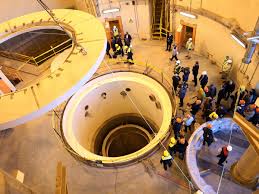
A new phase of U.S.–Iran nuclear talks is taking shape, but not without growing concern among allied governments watching from the sidelines. While diplomatic progress is being signaled publicly, the underlying structure of the agreement appears to still be under construction.
At the center of the debate is a developing rushed US Iran nuclear deal concerns narrative — not as a political slogan, but as a technical warning about pace versus precision in high-stakes nuclear diplomacy.
The concern is not that negotiations are happening too quickly in isolation, but that the most complex parts of the agreement may not yet be fully defined.
Why a rushed US Iran nuclear deal concerns allies
Reports indicate that several U.S. allies are uneasy about how rapidly a framework agreement may be advancing while key technical safeguards remain unresolved. These concerns are focused less on intent and more on structure — specifically verification systems, enforcement mechanisms, and long-term compliance design.
This reflects a broader pattern in international negotiations where early-stage frameworks are prioritized to establish momentum, even while technical details continue to be negotiated in parallel.
The underlying tension is simple but persistent: diplomatic urgency often moves faster than engineering-level agreement design.
The pressure shaping the negotiation timeline
The current talks are unfolding in a broader geopolitical environment marked by regional instability, energy security concerns, and shifting alliances. These external pressures tend to accelerate diplomatic timelines, especially when policymakers are seeking to reduce immediate escalation risks.
In parallel, other international reporting has highlighted ongoing volatility in Middle East security dynamics, where even limited disruptions can influence global energy markets and diplomatic calculations.
______________________________________________
🔴 Help keep this independent voice alive and uncensored.
Support independent journalism and help keep Chris Wick News going.
👉 Support Chris Wick on GoFundMe
This creates a structural pressure loop: the more unstable the environment becomes, the stronger the incentive to finalize a framework — even if that framework still requires extensive technical completion.
A familiar diplomatic pattern emerges again
This is not a new approach in international relations. Framework-first agreements are often used when full consensus is not immediately achievable but when political or security urgency demands visible progress.
In this structure, the initial agreement acts less as a final resolution and more as a stabilizing placeholder. The detailed technical work — often the most difficult part — is deferred to later negotiation phases.
This approach can reduce immediate tensions, but it also introduces a longer-term dependency on continued negotiation cycles.
Within the current US–Iran context, that pattern appears to be repeating in real time, with unresolved issues still sitting at the core of the agreement design.
This connects to earlier patterns in international nuclear negotiations where interim frameworks were used to slow escalation while leaving enforcement details open for later negotiation phases.
A similar structure appears in previous coverage of staged diplomatic agreements where political momentum outpaced technical completion.
This will likely evolve into broader analysis of how verification systems are built under time-constrained diplomatic conditions.
What remains unresolved inside the framework
Even as political momentum builds, several core technical areas remain either incomplete or actively under negotiation:
- Long-term limits on uranium enrichment levels
- International inspection access and verification authority
- Enforcement mechanisms for potential non-compliance
- Structure and timing of sanctions relief
These elements are not secondary adjustments. They form the operational backbone of any durable nuclear agreement.
Without alignment on these areas, a framework remains dependent on future technical negotiation phases to achieve full functionality.
Speed versus structural durability
At the core of the situation is a recurring tradeoff in modern diplomacy: speed versus completeness.
A faster agreement can reduce immediate geopolitical tension and signal progress to international observers. It can also help stabilize short-term market and security expectations.
However, speed can also compress the time available for detailed technical validation — particularly in agreements where verification systems are central to long-term stability.
This creates a subtle but important divide between political agreement and operational readiness.
A quiet contradiction in the process
Publicly, the framework is presented as a step toward stability and reduced risk. Privately, allied concerns suggest that the agreement may still be structurally incomplete at the moment it is being politically advanced.
That does not necessarily indicate weakness in the process itself. Instead, it reflects a broader reality in international negotiations where early-stage frameworks are often used to manage urgency while deeper technical alignment continues in parallel.
What makes this phase significant is not just what is being agreed, but what is still being left open while agreement momentum increases.
A broader pattern worth watching
This negotiation reflects a wider structural pattern in global diplomacy: when pressure increases, timelines compress; when timelines compress, complexity is deferred; and when complexity is deferred, it often re-emerges later under greater strain.
Whether this framework becomes a stabilizing step or a temporary pause in a longer negotiation cycle will depend less on its announcement and more on the technical alignment that follows.
And that process is still unfolding.