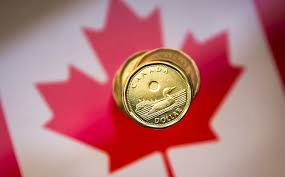
The Canadian dollar climbed to a one-month high this week as global markets reacted to easing tensions in the Middle East, following confirmation that the Strait of Hormuz remains open to oil shipments.
The move came after Iranian officials signaled that maritime traffic through the critical waterway would continue uninterrupted, reducing fears of a major disruption to global energy supply.
For currency markets, the response was immediate.
The loonie strengthened as investor confidence returned, reflecting a broader shift away from safe-haven positioning and toward risk-sensitive currencies.
What We Know So Far
The Strait of Hormuz is one of the most important النفط transit routes in the world, with roughly 20 percent of global oil supply passing through it daily.
Any threat to its stability can trigger sharp reactions across financial markets.
Recent tensions had raised concerns about potential disruptions, pushing oil prices higher and strengthening the U.S. dollar as investors moved toward safety.
However, once it became clear that the strait would remain open, those fears began to ease.
Oil market stability improved.
______________________________________________
🔴 Help keep this independent voice alive and uncensored -> Buy us a Coffee <-
And with it, currencies tied to global trade — including the Canadian dollar — began to recover.
Why the Canadian Dollar Moved
Canada’s currency is closely tied to global commodity markets, particularly oil.
When oil flows freely and market risk declines, the Canadian dollar tends to strengthen.
At the same time, the U.S. dollar often weakens slightly as demand for safe-haven assets fades.
That combination creates the conditions for a short-term rise in the loonie.
In this case, the shift wasn’t driven by domestic policy or economic data.
It was driven by perception — specifically, the perception that a major geopolitical risk had been temporarily reduced.
What Isn’t Being Said
While markets reacted quickly, the underlying situation remains fragile.
The Strait of Hormuz has long been a pressure point in global trade, and its stability has been tested repeatedly over the years.
A single announcement can calm markets.
But it doesn’t eliminate the deeper tensions that exist in the region.
That raises a quiet question.
How much of this movement is based on lasting stability — and how much is simply relief in the moment?
The Bigger Pattern
This isn’t the first time global markets have responded sharply to developments around the Strait of Hormuz.
Each time tensions rise, energy prices spike, and currencies shift accordingly.
Each time tensions ease, the pattern reverses.
But the broader trend remains consistent:
Markets are increasingly reactive to geopolitical signals, often moving before long-term outcomes become clear.
That creates a cycle of volatility — one driven as much by perception as by reality.
Why This Matters Now
The Canadian dollar’s rise may appear modest on the surface, but it reflects a deeper sensitivity in global markets.
Trade routes, energy supply, and geopolitical stability are all tightly connected.
When one shifts, everything else follows.
For now, the reopening of the Strait of Hormuz has provided a temporary sense of stability.
But in a world where key chokepoints can influence entire economies overnight, that stability is never guaranteed.
Final Thought
The market reaction makes sense on paper.
Risk drops, confidence rises, and currencies adjust.
But moments like this tend to move faster than the realities behind them.
The Strait is open.
The tension, however, hasn’t disappeared.
And when stability depends on a single corridor of water halfway across the world, it doesn’t take much for the balance to shift again.
Internal Links
- Related geopolitical developments affecting global markets
- Ongoing coverage of Middle East tensions
- Analysis of currency movements and trade impacts
External Sources
- Reuters coverage on currency markets and Strait of Hormuz developments
- Global energy trade data and shipping route analysis
- Financial market reaction reports
Author
Chris Wick is an independent Canadian writer focused on global events, geopolitical shifts, and emerging narratives. His work blends verified information with deeper analysis to explore patterns often overlooked in mainstream coverage.
About the Author


1 thought on “Canadian Dollar Rises After Iran Reopens Strait of Hormuz”