Something shifted overnight — and it didn’t come with a declaration, a speech, or a warning.
Instead, it arrived in fragments: confirmed strikes, retaliatory fire, and just enough silence between statements to suggest this wasn’t supposed to escalate this far, this fast.
What Actually Happened
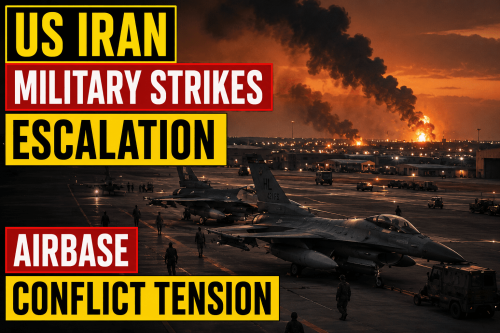
The United States carried out targeted strikes on Iranian military-linked sites, according to officials cited in this Reuters report.
The locations were described as strategic — not symbolic. These were not warning shots.
Iran responded quickly. Reports indicate retaliatory action against a U.S.-associated air base, marking a direct exchange rather than the proxy-style engagements that have defined much of the region’s conflict in recent years.
There were no immediate claims of large-scale casualties. But the significance isn’t in the numbers — it’s in the direction.
Why This Moment Matters
For years, both sides operated in a gray zone.
Indirect pressure. Cyber activity. Proxy forces. Economic warfare.
This is different.
______________________________________________
🔴 Help keep this independent voice alive and uncensored.
Support independent journalism and help keep Chris Wick News going.
👉 Support Chris Wick on GoFundMe
Direct strikes between the U.S. and Iran, even if limited, shift the perception of what’s acceptable. It lowers the threshold for future action.
And once that threshold moves, it rarely moves back.
The Pattern Behind the Event
This didn’t start here.
Tensions have been building through a series of smaller incidents — maritime confrontations, drone interceptions, targeted assassinations, and regional proxy conflicts.
Each event tested boundaries.
Each response recalibrated expectations.
What we’re seeing now looks less like a sudden escalation and more like the next step in a pattern that’s been quietly forming.
A pattern where both sides probe, respond, and adjust — without ever fully stepping into open war.
Until now, perhaps.
Where the Tensions Are Building
The geography matters.
Strikes tied to Tehran signal a willingness to operate closer to Iran’s core infrastructure. Meanwhile, retaliation against air bases suggests Tehran is prepared to respond in kind — not just through intermediaries.
This raises pressure across multiple hotspots:
The Persian Gulf, where military presence is already dense
Iraq and Syria, where proxy dynamics blur accountability
And the broader Middle East, where alliances are fragile and reactive
Each of these areas now becomes more sensitive — more volatile.
What This Could Signal Next
If both sides treat this as contained, the situation may stabilize into a new normal — one where direct strikes are rare but no longer unthinkable.
But if either side interprets this as weakness or provocation, the next move could come faster, and hit harder.
Escalation doesn’t always look dramatic at first.
Sometimes it looks like this — controlled, measured, and just believable enough to avoid panic.
Until it isn’t.
What’s unclear now is whether this was a message… or the beginning of a new phase that neither side can easily step back from.