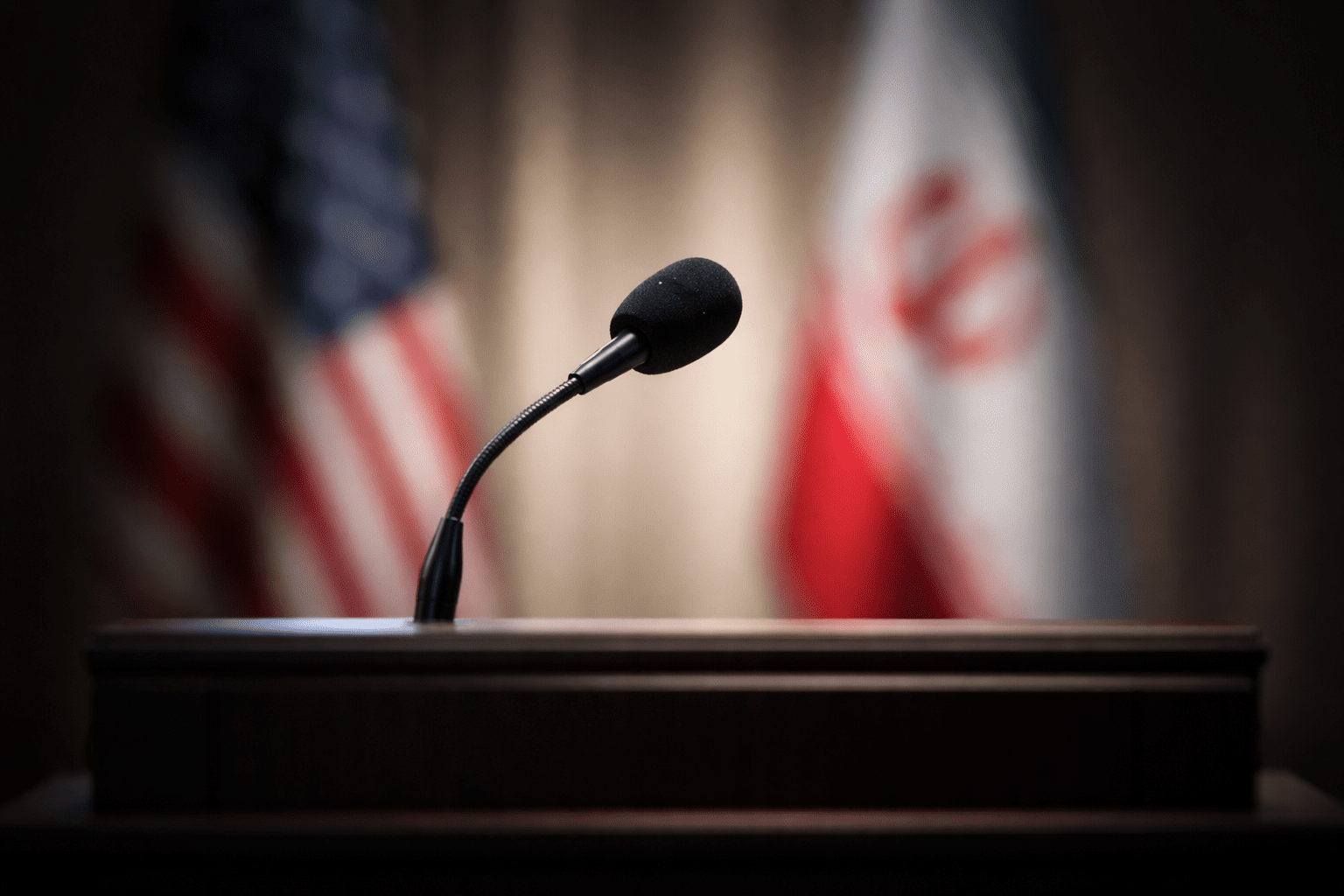
The phrase trump iran peace deal good news april 2026 is beginning to circulate across search engines, not because clarity has emerged — but because it hasn’t. What was framed as optimism from the White House has instead produced a familiar pattern: brief statements, limited detail, and a widening gap between official messaging and verifiable outcomes.
At the center of it is Donald Trump, who recently suggested there was “good news” regarding Iran without confirming any concrete framework or signed agreement. The statement landed in a geopolitical environment already shaped by long-standing tension, sanctions pressure, and fragile diplomatic channels involving Iran.
Early reporting from Reuters captured the ambiguity directly, noting that while optimism was expressed publicly, no clear peace deal or finalized arrangement had been confirmed through diplomatic channels.
Reuters coverage of Trump’s Iran remarks and unclear deal status
https://www.reuters.com/world/asia-pacific/trump-says-he-has-good-news-iran-no-clarity-peace-deal-2026-04-18/
That gap — between announcement and confirmation — is where the story begins to shift from simple diplomacy to something more structurally interesting.
Signals Without Structure
In Washington, messaging often operates ahead of substance. But what stands out in this case is not just the absence of detail — it’s the timing of the signal itself. The announcement arrives during a period of heightened regional pressure, where even minor shifts in tone are amplified through global markets, allied governments, and military planning channels.
A closer look at broader reporting from AP News shows that diplomatic contacts between U.S. and Iranian intermediaries have remained inconsistent, often mediated through third-party states rather than direct engagement.
AP News reporting on ongoing Iran diplomatic channels and tensions
https://apnews.com/hub/iran
What emerges is a system where communication itself becomes part of the strategy — not necessarily to resolve conflict, but to manage perception of it.
______________________________________________
🔴 Help keep this independent voice alive and uncensored.
Support independent journalism and help keep Chris Wick News going.
👉 Support Chris Wick on GoFundMe
This becomes clearer when examining how similar announcements have unfolded historically. Public optimism has frequently preceded either stalled negotiations or partial understandings that never fully materialize into formal agreements. The pattern is not new, but its repetition shapes expectations on all sides.
Institutional Framing and Controlled Ambiguity
There is a growing tendency in modern foreign policy communication to prioritize narrative control over procedural clarity. Statements are released before verification cycles are complete. Institutional response mechanisms — from State Department confirmations to allied intelligence assessments — often lag behind political messaging.
A recent analysis from BBC News highlighted how diplomatic signaling in the Middle East has increasingly relied on indirect messaging rather than formal disclosures, especially when outcomes remain uncertain.
This layered ambiguity creates a feedback loop. Political actors gain short-term narrative momentum, while institutions are left to stabilize expectations after the fact. The result is not necessarily deception, but a structural mismatch between political timing and diplomatic verification.
In the case of Iran, that mismatch carries additional weight. Economic sanctions, regional security calculations, and nuclear oversight frameworks all depend on precise language — yet public communication often operates in deliberately imprecise terms.
Reading Between the Diplomatic Lines
What makes the current moment notable is not that uncertainty exists — uncertainty has always been present in U.S.–Iran relations — but that it is being publicly packaged as progress without the supporting architecture normally required to validate it.
This raises broader questions about governance and messaging discipline. When political statements outpace institutional confirmation, public perception begins to shift independently of actual policy movement. Markets react, allies recalibrate, and media framing accelerates before the underlying facts are stabilized.
There is also a behavioral dimension at play. Repeated cycles of “near-deal optimism” can gradually reshape expectations, making future ambiguity feel like progress even when nothing structurally changes.
A Pattern Still Unfolding
What remains unresolved is whether this latest round of “good news” represents the early stage of a real diplomatic breakthrough or simply another iteration of controlled signaling — where optimism is used as a tool to test reactions before commitments are made.
In international relations, especially between long-standing adversaries, even silence can be strategic. But so can partial statements, carefully timed and deliberately incomplete.
And so the question lingers: is this the beginning of a shift in U.S.–Iran relations, or another moment where perception briefly runs ahead of reality — only to settle back into the same structural stalemate?
For now, the answer appears suspended somewhere between what was said, and what has yet to be confirmed.


One thought on “Trump’s “Good News” on Iran Raises More Questions Than Answers Behind Closed Doors”