The moment the missiles were launched, something didn’t line up.
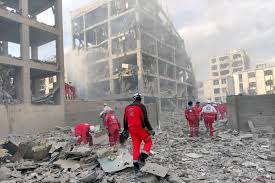
Early reports from U.S. officials suggested that Iranian strikes targeting Kuwait and Bahrain either failed mid-flight or were intercepted before reaching critical infrastructure. Yet within hours, conflicting details began to surface — damage reported at Kuwait International Airport, injuries confirmed, and at least one fatality.
If the attacks failed, why were there visible consequences on the ground?
This contradiction now sits at the center of a rapidly escalating situation involving Iran, the United States, and Gulf states already on edge.
What Actually Happened
According to initial U.S. military assessments, multiple Iranian missiles and drones aimed at U.S. positions and regional targets in Kuwait and Bahrain did not reach their intended objectives. Some reportedly broke apart mid-air, while others were intercepted by defense systems.
However, separate reporting confirmed that Kuwait International Airport sustained damage during the same wave of attacks. Flights were temporarily suspended, and emergency protocols were activated across the country.
The U.S. response followed quickly, with defensive interceptions and retaliatory strikes targeting Iranian positions, including areas linked to military infrastructure.
The situation described by Reuters reflects both failure and impact at the same time — a dual narrative that is still being clarified.
Source: https://www.reuters.com/world/iran-war-live-us-says-iranian-strikes-bahrain-kuwait-failed-2026-06-03/
Why This Moment Matters
The involvement of Kuwait and Bahrain changes the geometry of the conflict.
______________________________________________
🔴 Help keep this independent voice alive and uncensored.
Support independent journalism and help keep Chris Wick News going.
👉 Support Chris Wick on GoFundMe
Until now, escalation between Iran and the United States had remained largely contained through indirect confrontation and regional proxies. Direct strikes touching Gulf infrastructure signal a widening operational scope.
Kuwait, a strategic U.S. ally, hosts military assets and serves as a logistical hub. Any disruption there carries immediate implications for regional stability and energy markets.
Bahrain, home to the U.S. Navy’s Fifth Fleet, represents another critical node. Even unsuccessful strikes in that direction shift defensive postures and force rapid recalibration.
The distinction between “failed attack” and “contained damage” is no longer just technical — it’s geopolitical.
The Pattern Behind the Event
This is not the first time conflicting narratives have emerged in the early hours of a military exchange.
Initial reports often emphasize defensive success, particularly when interception systems are involved. But as more information emerges, the picture tends to evolve — sometimes revealing partial penetrations, unintended impacts, or infrastructure vulnerabilities.
Iran’s strategy in recent years has leaned toward saturation-style attacks using drones and missiles designed to test and overwhelm defense systems rather than guarantee precise strikes.
In that context, even a “failed” attack can serve a purpose: probing response times, exposing defensive gaps, and signaling capability without full escalation.
The ambiguity itself becomes part of the strategy.
Where the Tensions Are Building
The Gulf region is now in a heightened state of alert.
Kuwait has already adjusted flight operations and security measures, while Bahrain remains closely aligned with U.S. defensive coordination. Military assets across the region are reportedly repositioning, anticipating further attempts or retaliation cycles.
At the same time, diplomatic channels appear strained. Previous ceasefire signals and negotiations between Washington and Tehran have stalled, leaving fewer buffers between military actions and broader escalation.
This creates a narrow corridor where miscalculation becomes more likely.
Even a limited strike, if misinterpreted, could trigger a wider chain reaction.
What This Could Signal Next
What remains unclear is whether this was a contained episode or the opening signal of a larger phase.
If Iranian strikes continue — even at a limited or probing level — regional actors may be forced into more direct involvement. If U.S. responses intensify, the conflict risks shifting from contained confrontation to open regional instability.
For now, the narrative remains fractured.
An attack that “failed,” yet still caused damage.
A response that was “defensive,” yet extended into new territory.
And a region watching closely, trying to determine whether this was a warning… or something already underway.
For broader context on regional escalation patterns, see our ongoing coverage:
https://chriswicknews.com/kyiv-smoke-plume-air-raid-alert-ukraine/