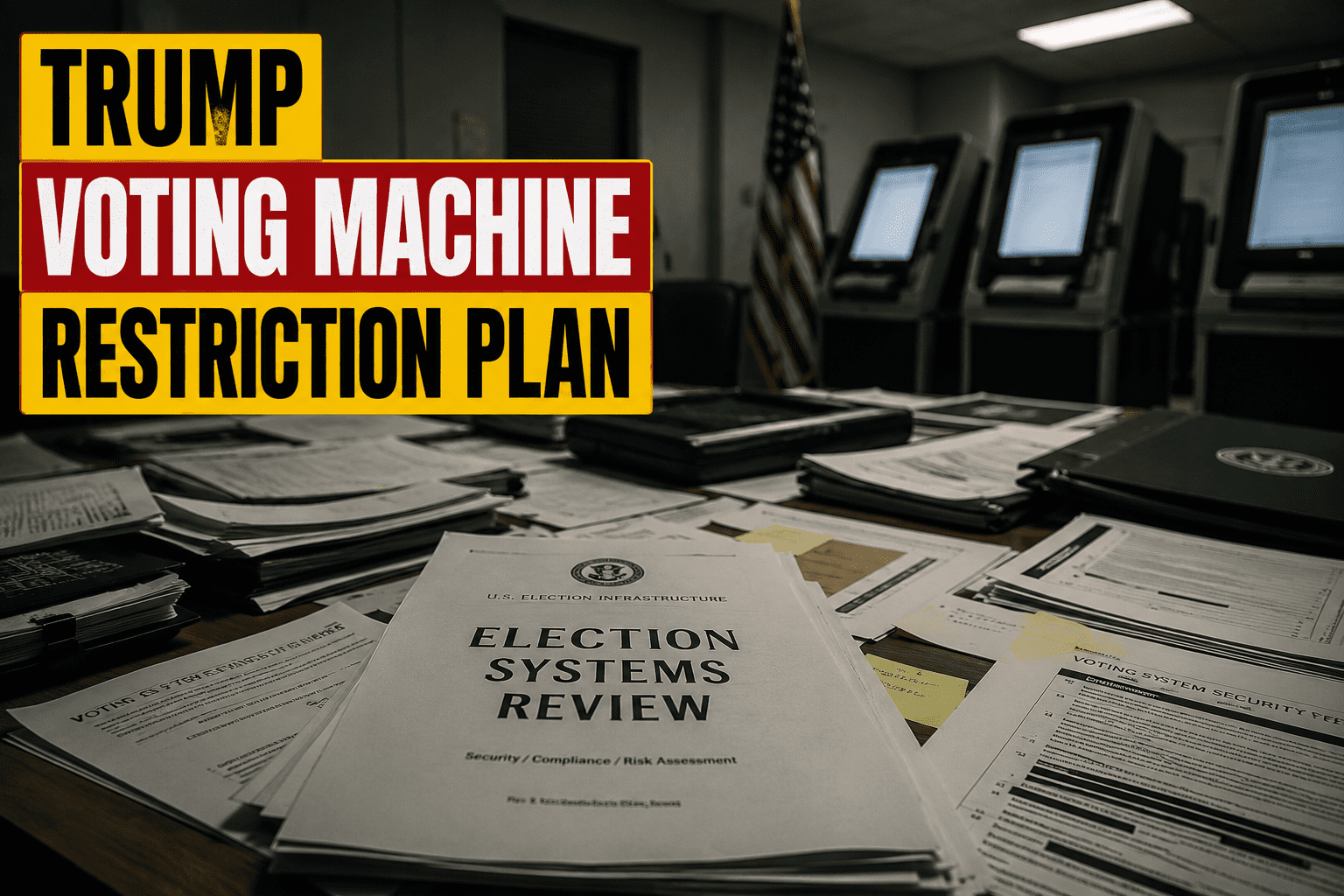
A quiet internal push inside Trump-era circles appears to have gone much further than previously understood, with officials reportedly exploring a sweeping plan that would have restricted or effectively banned a large portion of voting machines used across the United States. The reasoning, according to records and accounts tied to the discussions, leaned heavily on disputed conspiracy narratives rather than established technical or security evidence.
The scale of what was being considered is now raising fresh questions about how close federal election infrastructure came to being reshaped from within.
What Actually Happened
According to reporting by Reuters, discussions inside Trump-aligned official channels explored proposals that would have impacted roughly half of the voting machines used in U.S. elections.
The justification circulating within these discussions referenced claims tied to election conspiracy theories, particularly surrounding the integrity and security of electronic voting systems.
The report can be read here: https://www.reuters.com/legal/litigation/trump-officials-tried-ban-half-us-voting-machines-citing-conspiracy-theories-2026-05-22/
While no nationwide policy was ultimately implemented, the scope of the internal consideration itself is now drawing scrutiny from election experts and legal analysts.
Why This Moment Matters
Voting systems in the United States are not centrally uniform. Counties and states rely on a patchwork of certified machines, software systems, and vendors.
Any attempt to suddenly remove or invalidate a large share of those systems would have triggered logistical disruption on a national scale, particularly in rural counties that depend on specific legacy equipment.
What stands out in this case is not only the policy direction being explored, but the reasoning behind it. Election infrastructure decisions are typically driven by certification standards, audits, and cybersecurity reviews. In this instance, the reported motivation appears to have been shaped by unverified claims circulating in political and media ecosystems.
______________________________________________
🔴 Help keep this independent voice alive and uncensored.
Support independent journalism and help keep Chris Wick News going.
👉 Support Chris Wick on GoFundMe
That disconnect between technical evaluation and political narrative is now part of the wider concern.
The Pattern Behind the Event
This episode fits into a broader pattern seen in recent years: pressure on election systems framed through allegations of systemic vulnerability, often without supporting evidence from independent audits or federal certification bodies.
Experts have repeatedly noted that U.S. voting machines operate under layered security controls, including state-level certification, federal testing standards, and post-election audits.
Yet the persistence of doubt-driven narratives has created repeated cycles where infrastructure itself becomes the focal point of political contest.
Reuters reporting suggests the discussions were not abstract, but involved concrete considerations about removing or disabling entire categories of machines based on those disputed claims.
Where the Tensions Are Building
Election administration now sits at the intersection of three pressures:
- Political narratives questioning system legitimacy
- State-level autonomy over voting infrastructure
- Federal interest in cybersecurity standards
The result is an increasingly fragmented environment where even technical decisions can become politically charged.
In several states, officials have already begun tightening certification rules and reviewing vendor contracts in response to broader national debates. Any federal-level attempt to impose sweeping restrictions would likely face immediate legal challenges from states defending their election authority.
The Reuters report highlights how fragile that balance has become when internal policy discussions intersect with contested claims about election integrity.
What This Could Signal Next
Even though no ban or restriction was enacted, the fact that such a plan was actively discussed inside official channels suggests a continuing willingness in some political circles to reconsider foundational election infrastructure based on ideological or contested information sources.
The longer-term question is whether future policy efforts will focus more on technical modernization and security upgrades, or whether debates will continue to be shaped by competing narratives about past elections.
For now, the system remains unchanged. But the conversation around it is not settling.
About the Author