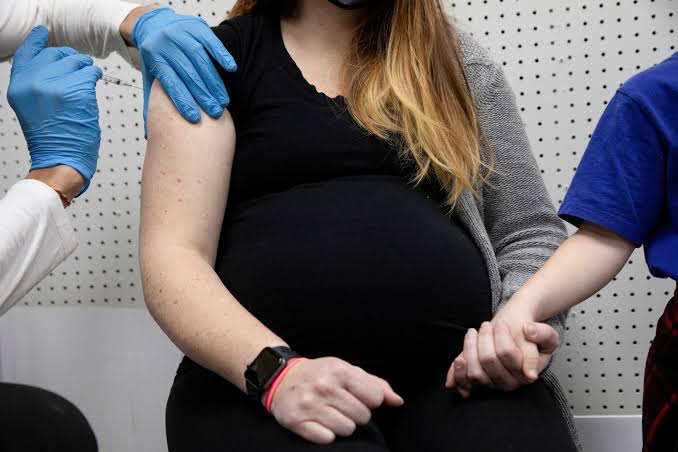
A new study has placed a spotlight on one of the most sensitive questions in public health: what happens when medical decisions are made during the earliest stages of pregnancy?
Researchers examining pregnancies in Iran reported finding higher rates of two rare birth defects among infants whose mothers received a COVID-19 vaccine during the first 12 weeks of pregnancy. The findings are already generating debate — not because they prove a cause, but because they raise questions that researchers say require deeper investigation.
The original report from Children’s Health Defense’s The Defender examined the study and its findings here: https://childrenshealthdefense.org/defender/covid-vaccine-early-pregnancy-higher-rates-two-birth-defects/
The study analyzed 1,352 pregnancies from two Iranian cities between 2022 and 2023. Researchers compared women who received no COVID-19 vaccine during pregnancy, women vaccinated during the earliest stages of pregnancy, and women vaccinated after the first trimester.
The period studied is significant because the first trimester is when many of the body’s major fetal structures begin forming. Researchers specifically looked at whether birth defects detected during routine ultrasound screenings appeared more frequently among different vaccination timing groups.
Among the findings highlighted in the report were two rare conditions: atrioventricular septal defects (a type of congenital heart defect) and cleft palate. Researchers reported six cases of atrioventricular septal defects among women vaccinated during the first trimester, compared with none in the unvaccinated group and one among women vaccinated later. Two cases of cleft palate were also reported in the early vaccination group, while none appeared in the comparison groups.
However, the researchers emphasized that the results are preliminary. The study was observational, involved a limited number of cases, and does not prove that vaccination caused the birth defects. The authors said larger studies and additional data would be needed before drawing firm conclusions.
That distinction is at the center of the ongoing scientific debate. Finding an association between two events does not automatically mean one caused the other. Medical researchers often use early findings like these as a starting point for additional studies designed to confirm or challenge the initial observations.
The study also drew attention because the vaccines used by participants in Iran were not mRNA vaccines. Instead, researchers examined women who received inactivated-virus or viral-vector COVID-19 vaccines, which contained aluminum-based adjuvants. The report noted that this difference separates the findings from many previous vaccine safety studies conducted in North America and Europe.
______________________________________________
🔴 Help keep this independent voice alive and uncensored.
Support independent journalism and help keep Chris Wick News going.
👉 Support Chris Wick on GoFundMe
Researchers behind the study said the findings highlight the need for continued monitoring of pregnancy outcomes and larger datasets. The question now facing scientists is whether the reported differences represent a real pattern or whether they resulted from the small sample size and rarity of the conditions involved.
For many families, pregnancy health decisions involve weighing risks, benefits, and uncertainty. As more data becomes available, the debate will likely continue around how medical recommendations evolve when new evidence emerges.