Israel stands at a perilous crossroads. Two years into a brutal, grinding conflict in Gaza, Prime Minister Benjamin Netanyahu isn’t just fighting a war on the ground—he’s fighting for his political life. As his fragile coalition teeters on the brink of collapse, Netanyahu has doubled down on violence and territorial expansion, betting on Gaza as his last refuge. But at what cost?
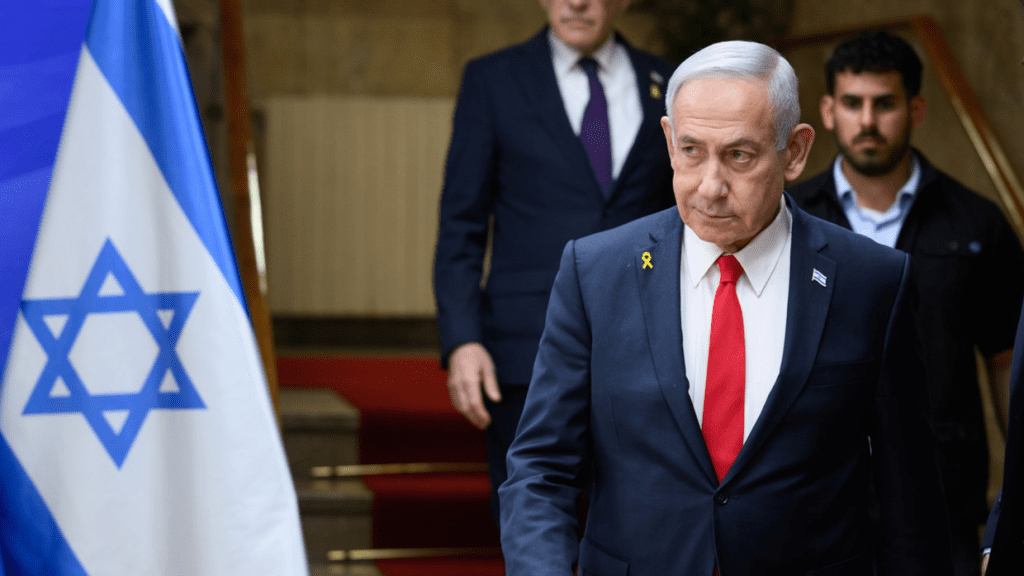
Prime Minister of Israel Benjamin Netanyahu. © Bernd von Jutrczenka/Getty Images
The Israeli cabinet’s recent green light to capture Gaza City is more than a military maneuver—it’s a calculated political play cloaked in the guise of security. Officially, the goals sound clear: dismantle Hamas’s military strength, rescue hostages, demilitarize the Strip, expand Israeli control, and install a new civil administration independent of both Hamas and the Palestinian Authority.
Yet beneath this official rhetoric lies a darker truth: Netanyahu and his hardline allies have no interest in peace. They don’t want the war to end. They want it to escalate—to crush Gaza, break Hamas, and pave the way for permanent Israeli settlements in the enclave they once abandoned.
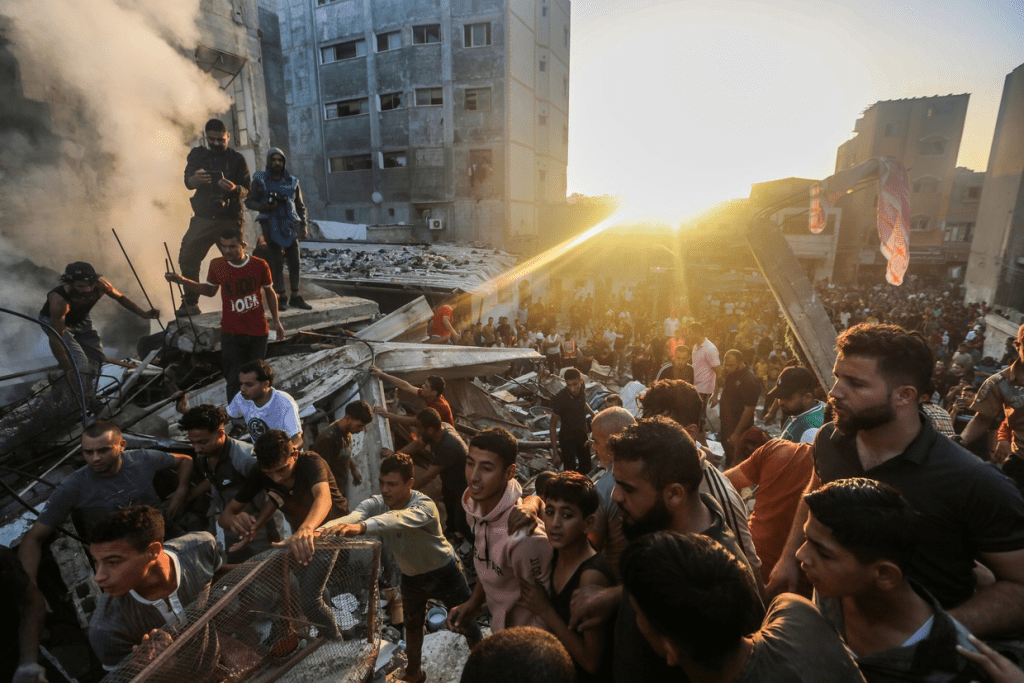
FILE PHOTO. People search through buildings that were destroyed during Israeli air raids in the southern Gaza Strip November 4 2023 in Khan Yunis, Gaza. © Ahmad Hasaballah/Getty Images
A Coalition on Thin Ice and a War That Won’t End
Netanyahu’s grip on power is fragile at best. His coalition holds a razor-thin majority of 61 seats in the Knesset. Ultra-Orthodox lawmakers threaten to bolt over a controversial draft law, and losing just a handful could trigger elections that may end his tenure.
In this high-stakes political roulette, the war is Netanyahu’s lifeline. Experts like Gaza’s political scientist Mkhaimer Abusada bluntly say, “The continuation of the war guarantees Netanyahu will remain in his seat.”
Hardliners like Finance Minister Bezalel Smotrich and National Security Minister Itamar Ben-Gvir—both champions of expanding the conflict—have outsized influence, pushing a vision of deepening control over Gaza and rebuilding Jewish settlements long since evacuated.
Settlements, Not Peace: The Dark Dream Behind the Offensive
Before 2005, Israel maintained over 20 settlements in Gaza, fortified and costly. When Ariel Sharon ordered the withdrawal, the country split—some hailed it as a relief, others warned it would embolden militants. Today, those warnings echo like a grim prophecy.
______________________________________________
🔴 Help keep this independent voice alive and uncensored.
Support independent journalism and help keep Chris Wick News going.
👉 Support Chris Wick on GoFundMe
The October 7 attacks, hardliners argue, would have been prevented if Israel had never pulled back. Now, their plan is clear: conquer Gaza City, dismantle Hamas, and reclaim land for new settlements. This is not just war—it’s an attempt to redraw the map, turning temporary occupation into permanent annexation.
A Human Catastrophe Looms
Taking Gaza City is not just a military challenge; it’s a humanitarian nightmare waiting to explode. Gaza’s already devastated population—over 61,000 killed, nearly 150,000 wounded, millions displaced—faces further suffering. Entire neighborhoods reduced to rubble, infrastructure obliterated, and a people stripped of hope.
“The Israeli army may be strong, Hamas may be weakened,” says Israeli peace activist Yariv Oppenheimer, “but how do you uproot a population that has nothing left to lose without catastrophic consequences?”
This operation risks igniting deeper chaos—not only in Gaza but within Israeli society and the military itself.
The World Is Watching—and Turning Away
Global outrage over Israel’s tactics grows louder by the day. Even longtime allies like Germany have halted weapons deliveries destined for Gaza’s battlefield. European governments weigh sanctions and diplomatic pressure.
Yet as international condemnation mounts, Netanyahu moves forward with chilling resolve—buoyed by support from Washington but increasingly isolated from the rest of the world.
Hostages, Ceasefires, and a Deal Too Dangerous to Accept
Meanwhile, the fate of some 20 hostages held in Gaza hangs in the balance. Families plead for negotiations, desperate for any sign of life. Yet past ceasefire talks collapsed over deal-breakers—how far Israel’s army could advance, prisoner exchanges, control over border crossings.
New proposals suggest Hamas might release some hostages in exchange for Israeli withdrawal and a new, Hamas-free governing body in Gaza. But for Netanyahu, this is unacceptable. Giving up the dream of settlements would mean the end of his coalition—and, possibly, his political career.
The Dark Road Ahead
If talks fail—and all signs point to stalemate—the war will drag on, dragging Gaza into an abyss of destruction and despair. Guerrilla warfare will rage street by street. Millions will face starvation, displacement, and death.
The fragile fabric of life in Gaza is unraveling fast, and with it, any hope of peace. Netanyahu’s gamble may save his seat—for now—but it risks igniting a nightmare that could consume an entire region.
There is no easy way out. And the war? It won’t end anytime soon.