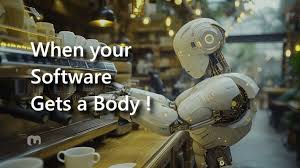
There’s a quiet shift happening beneath the surface of modern medicine — one that most people haven’t fully grasped yet.
It doesn’t look like a hospital.
It doesn’t sound like a breakthrough announcement.
It feels more like a rewrite.
Because if voices like Elon Musk are even partially right, the future of healthcare may not revolve around pills, surgeries, or symptom management at all. Instead, it may come down to something far more precise… and far more unsettling.
Code.
Not computer code in the traditional sense — but designed to enter the body and change what it does from the inside out.
Not treat.
Not manage.
Rewrite.
The idea is simple on the surface: if the human body runs on instructions, then changing those instructions changes the outcome. Just like software.
For decades, medicine has been reactive. A problem appears, symptoms follow, and treatment attempts to reduce the damage. But this new direction flips that entire model on its head.
______________________________________________
🔴 Help keep this independent voice alive and uncensored.
Support independent journalism and help keep Chris Wick News going.
👉 Support Chris Wick on GoFundMe
What if the problem could be corrected before it fully expresses itself?
What if the “bug” in the system could be edited directly?
This is where programmable biology enters the conversation — a concept that feels like science fiction until you realize fragments of it already exist. mRNA technology has already shown that the body can be guided, instructed, nudged into producing specific responses.
Now imagine taking that further.
Much further.
Custom-built RNA sequences tailored not just to trigger immune responses, but to alter cellular behavior itself. To switch genes on or off. To correct errors. To reconfigure how the body functions at a fundamental level.
In that world, disease isn’t something you battle.
It’s something you debug.
And if the correct sequence can be written — if the right biological “command” can be delivered — the implications are staggering. Chronic illness, genetic conditions, even age-related decline… all potentially reduced to problems of code rather than fate.
But that’s where the unease begins to creep in.
Because if the body becomes programmable… who controls the program?
Who writes the instructions?
Who decides what gets fixed — and what gets changed?
The conversation quickly moves beyond medicine and into something deeper. Something more philosophical. Even political.
A programmable body doesn’t just open the door to healing. It opens the door to modification.
Enhancement. Optimization. Control.
And history has shown that any powerful system, once created, rarely remains limited to its original purpose.
So while the promise is extraordinary — the ability to treat or even eliminate disease at its root — the questions that follow are just as profound.
How close are we, really, to this reality?
Closer than most people think.
The building blocks are already here. The language of biology is being decoded at an accelerating pace. What once took decades now takes months. What once seemed impossible is quietly entering clinical trials.
There won’t be a single moment where everything changes.
No clear line where the old world ends and the new one begins.
Just a gradual shift… until one day, updating your biology doesn’t sound strange at all.
And when that day comes, the question won’t be whether it’s possible.
It will be whether anyone ever truly understood what it would mean.