War rarely begins the way it is remembered later.
There is no single moment where the world collectively agrees that something irreversible has begun. Instead, events arrive in fragments — a strike here, a retaliation there, a statement from a podium, another headline slipping quietly into the morning news cycle.
And slowly, almost quietly, a regional crisis becomes something much larger.
Over the past weeks, the expanding Iran Israel US conflict has moved beyond rhetoric and entered a far more dangerous phase. Airstrikes, missile attacks, and drone operations now stretch across multiple countries and waterways. Each move is presented as measured. Each response is described as necessary.
But the pattern forming underneath tells a deeper story.
The conflict accelerated after joint U.S. and Israeli military operations began striking Iranian military infrastructure across the country. Targets included missile launch facilities, command centers, and elements of Iran’s defensive systems. Hundreds of strikes have been reported since the opening phase of the campaign.
Military planners describe these operations in technical terms: degrading capabilities, suppressing air defenses, limiting retaliation.
Yet war rarely stays inside the plans drawn on briefing-room maps.
Iran responded with missile and drone attacks across the region — targeting Israeli cities, U.S. bases in Gulf states, and energy infrastructure tied to global oil markets. In some cases, projectiles reached deep into strategic facilities that once felt comfortably distant from the battlefield.
______________________________________________
🔴 Help keep this independent voice alive and uncensored -> Buy us a Coffee <-
Even geography has begun to shift under the pressure.
The Strait of Hormuz — one of the most critical shipping corridors on the planet — has seen disruptions severe enough to rattle energy markets worldwide. Roughly one-fifth of global oil normally moves through that narrow passage. When conflict reaches waters like that, it stops being regional very quickly.
The economic signals follow the same quiet logic.
Oil prices climb. Shipping routes hesitate. Insurance rates surge. Governments begin speaking in careful language about contingency planning.
And yet the war itself remains strangely undefined.
Officially, it is still a series of operations. A campaign. A response. A counter-response.
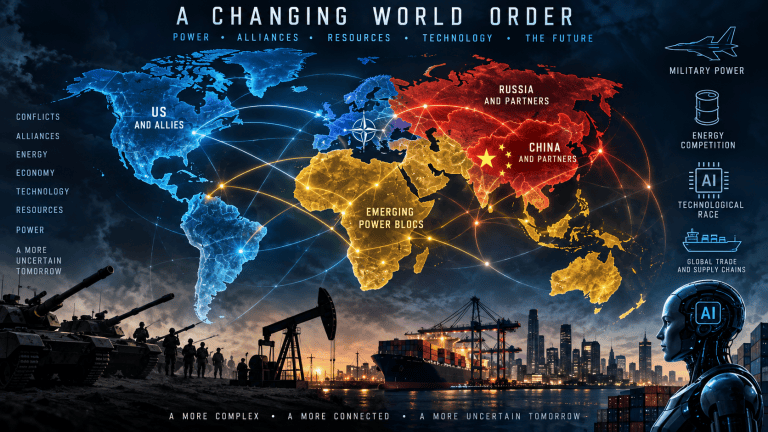
But the map suggests something broader.
Airstrikes in Iranian cities. Missile alerts sounding across Israel. Drone attacks reported near Gulf energy facilities. Military deployments widening across neighboring states.
When conflict begins touching multiple capitals, multiple militaries, and the arteries of global trade, the distinction between a limited war and a systemic one becomes harder to see.
There is also a quieter dimension unfolding behind the explosions.
Leadership questions inside Iran. Debates inside the United States about strategy and escalation. Allies weighing how close they are willing to move toward the front line.
These are the kinds of political currents that often shape the direction of wars more than missiles do.
History shows a pattern here.
Many large conflicts begin with the belief that escalation can remain controlled — that each side can apply pressure without crossing an invisible threshold. That there will always be time to slow things down later.
Sometimes that belief holds.
Sometimes it doesn’t.
Right now the signals remain mixed. Military actions continue. Diplomatic language still floats in the background. Calls for ceasefires appear alongside announcements of new strikes.
It leaves observers with an uncomfortable question.
Is this a war being carefully managed — or one still quietly unfolding into something no one fully intended?
The answer may not be visible yet.
Often it isn’t, until much later.
And by then, the shape of history has already changed.
About the Author