A fragile diplomatic opening around Iran is colliding with sudden military movement near one of the world’s most critical النفط chokepoints. Just as signals of a possible peace framework began surfacing, new activity near the Strait of Hormuz has complicated the narrative—and raised questions about whether negotiations are stabilizing the region or masking deeper instability.
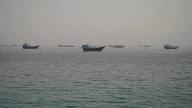
The Strait of Hormuz, a narrow passage linking the Persian Gulf to global markets, is once again under scrutiny. Any disruption here carries immediate consequences for global oil flows, shipping security, and geopolitical balance—especially involving Iran, the United States, and regional Gulf states.
So why is military tension rising at the exact moment a diplomatic breakthrough appears within reach?
What Actually Happened
Recent reporting from Reuters indicates that discussions around a potential Iran-related peace arrangement were gaining quiet momentum. At the same time, however, new military actions—described as localized but significant—emerged near the Strait of Hormuz.
These developments suggest a split-track reality: diplomacy advancing in one channel while military positioning intensifies in another. Naval movements, heightened alert levels, and regional force readiness have all increased, pointing to a situation that is not fully under control.
The Reuters report details how these overlapping dynamics are unfolding in real time, with both diplomatic and military actors operating under different assumptions.
Source: https://www.reuters.com/world/asia-pacific/iran-peace-deal-looms-while-new-military-action-flares-near-strait-hormuz-2026-06-13/
Why This Moment Matters
The Strait of Hormuz is not just a regional concern—it is a global pressure point. Roughly a fifth of the world’s oil supply passes through it, making any instability immediately relevant to energy markets and national economies.
For the United States, maintaining open shipping lanes is a long-standing strategic priority. For Iran, control and influence over the strait represent leverage—both economically and politically.
The timing is critical. A peace deal, even in early stages, is supposed to reduce tension—not coincide with escalations. That contradiction introduces uncertainty into how serious or unified the diplomatic effort actually is.
The Pattern Behind the Event
______________________________________________
🔴 Help keep this independent voice alive and uncensored.
Support independent journalism and help keep Chris Wick News going.
👉 Support Chris Wick on GoFundMe
This is not the first time diplomacy and military activity have moved in parallel around Iran.
Historically, negotiations involving Tehran often unfold alongside pressure tactics—sanctions, military exercises, or regional proxy movements. These dual-track strategies can serve multiple purposes: strengthening negotiating positions, signaling deterrence, or testing reactions.
What stands out in this moment is the proximity in timing. The overlap feels less like coincidence and more like a continuation of a long-standing pattern where diplomacy never fully replaces strategic positioning.
Where the Tensions Are Building
The pressure points are becoming clearer:
Iran’s naval posture in the Persian Gulf
U.S. and allied monitoring operations in the region
Commercial shipping concerns from global energy markets
Each layer adds friction. Even without direct confrontation, the buildup of presence and readiness increases the risk of miscalculation.
There is also a communication gap. Diplomatic channels tend to operate quietly, while military actions are visible and immediate. That imbalance can create conflicting signals—especially for global observers trying to assess whether the region is stabilizing or drifting toward escalation.
For related geopolitical analysis, see: /geopolitics/oil-route-tensions-global-impact
What This Could Signal Next
The situation presents two competing trajectories.
One path leads toward a structured agreement that reduces long-term tensions and stabilizes shipping routes. The other points toward continued volatility, where negotiations exist but fail to prevent localized flare-ups.
The uncertainty lies in which actors hold real influence over events on the ground—or at sea.
Diplomacy suggests intention. Military movement reflects capability. When both rise together, it becomes harder to determine which one will ultimately define the outcome.
And in a region where even small incidents can cascade quickly, the margin for error is narrowing.