In recent events, a prominent Israeli lawmaker, Revital “Tally” Gotliv, has stirred controversy by openly discussing the deployment of nuclear weapons as a response to ongoing attacks by the political and militant organization, Hamas. While Israel has maintained a significant nuclear arsenal since the 1960s, it has never officially acknowledged this fact. This article delves into the implications of Gotliv’s statements and the broader context of Israel’s nuclear deterrence capabilities.
Understanding Israel’s Nuclear Arsenal
Israel’s nuclear capabilities have long been a subject of speculation and debate. Despite maintaining a nuclear arsenal, the Israeli government has chosen to neither confirm nor deny its existence. This deliberate ambiguity is a part of the country’s security strategy, commonly referred to as the “strategic ambiguity” doctrine. This strategy aims to deter adversaries by keeping them uncertain about Israel’s nuclear capabilities.
The Jericho Missile System
One of the key components of Israel’s nuclear deterrence is the Jericho missile system. This family of ballistic missiles, initially developed in the 1960s, is a critical part of Israel’s second-strike capability. The Jericho missiles vary in range and payload capacity, ensuring Israel’s ability to respond to a broad spectrum of threats. The Jericho-1, with a range of 310.6 miles and a 2,205-pound payload capacity, is one example. The Jericho-2, with a range between 932 to 2,175 miles, provides extended capabilities. The more recent Jericho-3, introduced in 2011, represents an intermediate-range system with notable improvements over its predecessors.
The Controversial Statements by Revital Gotliv
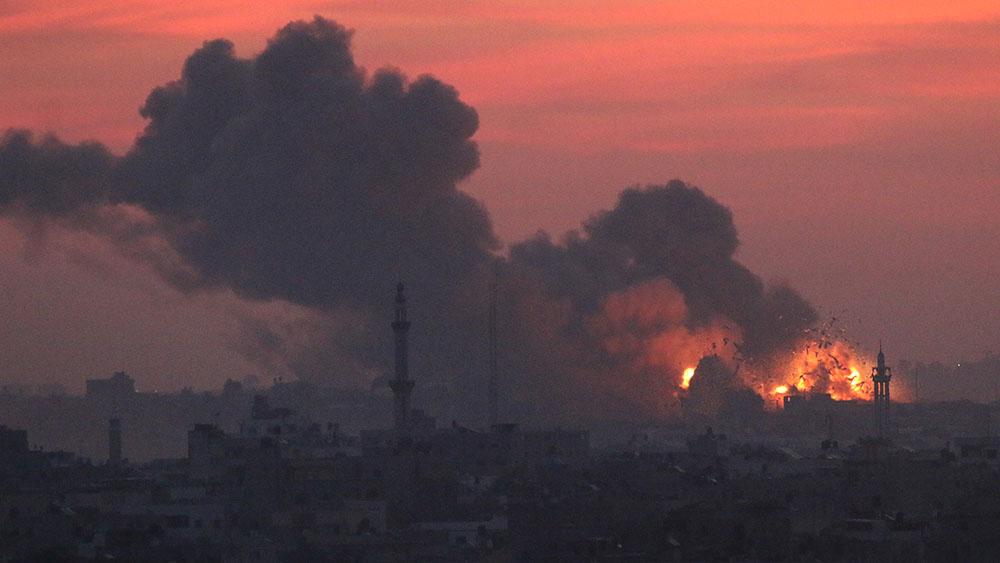
Gotliv’s recent statements on social media have added fuel to the fire of this nuclear debate. In her posts, she openly called for the use of nuclear weapons to “shell Gaza mercilessly” as a means to restore Israel’s dignity, strength, and security. Her provocative language and vengeful tone have ignited public discourse.
Government Response and International Concerns
Following Gotliv’s comments, Israeli Prime Minister Benjamin Netanyahu declared a state of war and promised a strong response to the attacks. Israeli Defense Minister Yoav Gallant vowed to show no mercy in the fight against Hamas. The international community has expressed concerns about such loose talk regarding nuclear capabilities, particularly in a region as volatile as the Middle East.
______________________________________________
🔴 Help keep this independent voice alive and uncensored -> Buy us a Coffee <-
Expert Analysis
Nikolai Sokov, a senior fellow at the Vienna Center for Disarmament and Non-Proliferation, cautioned against openly discussing nuclear weapons, especially in a region where such capabilities are sensitive and unconfirmed. He highlighted the potential risks to Israel’s image and the proximity of potential targets, which would put Israeli citizens in harm’s way. Sokov also emphasized that the utility of nuclear weapons in this conflict is questionable, as there are no suitable targets for their use.
Conclusion
The controversy surrounding Revital Gotliv’s statements underscores the complexity and sensitivity of Israel’s nuclear deterrence policy. While maintaining nuclear capabilities is crucial for Israel’s national security, discussing their use openly presents risks, both domestically and on the international stage. The situation calls for measured dialogue and a commitment to maintaining strategic ambiguity to ensure regional stability.
About the Author