Chris Wick News | World News | October 27, 2026
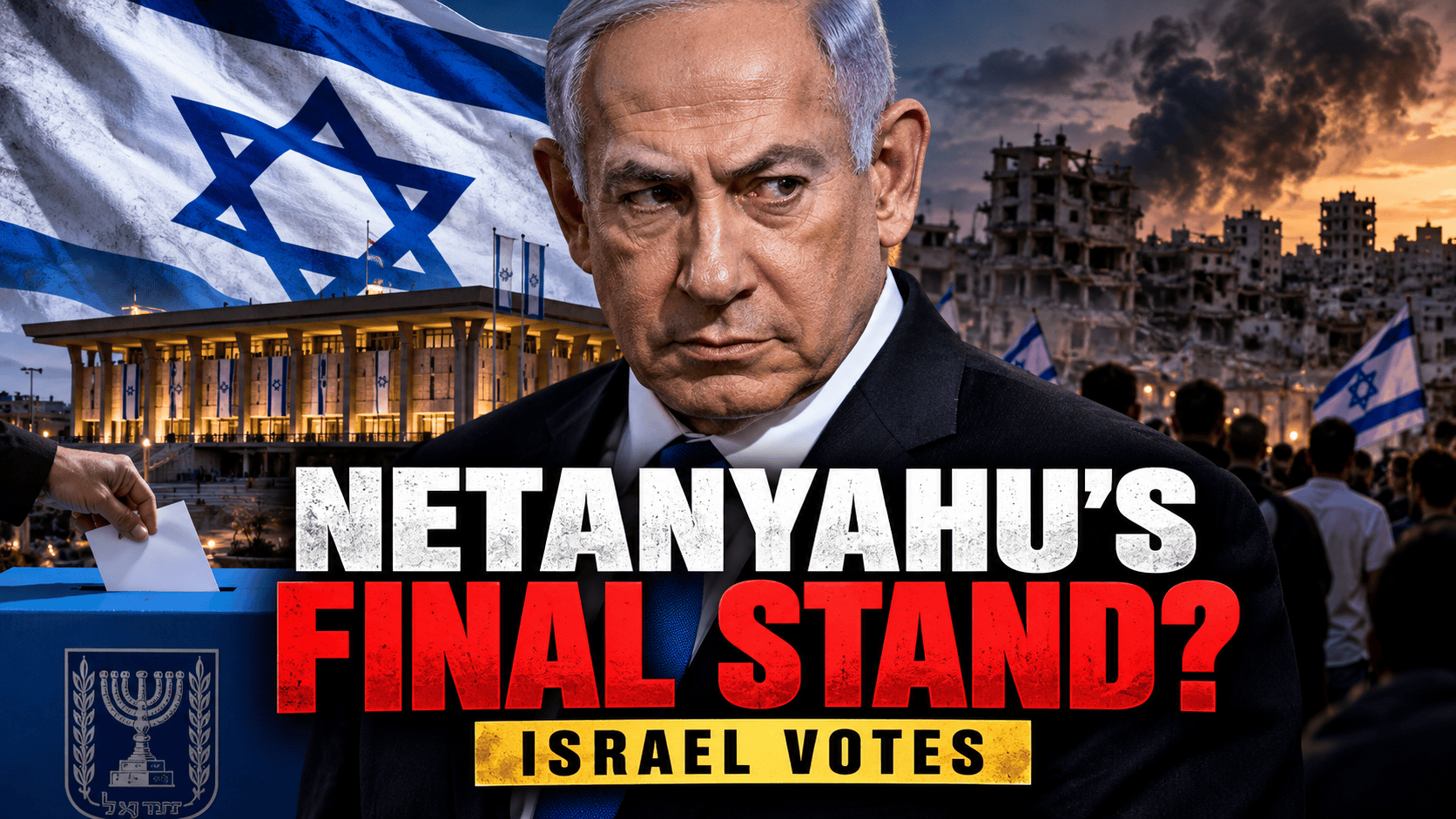
Israel is voting. Benjamin Netanyahu is fighting for his political life. And after years of war, devastation, political division, and international condemnation, the question hanging over the country is no longer simply who will govern.
It is whether a leader who built his political career on national security can survive one of the most catastrophic security failures in Israel’s history.
On Tuesday, October 27, millions of Israelis are heading to the polls in an election that could determine Netanyahu’s future, reshape Israel’s relationship with Washington, and influence the next chapter of an increasingly unstable Middle East.
But beneath the campaign promises and patriotic speeches lies an uncomfortable reality.
Even if Netanyahu loses public confidence, Israel’s fractured political system could allow him to remain in power.
And that raises a disturbing question about political accountability: What happens when voters demand change, but the political machinery makes that change almost impossible to deliver?
Netanyahu Faces His Biggest Political Reckoning
Netanyahu has dominated Israeli politics for much of the past two decades.
At 77, Israel’s longest-serving prime minister has survived corruption allegations, collapsing coalitions, international criticism, and repeated elections.
______________________________________________
🔴 Help keep this independent voice alive and uncensored.
Support independent journalism and help keep Chris Wick News going.
👉 Support Chris Wick on GoFundMe
Now he faces a different kind of political judgment.
The October 7, 2023, Hamas-led attacks killed approximately 1,200 people in Israel and resulted in 251 people being taken hostage.
The attacks shattered the government’s reputation for maintaining national security.
Israel’s subsequent military offensive devastated much of Gaza. According to Gaza health authorities, approximately 74,000 Palestinians have been killed in Israeli attacks.
Those figures represent human suffering on a staggering scale.
For Netanyahu’s supporters, Israel’s military campaigns demonstrate the determination necessary to confront Hamas, Hezbollah, and Iran.
For his critics, the same campaigns raise questions about leadership failures, civilian casualties, international isolation, and the consequences of pursuing military solutions without a credible political settlement.
Both narratives are competing for control of Israel’s future.
And neither can erase the destruction left behind.
Gadi Eisenkot Emerges as Netanyahu’s Biggest Threat
Netanyahu’s principal challenger is former Israeli military chief Gadi Eisenkot, whose political appeal rests heavily on his national security credentials.
Eisenkot is no stranger to war.
He served in Netanyahu’s emergency war cabinet following the October 7 attacks before resigning amid disagreements over the government’s handling of the conflict.
His son was killed during combat in Gaza.
Unlike politicians promising a dramatic transformation of Israeli foreign policy, Eisenkot represents a different approach to security leadership rather than a wholesale rejection of Israel’s military priorities.
He has criticized Netanyahu’s leadership and opposes the prime minister’s far-right coalition partners.
However, Eisenkot also opposes Palestinian statehood under the traditional two-state framework.
That distinction matters.
Removing Netanyahu would not automatically mean ending Israel’s hardline security policies or resolving the Palestinian conflict.
For voters seeking accountability, Eisenkot offers an alternative leader.
For Palestinians hoping for a fundamental change in Israeli policy, the differences may prove considerably narrower.
Donald Trump Becomes a Central Figure in Israel’s Election
One of the election’s most controversial dimensions is Netanyahu’s relationship with U.S. President Donald Trump.
Netanyahu has made his close alliance with Washington a central campaign argument.
Trump has openly endorsed Netanyahu, strengthening the prime minister’s claim that his personal relationship with the American president gives Israel a strategic advantage.
The alliance has particular significance following U.S.-Israeli military operations against Iran.
Netanyahu suggested ahead of the election that Trump would be prepared to take further action against Iran if Netanyahu remained prime minister.
The political message is difficult to miss.
Keep Netanyahu, and Israel keeps its privileged relationship with Trump.
Replace him, and that relationship could supposedly be placed at risk.
But Eisenkot has challenged that suggestion, arguing that Washington would cooperate with whichever leader Israeli voters select.
There is a broader issue here.
When a foreign president openly endorses a candidate in another country’s election, legitimate questions arise about political influence and diplomatic pressure.
An endorsement is not proof of unlawful election interference. Nevertheless, Trump’s public involvement illustrates how deeply American political interests have become intertwined with Israel’s domestic power struggle.
And it leaves Israeli voters confronting a question that extends beyond Netanyahu.
Should their next government be determined by domestic accountability, or by the perceived preferences of Washington?
The Far Right Could Hold the Keys to Power
Israel’s parliamentary system makes winning the largest number of votes only part of the battle.
The country’s 120-seat Knesset requires a governing coalition capable of commanding at least 61 seats.
That creates opportunities for smaller political parties to exercise influence far beyond their individual electoral strength.
Netanyahu may once again depend on far-right politicians Itamar Ben-Gvir and Bezalel Smotrich.
Both have faced international sanctions from certain Western governments over accusations involving incitement to violence against Palestinians.
Their political influence has generated controversy over settlement expansion, Palestinian rights, and the direction of Israeli democracy.
Yet their support could become essential to Netanyahu’s survival.
This is where the election becomes particularly complicated.
A prime minister can emerge politically weakened while still retaining enough parliamentary allies to govern.
Meanwhile, an opposition movement can attract substantial public support without assembling a workable coalition.
In Israel, winning the argument with voters does not necessarily mean winning the government.
And if neither side secures a governing majority, Netanyahu could remain caretaker prime minister while the country moves toward another election.
Gaza’s Destruction Casts a Long Shadow
The election is taking place against the backdrop of an extraordinary humanitarian and geopolitical crisis.
Israel’s military operations have left large sections of Gaza destroyed.
The conflict has also contributed to severe diplomatic tensions, international legal scrutiny, and growing criticism of Israel’s conduct.
Netanyahu faces an International Criminal Court arrest warrant concerning allegations of war crimes and crimes against humanity.
He rejects the allegations.
Separately, he continues to fight corruption charges in Israel, which he also denies.
Neither proceeding establishes guilt by itself.
Nevertheless, the combination of legal battles, military controversies, and political instability presents an extraordinary situation for a sitting national leader.
The question is whether Israeli voters will view those controversies as reasons to remove Netanyahu or regard his continued leadership as necessary during a period of regional confrontation.
For many families affected by October 7, accountability for the security failures remains a central demand.
For Palestinians in Gaza, the consequences of Israeli government decisions are far more immediate than the political fortunes of any individual leader.
A change in prime minister would not, by itself, rebuild destroyed homes, restore shattered infrastructure, or guarantee a different military strategy.
Those outcomes would require concrete policy decisions.
Why Israel’s Election Matters Beyond Its Borders
The consequences of Tuesday’s vote will not stop at Israel’s borders.
A Netanyahu victory could reinforce the existing government’s approach toward Iran, Palestinian territories, and regional security.
An Eisenkot-led government could change the tone of Israeli diplomacy and reduce the influence of Netanyahu’s far-right allies.
However, major elements of Israel’s security consensus would likely remain intact.
For Washington, the result will influence cooperation with one of America’s most important Middle Eastern allies.
For European governments, it could affect diplomatic disputes over Gaza, settlement policies, and international law.
For Palestinians, the election could determine which Israeli leadership makes decisions affecting their daily lives, security, and political future.
And for the broader Middle East, it could influence whether confrontation remains the dominant regional strategy.
These are substantial consequences for an election in which neither major political bloc appears assured of victory.
The Real Question: Can Netanyahu Survive the Consequences of His Own Leadership?
Benjamin Netanyahu has spent decades presenting himself as indispensable to Israel’s survival.
That political identity has helped him withstand crises that might have ended other political careers.
But the October 7 attacks, the devastation in Gaza, confrontation with Iran, and deepening divisions within Israeli society have placed that claim under unprecedented scrutiny.
His supporters see a determined wartime leader who understands the threats facing Israel.
His opponents see a politician whose pursuit of power has deepened national divisions and delayed meaningful accountability.
The truth of his political future will be determined not simply by the ballots cast Tuesday, but by the coalition negotiations that follow.
And that may be the most revealing part of this election.
After years of war, enormous loss of life, and repeated political crises, Israelis are being asked to decide whether Netanyahu deserves another term.
Yet the parliamentary system could leave him in office even without a decisive electoral endorsement.
The election may determine who controls Israel’s government. Whether it produces accountability, meaningful policy change, or another round of political paralysis is an entirely different question.
For a country exhausted by conflict, the distinction could hardly be more important.
Sources
1. Reuters — Netanyahu’s Political Survival on the Line as Israel Votes (October 27, 2026)
https://www.reuters.com/world/middle-east/netanyahus-political-survival-line-israel-votes-2026-10-27/
Editorial Disclaimer
This article is an independent news analysis and opinion piece published by Chris Wick News. It draws on publicly available reporting, political developments, and statements attributed to relevant individuals and organizations. Commentary, interpretations, and opinions expressed are intended to encourage public discussion and critical examination of political accountability.
All allegations, legal proceedings, and disputed claims referenced in this article should be understood as allegations unless established by a competent court or independently verified. The inclusion of such information does not imply guilt or wrongdoing.
The accompanying featured image is an AI-generated editorial illustration created for visual commentary. It does not depict an actual photograph or a specific documented event.
Election developments, political circumstances, and reported figures may change following publication. Readers are encouraged to consult multiple credible sources for the latest verified information.
Chris Wick News maintains editorial independence and does not endorse any political party, candidate, government, or military organization.