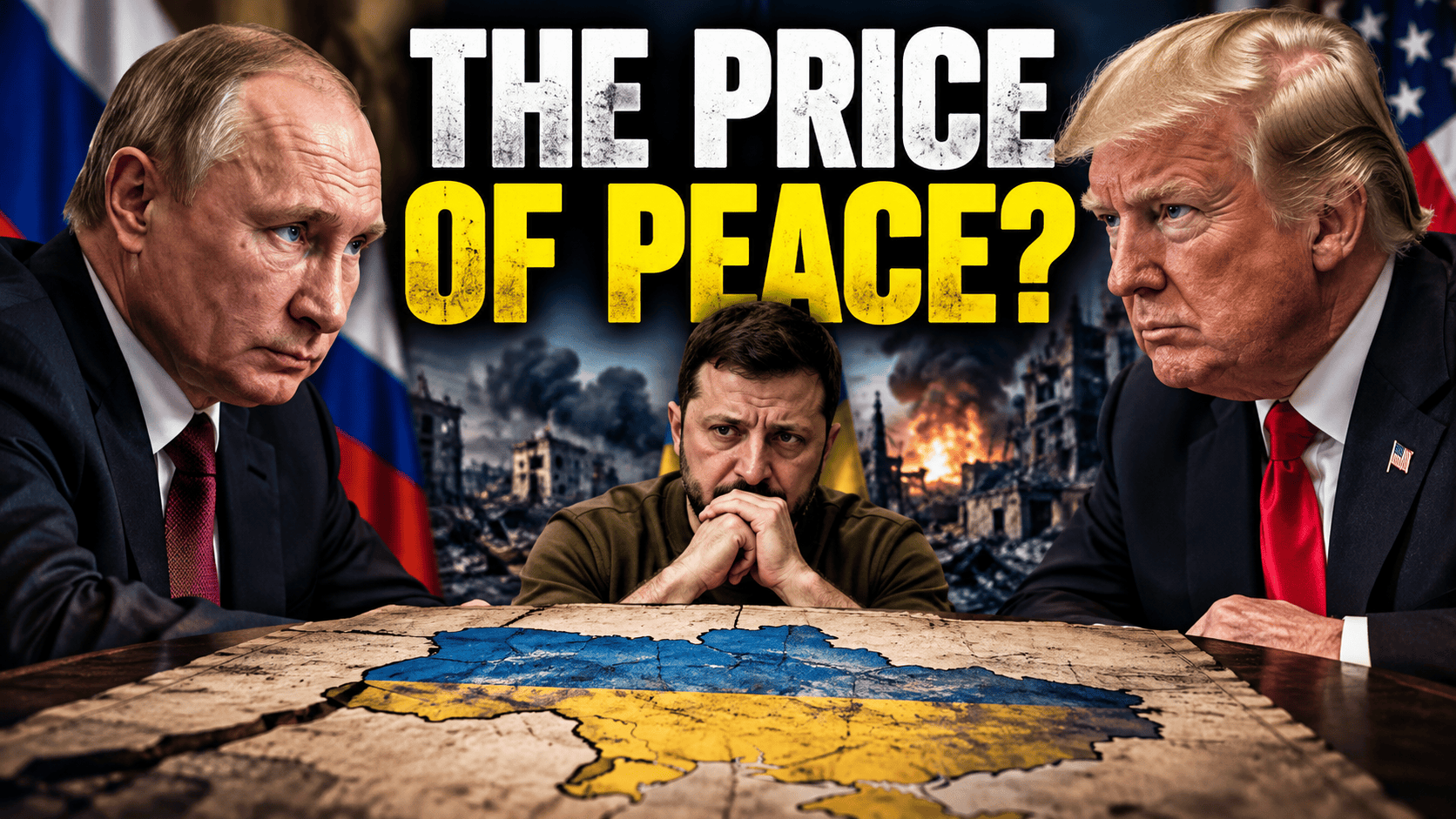
Russia is talking peace. Washington is pushing for a deal. Ukraine is fighting to protect its future. But behind the diplomatic handshakes, a much darker question is emerging: Will ending the war require Ukraine to surrender more than it can afford to lose?
Russian President Vladimir Putin welcomed U.S. special envoy Steve Witkoff to St. Petersburg on Wednesday for another round of discussions aimed at ending the war in Ukraine.
The meeting took place at the historic Constantine Palace, an impressive setting for negotiations that could determine the future of European security.
It was the ninth face-to-face meeting between Putin and Witkoff, according to Reuters. Yet despite repeated diplomatic encounters, the central disagreements remain unresolved.
The Kremlin wants concessions. Washington wants progress. Kyiv wants security guarantees that will prevent another Russian invasion.
Those are three very different objectives.
And the distance between them may prove far more important than the photographs of diplomats shaking hands.
Russia Releases American Prisoner as Peace Talks Begin
The meeting opened with a significant diplomatic gesture.
Russia announced the release of Stephen Hubbard, a 74-year-old retired American schoolteacher who had been detained since April 2022.
______________________________________________
🔴 Help keep this independent voice alive and uncensored.
Support independent journalism and help keep Chris Wick News going.
👉 Support Chris Wick on GoFundMe
Hubbard was convicted in Russia of mercenary activity and sentenced to six years and ten months in prison. His family and American lawyer have disputed the allegations.
Putin informed Witkoff that Hubbard was at an airport in St. Petersburg, preparing to return to the United States.
President Donald Trump subsequently confirmed the release and said Washington had not been required to provide anything in exchange.
For Hubbard and his family, the development represents the end of a prolonged ordeal.
But in international diplomacy, timing matters.
The release occurred as Moscow was attempting to demonstrate its willingness to cooperate with Washington on the much larger issue of Ukraine.
One American coming home is unquestionably welcome news. Whether that goodwill extends to meaningful Russian concessions on Ukraine remains another question entirely.
Trump Wants a Deal. But Is Ukraine Being Pressured Harder Than Russia?
The latest diplomatic effort follows discussions in Oslo involving Witkoff, Ukrainian President Volodymyr Zelenskyy, European leaders and NATO representatives.
American officials described those conversations as constructive, with proposals addressing Ukrainian security guarantees, economic reconstruction and Europe’s broader security arrangements.
But the public messaging coming from Washington has raised concerns.
Trump has repeatedly expressed frustration with Zelenskyy and suggested that Ukraine must become more willing to negotiate.
The president’s position reflects his determination to bring the conflict to an end.
The difficulty is that ending a war and establishing a lasting peace are not necessarily the same thing.
A ceasefire might stop the shooting temporarily. A poorly constructed agreement could leave the underlying conflict unresolved.
Russia continues to seek control over the entire Donetsk region and opposes Ukrainian membership in NATO.
Ukraine, meanwhile, faces the prospect of accepting territorial losses while attempting to secure guarantees against future aggression.
If one side is asked to surrender territory while the other retains the ability to attack again, what exactly has been achieved?
That is the uncomfortable question hovering over these negotiations.
The Intelligence Dispute Raises Another Warning
Diplomatic tensions have also been accompanied by disagreements over American intelligence and satellite support for Ukraine.
Kyiv has complained about interruptions affecting intelligence sharing and military communications.
The controversy intensified following a U.S.-Russia diesel export agreement announced earlier in October.
According to Reuters, Ukrainian officials have raised concerns about disruptions involving satellite-based military systems.
Separately, The Wall Street Journal reported allegations that SpaceX had slowed a military-grade version of its Starlink service used by Ukraine.
Reuters said it could not independently verify that report.
Elon Musk and American officials have disputed suggestions of presidential involvement, while Secretary of State Marco Rubio maintained that Washington had not withdrawn Ukraine’s access to Starlink.
Zelenskyy indicated that discussions in Oslo had produced an agreement to address some of the problems.
These distinctions matter. Allegations about deliberately restricting Ukraine’s capabilities should not be treated as established facts without supporting evidence.
Nevertheless, the broader issue deserves scrutiny.
Modern warfare depends heavily on satellite communications, intelligence sharing and missile-warning systems.
When a country relies on foreign technology to defend itself, decisions made thousands of kilometres away can have immediate consequences on the battlefield.
That dependency becomes especially sensitive when the same foreign government is negotiating with the country’s military adversary.
Putin Has Reasons to Keep Washington Talking
For Moscow, diplomatic engagement offers potential advantages beyond an immediate ceasefire.
Russia has expressed interest in restoring economic relations with the United States.
Putin’s investment envoy Kirill Dmitriev was expected to participate in the discussions, underscoring the economic dimension of the relationship.
Restored commercial ties could offer Moscow important opportunities, particularly after years of international sanctions and economic restrictions.
But negotiations involving trade, sanctions and security cannot be evaluated separately from the war itself.
Any economic agreement that benefits Russia while leaving Ukraine exposed would invite serious questions about the priorities driving the diplomatic process.
That does not mean Washington should refuse to negotiate.
Diplomacy is necessary, especially when the alternative is a prolonged war with devastating human consequences.
But effective diplomacy requires more than securing an agreement that looks successful at a press conference.
It requires examining whether the terms can actually prevent another conflict.
Could a Trump-Putin-Zelenskyy Summit Finally Happen?
American officials are exploring the possibility of direct negotiations involving Russia, Ukraine and the United States.
Zelenskyy has expressed interest in a meeting with Putin and Trump to address the central issues preventing an agreement.
Moscow, however, has maintained that such a summit would require extensive preparation.
That caution reflects the enormous distance separating the parties.
Ukraine wants reliable security commitments.
Russia wants territorial and strategic concessions.
The United States wants a diplomatic breakthrough.
European governments want to prevent an agreement that could undermine security across the continent.
A summit bringing those competing interests together would attract global attention.
But a meeting between three presidents would not, by itself, establish that peace is within reach.
The decisive issue would be whether the parties are prepared to accept enforceable commitments rather than simply announce another round of negotiations.
The Real Test Is What Happens After the Cameras Leave
There is a temptation in international politics to measure diplomatic success by the number of meetings held, statements issued or leaders brought together.
But Ukraine’s future cannot be determined by appearances.
The conflict has already imposed enormous human and economic costs.
Families have been displaced. Communities have been destroyed. Millions of Ukrainians have lived for years under the threat of attacks.
Ending that suffering should remain the central objective.
Yet a settlement that leaves Ukraine vulnerable to renewed aggression could simply postpone the next crisis.
Trump has an opportunity to pursue a consequential diplomatic achievement. Putin has an opportunity to demonstrate whether Russia is prepared to move beyond its existing demands. Zelenskyy faces the responsibility of defending Ukraine’s interests while considering the enormous costs of continued fighting.
None of those decisions will be easy.
The release of Stephen Hubbard demonstrates that diplomacy can produce concrete humanitarian results.
Whether the same negotiations can produce a credible and durable settlement for Ukraine remains uncertain.
The world does not need another peace agreement that survives only until one side decides to break it.
It needs an agreement that can withstand the realities of power, geography and competing national interests.
And until those conditions exist, every handshake in St. Petersburg should be judged against one question:
Are these negotiations bringing Ukraine closer to lasting peace — or simply making a dangerous compromise easier to sell?
Chris Wick News — Independent news. Uncomfortable questions. No political team gets a free pass.
Sources
Reuters — Putin hosts Trump envoy for new Ukraine peace talks, frees US citizen held in Russia https://www.reuters.com/world/europe/putin-hosts-trump-envoy-new-ukraine-peace-talks-frees-us-citizen-held-russia-2026-10-21/
Associated Press — Russia releases detained American Stephen Hubbard during a visit by Trump administration envoy https://apnews.com/article/2c7e34d6606be242ed4a7473e57110c7
Axios — Witkoff heads to Oslo, plans Russia trip for peace talks https://www.axios.com/2026/10/20/russia-ukraine-peace-talks-trump-witkoff-oslo