The drums of war are growing louder in the Middle East, and Washington is making little effort to hide the possibility of another devastating military confrontation with Iran.
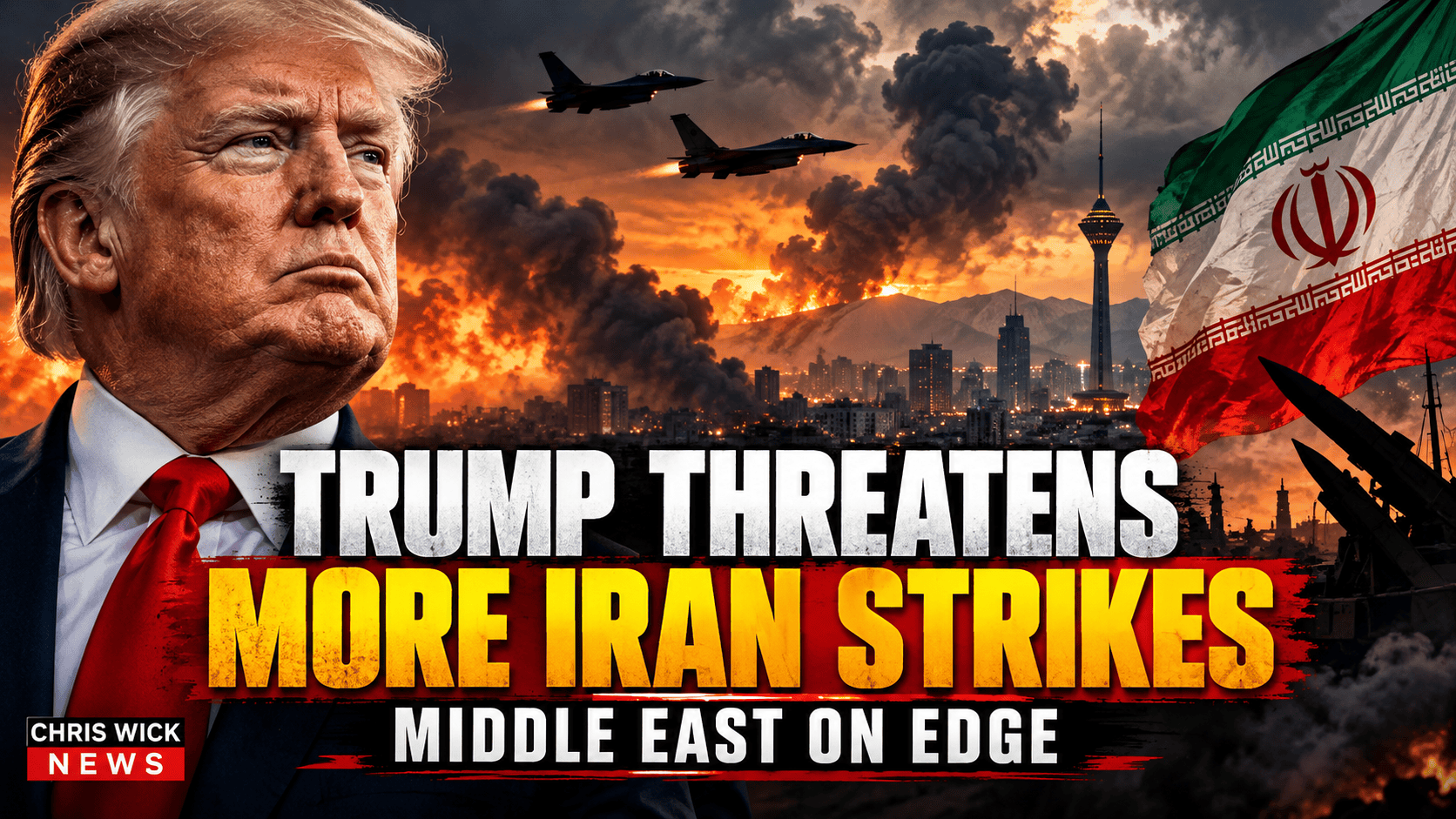
President Donald Trump has suggested that American forces could launch additional strikes against Tehran, declaring that the United States has already inflicted severe damage on Iran’s military capabilities.
But behind the language of military victory lies a much more troubling reality: a regional conflict that continues to threaten international shipping, energy supplies, economic stability, and millions of civilians.
The question is no longer simply how much destruction either side can inflict.
The question is whether anyone has a realistic plan to stop the fighting before another escalation pushes the region into an even deeper crisis.
Trump Signals Another Round of Military Strikes
Speaking to reporters at the White House on October 22, Trump defended the American military campaign against Iran and suggested that further action remained possible.
“We’ve knocked the hell out of them, and we may do it a little bit further,” Trump declared.
The president argued that previous American administrations should have confronted Iran more aggressively, maintaining that preventing Tehran from obtaining nuclear weapons remains a central objective of Washington’s military strategy.
His remarks come as reports indicate that American and Israeli military planners have examined options for renewed attacks on Iranian military installations, missile capabilities, nuclear facilities, and other strategic targets.
______________________________________________
🔴 Help keep this independent voice alive and uncensored.
Support independent journalism and help keep Chris Wick News going.
👉 Support Chris Wick on GoFundMe
However, discussing military options is not the same as authorizing an operation. As of the latest reporting, there has been no confirmed presidential decision to launch another round of strikes.
That distinction matters.
In a region already experiencing months of warfare, even the suggestion of another major offensive can intensify military preparations and increase the possibility of miscalculation.
Iran Warns That Another Attack Could Have Wider Consequences
Tehran has responded to the possibility of renewed American attacks with warnings of its own.
Iranian officials have threatened retaliation against American military positions and other targets in the region if additional strikes occur.
Reports also describe Iranian warnings that a renewed military campaign could endanger energy infrastructure and regional economic facilities.
These statements represent threats, not confirmation that such attacks will take place.
Nevertheless, the danger is unmistakable.
American military installations are spread across several Middle Eastern countries, while critical energy infrastructure and commercial shipping routes operate within reach of weapons deployed throughout the region.
A new round of strikes could therefore trigger consequences far beyond Iranian territory.
For governments attempting to contain the confrontation, the greatest concern may not be the first attack but the chain of retaliation that follows.
Strait of Hormuz Becomes a Dangerous Flashpoint
The Strait of Hormuz remains one of the most strategically important locations in the confrontation.
The narrow waterway connects the Persian Gulf with international shipping routes and plays a crucial role in the movement of oil and natural gas.
Iranian authorities have reported that seven vessels were damaged in incidents involving the strait and nearby waters within a single day.
Those claims require independent verification, particularly concerning the circumstances and responsibility for each incident.
Even so, the reports highlight the risks facing commercial shipping as military operations, mines, threats, and competing claims complicate navigation.
A prolonged disruption to the strait would have consequences extending well beyond the Middle East.
Oil markets could experience renewed volatility, transportation costs could rise, and energy-importing countries could face additional economic pressure.
For ordinary families, geopolitical instability can eventually appear in something as familiar as the price displayed at a gasoline pump.
Canada Could Feel the Economic Shock
Canada may be geographically distant from the fighting, but Canadians are not necessarily insulated from its economic consequences.
Global energy prices respond to international supply disruptions, shipping risks, and expectations about future production.
A major escalation around the Strait of Hormuz could influence crude oil prices, fuel costs, transportation expenses, and inflation expectations.
Canadian energy producers might benefit from higher crude prices, while households and businesses could face increased costs.
The outcome would depend on the duration of the disruption, global market conditions, and the response of governments and energy suppliers.
For Canadians already struggling with housing, groceries, and other essential expenses, another period of global instability would be particularly unwelcome.
Wars fought thousands of kilometres away can still reach directly into Canadian household budgets.
Military Victory Does Not Automatically Produce Peace
Washington has repeatedly emphasized the damage inflicted on Iranian military capabilities.
But destroying military installations and forcing a lasting political settlement are two very different objectives.
Iran retains the ability to threaten regional interests, while its leadership continues to resist American demands.
Meanwhile, reports suggest that Washington is considering further military action despite the absence of a diplomatic breakthrough.
That raises difficult questions about the ultimate objective of the campaign.
What specific conditions would convince Washington that the war had achieved its goals?
What would a sustainable agreement with Tehran look like?
And how many additional military operations would be required before either side considered negotiations preferable to continued confrontation?
These questions deserve serious answers.
Without clearly defined political objectives, even overwhelming military power can become trapped in a prolonged confrontation.
Diplomacy Struggles Against the Momentum of War
International diplomatic efforts continue amid warnings that another major escalation could threaten the wider region.
Middle Eastern and European officials have pursued discussions concerning regional security and the Strait of Hormuz.
Iranian Foreign Minister Abbas Araghchi has also indicated that Tehran remains open to diplomacy under conditions that could restore confidence between the opposing sides.
Washington, however, has signalled little immediate progress toward negotiations.
The competing positions reveal a familiar problem in international conflicts.
Each side wants the other to make concessions first, while military pressure is used to strengthen negotiating leverage.
But the longer the confrontation continues, the greater the danger that events on the battlefield will overwhelm whatever diplomatic opportunities remain.
The Human Cost Behind the Military Headlines
Political leaders frequently describe military operations through statistics, destroyed targets, strategic advantages, and claims of success.
For civilians living near the fighting, the experience is very different.
War threatens homes, electricity supplies, hospitals, transportation networks, employment, and the basic security required for ordinary life.
Even when attacks focus on military objectives, the consequences can spread through surrounding communities and essential services.
The prospect of further attacks against energy infrastructure and other strategically important facilities raises additional concerns about civilian harm.
International humanitarian law requires parties to distinguish military objectives from civilians and civilian objects, and prohibits indiscriminate attacks.
Those obligations do not disappear because governments believe their military objectives are justified.
The people most exposed to the consequences of escalation often have the least influence over the decisions that produce it.
A Dangerous Moment With No Guaranteed Exit
Trump’s latest remarks leave the Middle East facing another period of uncertainty.
American military power remains formidable. Iran continues to threaten retaliation. Israel remains deeply involved in the regional confrontation. International shipping faces serious risks.
And diplomatic efforts have yet to produce a durable resolution.
The danger is not simply that another attack could occur.
It is that every new attack could create pressure for an even larger response, pushing the conflict further away from a negotiated settlement.
History offers repeated examples of governments entering military confrontations with confidence, only to discover that ending a war is far more difficult than beginning one.
For Washington, Tehran, and their regional partners, that lesson should matter more than another declaration of battlefield success.
Because when leaders promise that one more round of military strikes will deliver security, the world has every reason to ask what happens if it doesn’t.
Chris Wick News — Independent reporting, analysis, and commentary on the events shaping our world.
Sources
1. Al Jazeera — Iran war live: Trump hints new strikes, says US knocked ‘hell out’ of Iran https://www.aljazeera.com/news/liveblog/2026/10/23/trump-hints-new-strikes-says-us-knocked-hell-out-of-iran
2. Anadolu Agency — Trump says US ‘may do it a little bit further’ in Iran https://www.aa.com.tr/en/us-israel-iran-war/trump-says-us-may-do-it-a-little-bit-further-in-iran/4097848
3. Iran International — Trump says US could go further in Iran war, Tehran threatens wider response https://www.iranintl.com/en/liveblog/202610187555
4. Gulf News — Middle East war: Trump warns US may hit Iran further as IRGC threatens US bases https://gulfnews.com/world/mena/middle-east-war-trump-warns-us-may-hit-iran-a-little-bit-further-as-irgc-threatens-us-bases-netanyahu-calls-for-regime-change-in-tehran-1.500720580