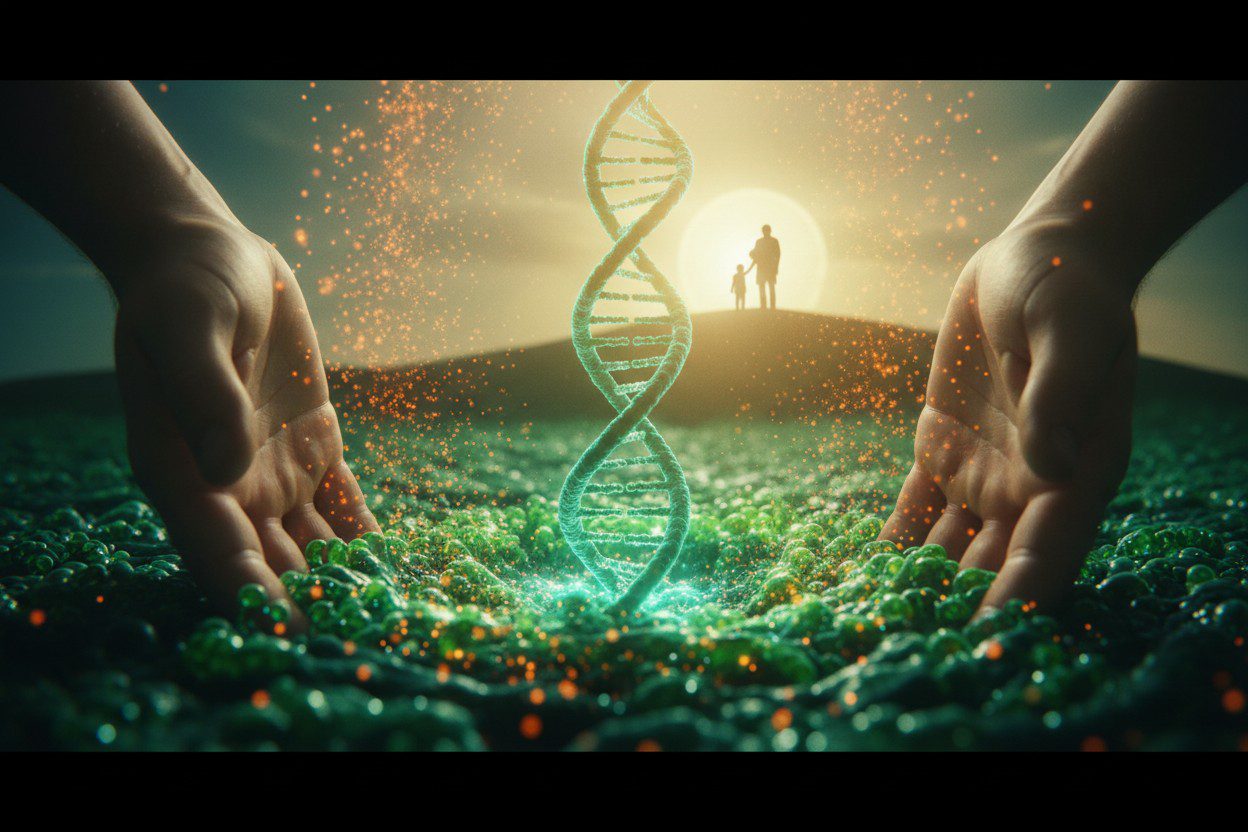
The debate over whether scientists should be allowed to edit human embryos is back in the spotlight — and it’s raising the same uncomfortable question that has followed gene-editing technology for years: just because we can, does it mean we should?
In a recent discussion published by Children’s Health Defense, available here: https://childrenshealthdefense.org/defender/should-scientists-edit-dna-human-embryos/, the issue is framed less as a technical breakthrough and more as a growing ethical and societal fault line. At the center of it is CRISPR and newer gene-editing tools that now make it possible to alter DNA at the earliest stages of human life.
These technologies were originally developed with one promise in mind — to prevent serious genetic diseases before birth. But as the science advances, the line between therapy and enhancement becomes harder to define. Once DNA in embryos can be rewritten with precision, questions emerge far beyond medicine: who decides what counts as a “fix,” and what happens when preferences, profit, or politics enter the equation?
Researchers and ethicists have been warning for years that embryo editing sits in a uniquely sensitive category of science. Any changes made at this stage would not just affect one individual — they would be passed down through future generations. That permanence is what makes the topic so controversial, even among scientists who otherwise support gene-editing research.
There is also the issue of safety. While laboratory progress has been significant, early experiments in human embryos have shown inconsistent results, including incomplete editing and unintended genetic changes. These technical limitations are part of why many countries have strict rules or outright bans on using edited embryos to start pregnancies.
At the same time, interest in the field is growing, driven by the possibility of eliminating inherited diseases that currently have no cure. That tension — between medical hope and ethical risk — is what keeps the debate alive and unresolved.
For now, most of the discussion remains in research settings and policy circles. But as the tools become more precise and more accessible, the question is shifting from theory to potential reality.
And that is where the disagreement sharpens: whether editing human embryos represents the next step in medicine, or a boundary science should not cross.