In the evolving diplomatic signal captured in the Trump Iran Strait Hormuz deal, former U.S. President Donald Trump has indicated that a war-related agreement with Iran may be approaching completion, even as military and maritime tensions continue to build around the Strait of Hormuz. The statement arrives at a moment when regional actors are already operating under heightened alert levels, and shipping routes remain sensitive to even minor escalations.
The remarks, reported by Reuters, suggest progress in backchannel discussions involving the United States, Iran, and regional intermediaries. Yet on the ground—and at sea—no corresponding de-escalation has been confirmed, and commercial navigation through the Strait of Hormuz continues under what analysts describe as a “high-risk stability.”
What remains unclear is whether diplomatic signaling is outpacing operational reality, or whether negotiations are genuinely nearing a breakthrough that has yet to be reflected in military posture or regional behavior.
What Actually Happened: Trump Iran Strait Hormuz deal
According to reporting from Reuters (https://www.reuters.com/world/middle-east/trump-says-iran-war-deal-close-strait-hormuz-tensions-linger-2026-06-12/), Donald Trump stated that a war-related agreement involving Iran is “close,” framing the development as part of ongoing efforts to reduce escalation risks in the Middle East. The comments were made against the backdrop of persistent uncertainty in maritime security near the Strait of Hormuz, a critical passage for global oil shipments.
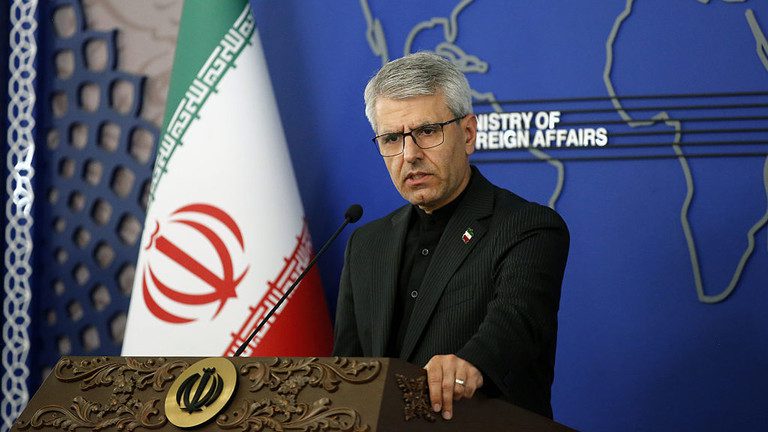
U.S. government officials have not independently confirmed the timeline described in Trump’s remarks, and Iranian state-aligned messaging has remained cautious, neither fully endorsing nor rejecting the claim of an imminent deal. Within Washington policy circles, the statement has been received as politically significant but operationally unverified.
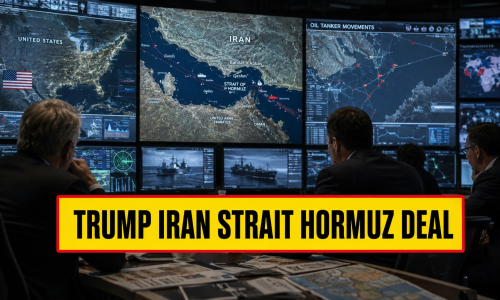
The Strait of Hormuz remains the central pressure point in this equation. Even minor disruptions there tend to ripple through global energy markets, making any suggestion of a “close deal” heavily scrutinized by both defense analysts and shipping insurers.
Why This Moment Matters
The Strait of Hormuz has long functioned as a strategic chokepoint, and any perceived shift in Iran–U.S. relations immediately triggers global attention. In this case, Trump’s remarks introduce the possibility of a diplomatic off-ramp at a time when military signaling has not yet de-escalated.
Markets typically react not to confirmed agreements, but to perceived probability shifts. The ambiguity surrounding the Trump Iran Strait Hormuz deal therefore creates a dual-track reality: diplomatic optimism on one side, and operational caution on the other.
For energy-dependent economies, even the suggestion of improved relations can temporarily stabilize pricing expectations. However, without verification from institutional actors such as the U.S. State Department or Iran’s Foreign Ministry, the statement remains an isolated political signal rather than a confirmed policy shift.
______________________________________________
🔴 Help keep this independent voice alive and uncensored -> Buy us a Coffee <-
Related analysis: /analysis/strait-of-hormuz-risk-patterns
The Pattern Behind the Event
This is not the first time high-level figures have signaled near-breakthroughs in U.S.–Iran negotiations that later unfolded more slowly on the ground. The pattern often follows a familiar structure: political statements emerge first, followed by institutional clarification, and finally by either partial implementation or quiet stagnation.
Donald Trump’s communication style, particularly on foreign policy matters, has historically emphasized deal proximity and negotiation momentum. In contrast, formal diplomatic channels tend to move through verification layers that delay confirmation.
Iran’s strategic posture adds another layer. Tehran often calibrates its responses carefully, especially when maritime chokepoints like the Strait of Hormuz are involved, where signaling strength is often as important as actual deployment.
This mismatch between political narrative and institutional confirmation is what keeps analysts cautious, even when headlines suggest movement.
Where the Tensions Are Building
Despite talk of a potential agreement, maritime monitoring reports continue to highlight elevated risk conditions in and around the Strait of Hormuz. Commercial shipping lanes remain under surveillance, and insurance premiums for vessels transiting the region have not yet adjusted downward in a meaningful way.
Regional actors—including Gulf states and naval coalitions—continue to maintain readiness levels that reflect uncertainty rather than resolution. This suggests that operational planning has not yet aligned with diplomatic messaging.
At the same time, internal divisions within policy communities in Washington complicate interpretation. Some view Trump’s statement as a negotiation signal intended to accelerate talks, while others see it as premature framing ahead of any verified diplomatic outcome.
The absence of synchronized messaging across institutions keeps the situation fluid, with no clear consensus on whether escalation risk is genuinely decreasing.
What This Could Signal Next
If the Trump Iran Strait Hormuz deal narrative gains institutional confirmation, it could mark a shift toward reduced maritime tension and a gradual stabilization of energy corridor security. That would likely be reflected first in shipping advisories and insurance adjustments, rather than immediate political announcements.
However, if no follow-through emerges from either U.S. or Iranian official channels, the statement may be absorbed into a broader pattern of episodic diplomatic signaling without structural change. In that case, the Strait of Hormuz would remain a persistent flashpoint shaped more by deterrence than resolution.
For now, the gap between political language and operational reality remains the defining feature of the moment. What happens next depends less on the statement itself, and more on whether institutions move to validate it—or quietly distance themselves from it.
The uncertainty itself may be the most important signal.
About the Author