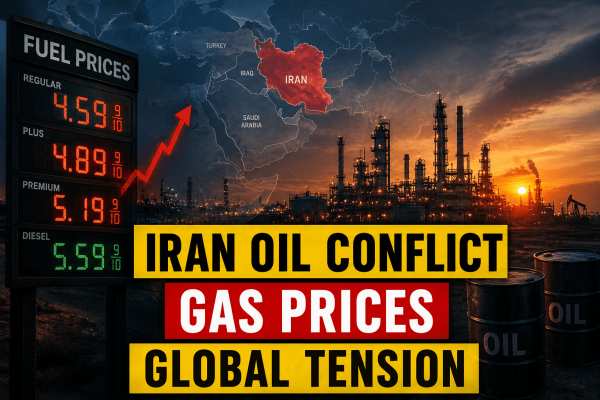
Rising fuel prices signal growing global tension as Iran-linked oil risks shake energy markets
Something isn’t adding up.
As tensions tied to Iran quietly stretch on, the usual levers Washington relies on to stabilize fuel prices are starting to look weaker — or already exhausted.
What’s left isn’t a clear plan. It’s a narrowing set of imperfect choices.
What Actually Happened
U.S. officials are facing a difficult reality: there are limited tools available to quickly bring down gasoline prices if conflict linked to Iran continues to disrupt global oil flows.
A Reuters report outlines how traditional responses — such as tapping strategic reserves or applying diplomatic pressure on oil-producing allies — may not be enough in the current environment.
Source: https://www.reuters.com/business/energy/white-house-has-few-tools-gas-price-relief-iran-war-drags-2026-05-14/
The Strategic Petroleum Reserve, once a reliable buffer, has already been drawn down in previous interventions. Releasing more oil now carries political and logistical risks.
At the same time, persuading major producers like Saudi Arabia to increase output isn’t guaranteed — especially in a market already shaped by tight supply and shifting alliances.
Why This Moment Matters
Fuel prices are never just about energy.
They ripple outward into food costs, transportation, manufacturing, and ultimately public sentiment. When gasoline prices rise sharply, they tend to move faster than wages or policy responses.
______________________________________________
🔴 Help keep this independent voice alive and uncensored -> Buy us a Coffee <-
That creates pressure — not just economically, but politically.
If disruptions tied to Iran intensify, the margin for error shrinks quickly. Policymakers aren’t just managing supply and demand anymore. They’re managing expectations in a system that reacts instantly to uncertainty.
The Pattern Behind the Event
There’s a broader pattern emerging beneath this moment:
Crisis response tools are being used more frequently — but with diminishing impact.
Strategic reserves get smaller each time they’re tapped.
Diplomatic influence becomes less predictable as global alliances diversify.
Markets react faster than governments can respond.
What once worked as short-term stabilization is starting to look like temporary delay.
Where the Tensions Are Building
The pressure isn’t isolated to one region.
Iran-linked risks intersect with key shipping routes, particularly in areas critical to global oil transit. Even the perception of disruption can push prices upward before any physical supply is affected.
Meanwhile, major producers are navigating their own interests, balancing market stability with revenue goals.
That creates a fragmented response environment — one where coordination becomes harder just as stakes increase.
What This Could Signal Next
If the current trajectory holds, the next phase may not be defined by sudden shocks — but by sustained strain.
Higher energy costs could settle in rather than spike and fall.
Policy responses may become more reactive than preventative.
And markets may begin pricing in instability as a baseline, not an exception.
That shift changes how everything else behaves — from investment decisions to consumer confidence.
The deeper question isn’t whether prices will move.
It’s whether the systems designed to control them still carry the same weight they once did.
About the Author