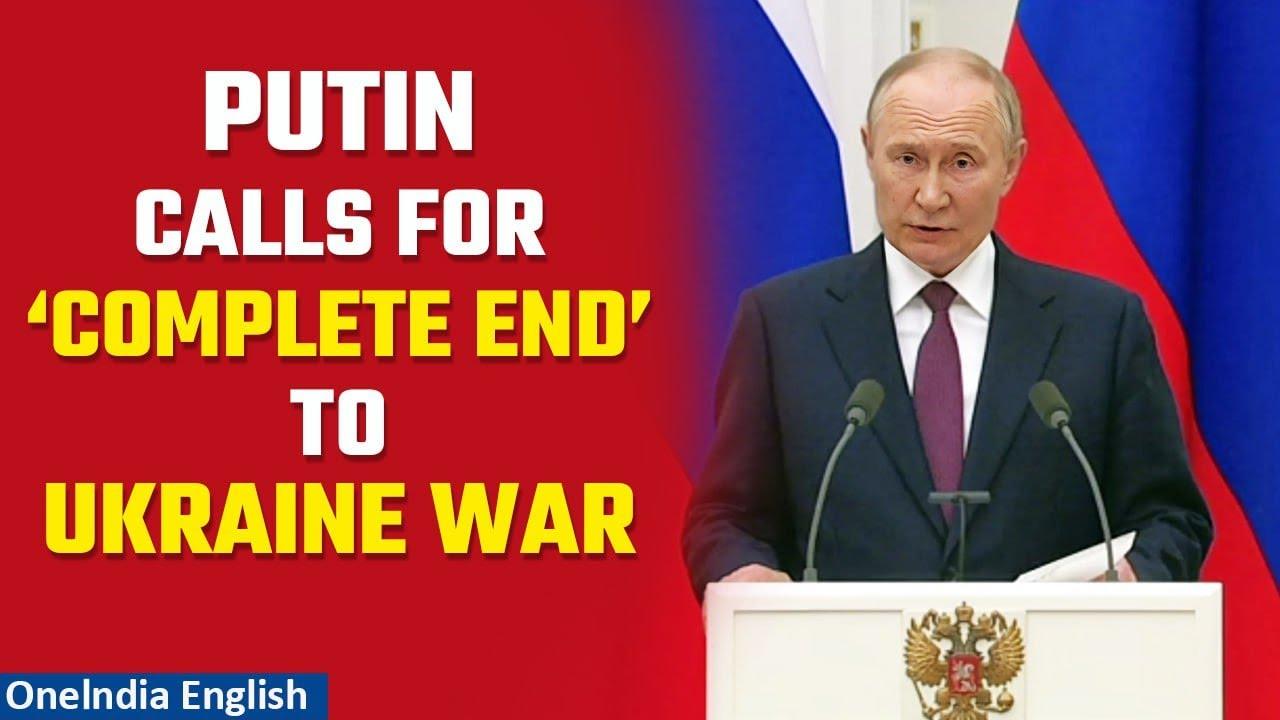
Russian President Vladimir Putin has called for a full resolution of the Ukraine conflict, insisting that merely establishing a ceasefire or freezing hostilities won’t suffice. This statement followed his meeting with Hungarian Prime Minister Viktor Orban in Moscow, where they discussed potential peaceful and diplomatic solutions.
A Push for Lasting Peace
During a joint press conference with Orban, Putin emphasized the need for a “complete and final end of the conflict.” He argued that a simple ceasefire would only give the Kiev regime a chance to recover losses, regroup, and rearm, which is not in Russia’s interest. Instead, Putin underscored the necessity of meeting specific conditions to ensure a permanent resolution.
Conditions for Ending the Conflict
Putin outlined key conditions for the conflict’s resolution. He insisted that Kiev must withdraw its forces from Donbass and the former Ukrainian regions of Zaporozhye and Kherson, which have been incorporated into Russia following public referendums. Putin stated that these are non-negotiable prerequisites for peace.
Further Considerations
The Russian leader mentioned that additional conditions would need to be addressed through detailed discussions. Previously, Putin had proposed an immediate ceasefire, conditional on Ukraine’s agreement to certain terms. These included the withdrawal of Ukrainian forces from all territories claimed by Russia and legal guarantees that Kiev would not pursue NATO membership. Despite Kiev and its Western allies rejecting this plan, Putin reiterated that the offer remains open and urged Ukrainian leaders to reconsider.
Orban’s Perspective
At the press conference, Viktor Orban acknowledged the significant gap between Moscow’s and Kiev’s positions on the conflict. He emphasized that bridging this gap would require considerable effort and negotiation. Orban’s visit to Moscow highlights Hungary’s interest in seeking a peaceful resolution, though he acknowledged the complexity of the task ahead.
Ukraine’s Stance
Putin suggested that Ukraine, under its current leadership, appears unprepared to cease hostilities and pursue peace. He implied that the Ukrainian authorities are determined to continue the conflict until a decisive victory, a stance that complicates diplomatic efforts.
International Reactions and Prospects for Peace
The international community has closely watched these developments, with many Western nations skeptical of Russia’s intentions. The West has generally supported Ukraine’s stance, viewing Russia’s demands as excessive and uncompromising. Nonetheless, the call for a complete end to the conflict, as opposed to a temporary ceasefire, has opened a dialogue about the long-term stability in the region.
Diplomatic Efforts and Future Negotiations
As diplomatic efforts continue, the focus will be on finding a mutually acceptable path forward. The stakes are high, with both regional stability and international relations hanging in the balance. The conditions set by Russia, the resistance from Ukraine, and the involvement of Western powers create a complex and challenging environment for peace negotiations.
Conclusion
In summary, Putin’s call for a complete end to the Ukraine conflict highlights Russia’s firm stance on the issue. The conditions outlined by Russia, particularly the withdrawal of Ukrainian forces from certain regions and assurances against NATO membership, remain pivotal points of contention. As international diplomats and leaders work towards a resolution, the world watches with bated breath, hoping for a peaceful and lasting solution to this prolonged conflict.