The global stage shook once again as U.S. President Donald Trump openly blasted some of Washington’s closest allies for formally recognizing Palestinian statehood. In a move that defies decades of U.S. and Israeli opposition, countries like France, the UK, Canada, and Australia threw their weight behind a two-state solution during last week’s UN General Assembly.
Standing next to Israeli Prime Minister Benjamin Netanyahu at the White House, Trump dismissed the recognition as “foolish,” while admitting European leaders are “very tired of what’s been going on for so many decades.” But beneath Trump’s scorn lies a growing rift between the United States and its allies over how peace in Gaza can—or should—be achieved.
A Deepening Divide Between Allies
For Europe, the recognition of Palestine is not symbolic—it is a deliberate step to push forward the two-state solution, a vision that has been stalled for generations. Macron called it “a defeat for Hamas and for those who incite hatred,” while the UK insisted Hamas would play no role in Palestine’s future governance.
For Trump and Netanyahu, however, these moves undermine their carefully crafted roadmap for Gaza. Their plan hinges on Hamas disarmament, hostage exchanges, and a transitional government stripped of any role for the Palestinian Authority. By recognizing Palestine now, Europe effectively challenges the U.S.-Israeli grip on what the next phase of the Middle East should look like.
Netanyahu and Trump’s Hardline Vision
Netanyahu stood firmly with Trump, thanking him for making it clear that the Palestinian Authority “could have no role whatsoever in Gaza.” He warned that Israel would “finish the job” militarily if Hamas refused to comply with Trump’s peace framework.
The message is clear: while Europe seeks to recognize Palestinian statehood as a step toward peace, Trump and Netanyahu see it as emboldening Hamas and undermining Israel’s security.
The Human Cost That Overshadows Diplomacy
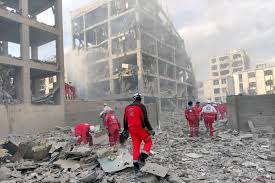
Since October 2023, more than 66,000 Palestinians have been killed in Gaza. Behind the diplomatic chess moves and fiery rhetoric, the human toll is staggering. Recognition of Palestine is, to many, a statement that the world cannot wait for U.S.-Israeli-approved conditions while civilians continue to die.
Yet for Trump, this recognition is not progress—it is betrayal. His rebuke of America’s closest allies highlights just how fractured the international approach to Gaza has become.
A World Split on the Path to Peace
The recognition of Palestine may mark a turning point in global politics. For Europe, it’s a step toward ending a cycle of violence. For Trump, it’s a reckless gamble that risks empowering Hamas.
The question is whether this growing divide will force Washington to soften its hardline stance—or whether it will double down, leaving allies and adversaries alike to chart their own course in one of the most volatile conflicts of our time.
About the Author

______________________________________________
🔴 Support Independent Journalism
This work is independently produced without corporate funding.
If you value it, a small donation helps keep it going and supports a senior creator continuing this work.
👉 Support here: I NEED Your Help Today