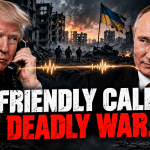




In a move that left many uneasy, the White House has quietly decided not to slap tariffs on Russia—a country at the heart of a brutal and grinding war—citing “ongoing peace negotiations” as the reason. But behind this decision lies something more unsettling, something that reeks of shadow games and backroom dealings.
Kevin Hassett, director of the White House Economic Council, tried to keep things tidy in an interview with ABC. “We’re in the middle of delicate negotiations,” he said. That’s why Russia was left untouched when President Trump dropped new tariffs on nations like China, Japan, and the European Union—a sweeping move he claimed was meant to correct global trade imbalances.
But Russia? Russia was spared. Along with Belarus. Cuba. North Korea. A grim list of nations that often find themselves on the fringes of diplomacy—or deep in the heart of darkness.
Why? What’s really happening here?
Hassett insisted the administration didn’t want to “conflate the two issues”—trade and the bloody war in Ukraine. But the timing couldn’t feel more eerie. While the U.S. was punishing its allies and rivals alike, it kept the knife sheathed for Russia.
ABC’s George Stephanopoulos pressed him: “Is this the right thing to do?” Hassett dodged, claiming it wasn’t wise to “put a whole bunch of new things on the table” during negotiations that could, as he said, affect “so many American, Ukrainian, and Russian lives.” His words felt scripted—like a politician walking a tightrope over a minefield.
Meanwhile, whispers of progress in U.S.-Russia talks swirl in the shadows. A ceasefire? Possibly. But at what cost? And who is paying the price?
Behind closed doors in Washington, Russian emissaries—like President Putin’s economic envoy Kirill Dmitriev—are meeting with top American officials and power brokers. These are the first such high-level visits since the war began. And no one is saying much about what’s being discussed.
There’s something haunting about it all.
______________________________________________
🔴 Help keep this independent voice alive and uncensored.
Support independent journalism and help keep Chris Wick News going.
👉 Support Chris Wick on GoFundMe
Just this week, Treasury Secretary Scott Bessent added another layer to the murk. Speaking to Fox News, he casually explained that America doesn’t “trade meaningfully” with Moscow anymore, and sanctions were already “doing the work that tariffs would.”
That might sound logical—if you ignore the steady drip of contradictions. U.S. imports from Russia dropped to around $3 billion last year, a 34% plunge. So why even mention tariffs if sanctions are enough?
Because something else is happening.
What’s being traded in those quiet rooms isn’t just goods—it’s influence, power, maybe even lives. While the public is distracted by headlines about inflation and election drama, a quiet dance with the devil continues behind the curtains.
And in the middle of it all, Ukraine bleeds.


And in the middle of it all, Ukraine bleeds.