





It happened.
We were told it was over.
And then… it moved on too quickly.
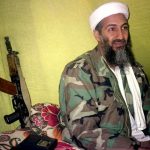
The official account of the Osama bin Laden death evidence was delivered with certainty. Clean. Final. Almost rehearsed in its clarity. A decade-long hunt ended in a single night, followed by a burial few could verify and a narrative that settled faster than expected.
At first, that felt like closure.
But the details — or more precisely, the absence of them — never fully settled.
No publicly released photos.
No video confirmation.
No independently reviewed autopsy report.
No accessible death certificate.
DNA confirmation mentioned, but never shown in a way the public could examine.
For an event framed as one of the most significant operations in modern history, the lack of verifiable evidence feels unusually complete.
This becomes clearer when looking at other moments of similar global importance. Even under layers of classification, fragments tend to surface. Documentation leaks. Witness accounts. Something tangible that grounds the event beyond official statements.
Here, the record feels… sealed.
The Evidence That Never Arrived
There was an expectation — not unreasonable — that something would eventually emerge. A photograph. A report. Even partial confirmation through secondary channels.
It never did.
Instead, the narrative remained intact, but unsupported in ways people could independently examine. Over time, that absence stopped being part of the conversation.
Not because it was resolved.
But because attention shifted.
A similar pattern appeared in other operations where urgency replaced transparency. Information arrives fully formed, leaving little room for scrutiny. And once accepted, it becomes increasingly difficult to revisit without resistance.
The Quiet Pattern Behind High-Profile Events
What happened next raised more questions, though they rarely reached the surface. The media cycle moved on. Public focus shifted. And the expectation to question faded quietly into the background.
This connects to a broader shift in how information is handled during critical moments. Speed takes priority. Certainty is presented early. And verification — if it happens at all — comes later, often out of view.
When Absence Becomes Normal
Over time, something else happens.
People adjust.
The lack of evidence stops feeling unusual. It becomes part of the accepted structure of events — especially those tied to national security or classified operations.
But that normalization creates a subtle gap.
Not one that proves anything outright.
But one that never fully closes.
A Story That Holds — Without Being Held
The Osama bin Laden death evidence remains a complete narrative on the surface. It holds together. It’s widely accepted. Rarely challenged in mainstream discussion.
And yet, it rests on information the public cannot independently verify.
That contradiction sits quietly beneath it all.
Not loud enough to disrupt the story.
But persistent enough to be noticed by those paying closer attention.
And once you see it, it’s difficult to unsee.
What just happened in intelligence transparency may change how this is understood
A deeper look at this pattern reveals something unexpected
This may connect to a broader shift that’s quietly underway
______________________________________________
Help Keep Independent Journalism Alive & Support a Senior
Even a small contribution to my GoFundMe helps me continue this work and get a used car to stay mobile.


