You don’t have to live anywhere near the Middle East to eventually feel the economic consequences of what’s happening there.
You may feel it when you fill your gas tank. You may see it in transportation costs, food prices and the price of products that have travelled thousands of kilometres before reaching a store near you.
The connection is one word:
Oil.
Brent crude settled Friday at roughly $104 a barrel after climbing above $106 during the previous session as markets reacted to renewed concerns about Middle Eastern oil supplies.
And that number tells only part of the story.
The bigger issue is what happens when conflict threatens not one, but several routes used to move enormous quantities of energy around the world.
The War Doesn’t Stop at the Border
It’s easy to look at a war thousands of kilometres away and assume its economic consequences will remain there.
Modern economies don’t work that way.
______________________________________________
🔴 Help keep this independent voice alive and uncensored.
Support independent journalism and help keep Chris Wick News going.
👉 Support Chris Wick on GoFundMe
Oil moves on tankers.
Tankers require insurance.
Ships need secure routes.
Trucks and trains burn fuel.
Factories require energy.
Food must be grown, processed, refrigerated and transported.
Almost every stage adds another cost.
When oil becomes more expensive — or simply more dangerous and expensive to transport — those additional costs can begin moving through the global economy.
Eventually somebody pays them.
More often than not, that somebody is the consumer.
Hormuz Is More Than a Name on a Map
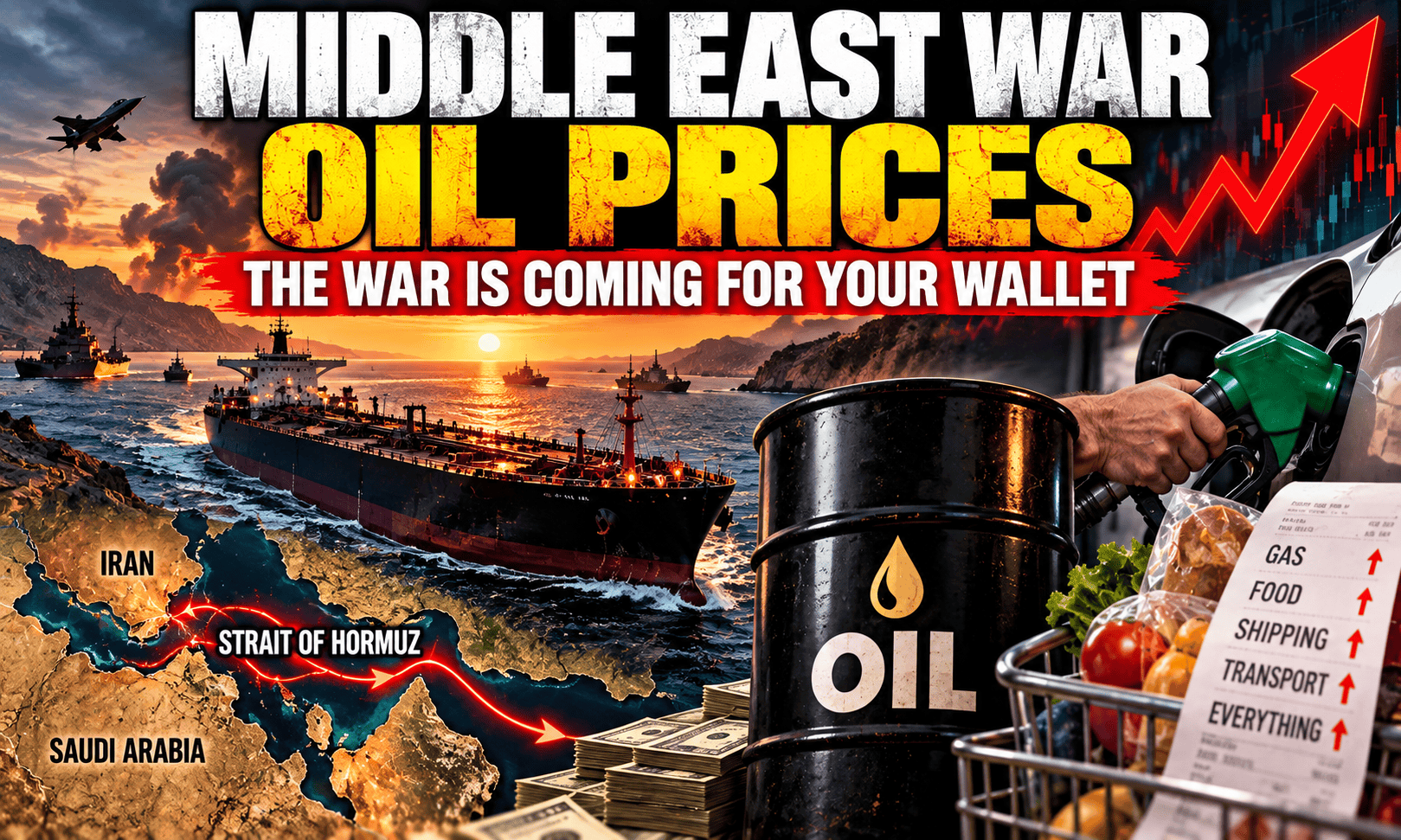
The Strait of Hormuz has become one of the critical pieces of this story.
It is a narrow maritime passage connecting the Persian Gulf with the Gulf of Oman and the wider global shipping network.
Under normal circumstances, most people outside the energy business probably wouldn’t spend much time thinking about it.
War changes that.
When security deteriorates around a strategically important shipping corridor, traders aren’t only considering today’s oil supply.
They’re trying to calculate tomorrow’s risk.
Will tankers be able to move safely?
Will shipping traffic return to normal?
Could another attack occur?
Will diplomacy reduce tensions?
Those questions can affect prices before anyone actually runs out of oil.
That is one reason geopolitical uncertainty can become an economic cost of its own.
Saudi Arabia Faces Another Problem
Hormuz isn’t the only concern.
The situation involving Yemen’s Houthis has created additional uncertainty around Saudi Arabia and alternative energy infrastructure and shipping routes.
That matters because alternatives become increasingly important when the primary route is threatened.
Think about it like a highway system.
If the main highway becomes dangerous or inaccessible, traffic moves to another road.
But what happens if the alternative route also becomes vulnerable?
Suddenly the problem isn’t simply inconvenience.
It’s resilience.
How many options remain if something else goes wrong?
That’s the question energy markets are trying to price.
Why Oil Can Reach Into Almost Everything
People sometimes hear “oil prices” and immediately think gasoline.
That’s understandable, but the economic reach is much broader.
Diesel moves trucks.
Ships move commodities and manufactured goods.
Aircraft move cargo.
Farm equipment requires fuel.
Plastics and petrochemicals are used throughout modern manufacturing.
Businesses facing higher transportation or production costs eventually have choices to make.
Absorb those costs and accept smaller margins.
Cut costs somewhere else.
Or raise prices.
When enough companies choose the third option, consumers begin seeing the consequences.
Not necessarily overnight.
But gradually.
A little more here.
Another increase there.
Until something happening thousands of kilometres away starts showing up on a household budget.
The Invisible Cost: Insurance
There is another part of this story that doesn’t receive nearly as much public attention.
Insurance.
Moving a massive tanker through an area considered dangerous isn’t the same as moving it through peaceful waters.
Risk has a price.
When insurers believe the probability of attack, damage or loss has increased, the economics of shipping can change.
That means a barrel of oil doesn’t have to disappear for instability to become expensive.
The cost of safely moving that barrel can increase.
The ship still sails.
The oil still arrives.
But the journey costs more.
And somewhere down the economic chain, somebody absorbs that additional expense.
Diplomacy Can Move Markets Too
There is another side to this.
Markets don’t react only to missiles and attacks.
They react to diplomacy.
Reports of potential US-Iran diplomatic progress and the possibility of reopening or normalizing traffic through the Strait of Hormuz have already influenced oil prices.
That tells us something important.
The market isn’t simply pricing today’s war.
It’s constantly trying to calculate what tomorrow looks like.
One promising diplomatic development can reduce fears.
One attack can bring them roaring back.
That’s why oil prices can move dramatically even when the world’s physical supply hasn’t changed by the same magnitude.
Markets trade expectations as much as reality.
This Is Where War Becomes Personal
People understandably think about war in human terms first.
Lives lost.
Families displaced.
Cities damaged.
Those consequences dwarf arguments about financial markets.
But wars also create economic shockwaves that spread far beyond the battlefield.
And those shockwaves don’t ask whether you supported the war.
They don’t care which political party you voted for.
They don’t care whether you live in Canada, the United States, Europe or somewhere else entirely.
If your economy depends on global transportation and energy — and virtually every modern economy does — major disruptions eventually find a way into everyday life.
Watch Diesel, Not Just Gasoline
Gasoline gets most of the public attention because drivers see the price displayed on giant signs every day.
But diesel deserves just as much attention.
Diesel powers an enormous amount of the machinery that moves goods through an economy.
Trucks delivering groceries.
Agricultural machinery producing food.
Construction equipment.
Industrial transportation.
When diesel becomes significantly more expensive, businesses throughout the supply chain face additional costs.
Those costs don’t necessarily appear on a receipt labelled “Middle East war surcharge.”
They become part of the price.
That’s what makes the economic consequences of distant conflict so easy to underestimate.
The Grocery Store Can Be the Final Stop
Consider something as ordinary as food.
A farmer may use fuel.
A processing facility requires energy.
The product is transported.
It may need refrigeration.
It goes through a distribution centre.
Then another truck takes it to the supermarket.
Each step represents energy, transportation and operating costs.
That doesn’t mean every increase in grocery prices can simply be blamed on oil. Food prices are influenced by many factors.
But sustained increases in energy and transportation expenses can add pressure throughout that chain.
This is where geopolitics stops being an abstract discussion on television.
It arrives at the checkout.
The World Is More Connected Than We Like to Admit
Modern globalization created extraordinary efficiencies.
Goods can move around the planet at remarkable speed.
Energy produced in one region powers economies somewhere else.
Manufacturers can obtain components from multiple continents.
Consumers benefit enormously from those networks when everything functions properly.
But interconnectedness has another side.
Disruption travels too.
A conflict near a critical shipping route can affect markets thousands of kilometres away.
An attack on energy infrastructure can change expectations almost instantly.
A tanker route most people have never heard of can suddenly matter to millions of household budgets.
That’s the world we’ve built.
Highly connected.
Highly efficient.
And sometimes surprisingly fragile.
The Real Question Isn’t Just Where Oil Goes Next
Oil could rise.
It could fall.
Diplomacy could succeed and reduce the geopolitical risk premium.
Supply routes could stabilize.
Or another escalation could send markets moving in the opposite direction.
Predicting the exact price weeks or months from now would be speculation.
The more important point is already visible.
The economic distance between a battlefield and your household isn’t nearly as large as the physical distance on the map.
Wars don’t stay conveniently inside national borders anymore.
Their consequences travel.
Through tankers.
Through insurance premiums.
Through shipping contracts.
Through diesel pumps.
Through distribution centres.
Through grocery stores.
And eventually, through your wallet.
You don’t have to live anywhere near the battlefield to get the bill.