Donald Trump promised Americans relief from crushing prices. Instead, inflation is climbing, household budgets are tightening, and Republicans are staring down a potentially devastating midterm election. The economy Trump calls a golden age is looking considerably darker from the grocery checkout line.
The Golden Age Americans Cannot Afford
There is something deeply revealing about a president celebrating economic prosperity while millions of Americans are struggling to pay their bills.
Donald Trump returned to the White House promising to defeat inflation, bring down everyday costs, and restore America’s economic strength.
Nearly two years later, the numbers are telling a different story.
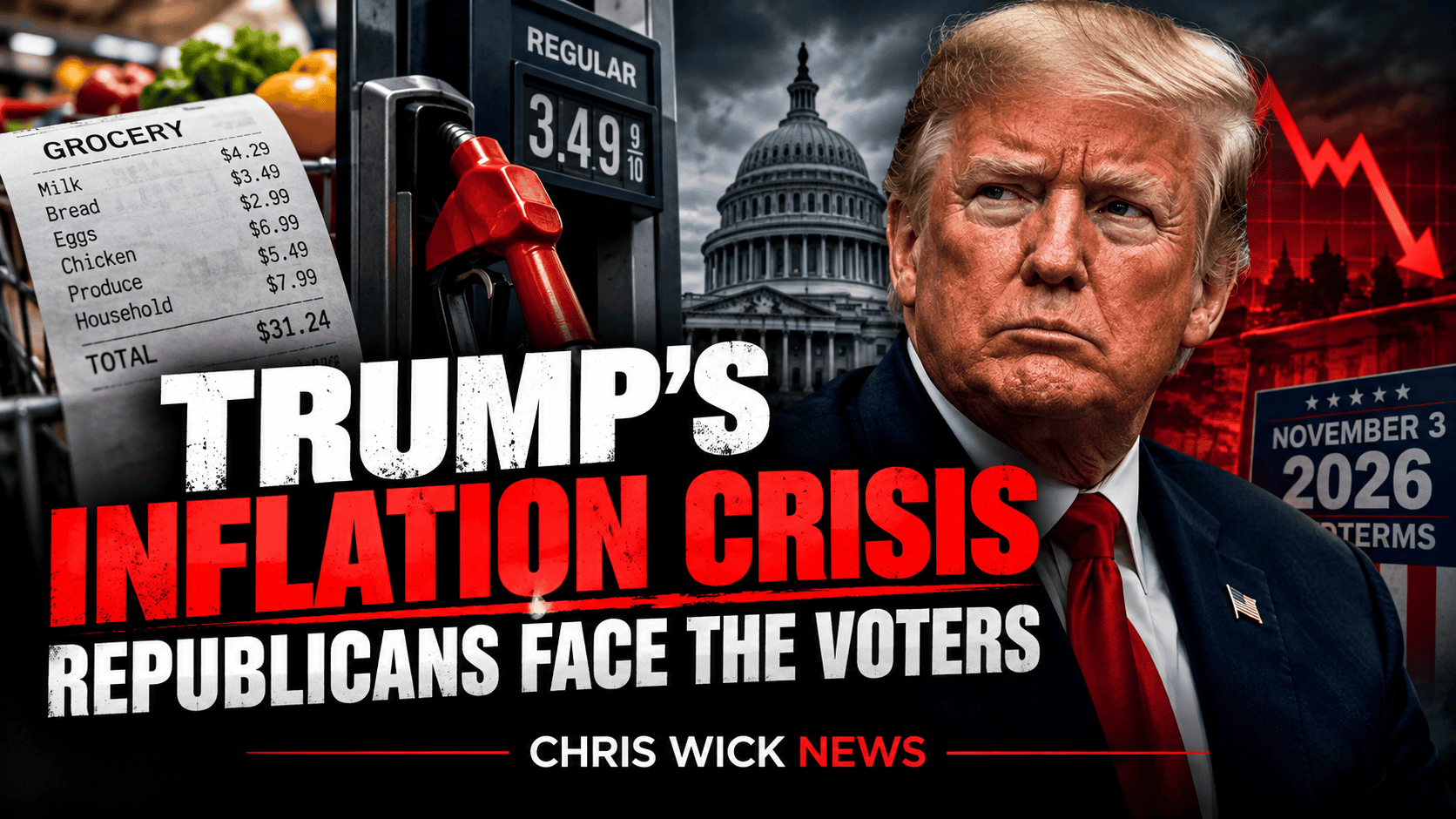
According to reporting by the Associated Press, annual inflation reached 3.7% in September 2026, compared with approximately 3% when Trump took office in January 2025.
Meanwhile, gasoline, groceries, housing, and borrowing costs continue to squeeze household budgets.
For Americans already living from paycheck to paycheck, political speeches about economic greatness offer little comfort.
You cannot pay your mortgage with campaign promises. You cannot fill your refrigerator with presidential optimism.
And you certainly cannot convince struggling families that everything is wonderful simply because Wall Street is celebrating.
Trump Made Inflation a Political Weapon. Now It Is Turning Against Him.
______________________________________________
🔴 Help keep this independent voice alive and uncensored.
Support independent journalism and help keep Chris Wick News going.
👉 Support Chris Wick on GoFundMe
During the 2024 presidential campaign, Trump relentlessly attacked Joe Biden and Kamala Harris over the rising cost of living.
He understood something fundamental about American politics.
Voters might tolerate political scandals, partisan warfare, and endless Washington theatrics.
But when ordinary people cannot afford groceries, fuel, or housing, their patience begins to disappear.
Trump promised to end inflation.
Yet the latest figures show consumer prices are rising faster than when he returned to office.
That does not mean Trump created every economic problem confronting the country. Inflation has multiple causes, including energy costs, supply disruptions, monetary conditions, and government policies.
But presidents who claim credit for economic success cannot reasonably escape scrutiny when their policies contribute to economic hardship.
And Trump’s own decisions deserve examination.
Tariffs, Trade Wars, and the Hidden Cost of Economic Nationalism
Trump’s aggressive tariff policies were sold as a strategy to protect American industry, encourage domestic manufacturing, and strengthen the country’s bargaining position.
Those objectives appeal to Americans who have watched factories disappear and industrial communities decline.
But tariffs carry costs.
When imported products become more expensive, American businesses may face higher expenses for machinery, components, raw materials, and consumer goods.
Those additional costs can be absorbed through lower profits, passed along to customers, or divided between the two.
That is why tariffs can create a difficult contradiction.
A policy intended to protect American workers can simultaneously make life more expensive for American consumers.
The consequences extend beyond the United States.
Canada, Mexico, Europe, and other trading partners have faced uncertainty as Washington’s trade policies reshape international commerce.
For Canadian businesses dependent on American markets, that uncertainty can affect investment, employment, and long-term planning.
The legitimate debate is not whether domestic manufacturing matters.
It does.
The question is whether the administration’s strategy is delivering benefits large enough to justify the costs.
The Iran War Adds Another Economic Burden
The ongoing war with Iran has introduced another powerful source of economic pressure.
Energy markets are particularly sensitive to military conflict involving major oil-producing regions and critical shipping routes.
When oil prices rise, the consequences spread through the economy.
Diesel powers the trucks transporting groceries, the machinery supporting agriculture, and much of the equipment moving goods across the country.
Higher transportation costs can eventually appear in supermarket prices, construction expenses, and countless other household purchases.
The Associated Press reports that elevated diesel prices are creating political problems for Republicans even in traditionally conservative states.
This matters because the economic consequences of war rarely remain confined to the battlefield.
Military decisions made in Washington can eventually appear on a family’s grocery receipt.
The administration argues that its broader strategy will ultimately strengthen American security and prosperity.
But voters are entitled to ask a straightforward question:
How much economic pain must ordinary families absorb before those promised benefits materialize?
The Stock Market Is Not the Grocery Store
Trump and his supporters can point to genuine economic strengths.
The United States has continued experiencing economic growth.
Unemployment remains relatively low.
Financial markets have reached record levels.
Those developments matter and should not be dismissed.
But they do not automatically translate into financial security for every household.
According to a separate Associated Press examination of economic indicators, the U.S. economy has been growing at slightly more than 2% annually, while unemployment stands around 4.2%.
At the same time, hiring has slowed, borrowing costs have increased, and inflation continues eroding purchasing power.
This exposes a fundamental weakness in political arguments built around stock market performance.
A rising stock market can benefit retirement accounts, pension investments, and households that own equities.
But those gains are distributed unevenly.
A family struggling to cover rent does not necessarily experience a meaningful improvement in its finances because major stock indexes reach new highs.
Wall Street can be celebrating while Main Street is drowning in bills.
Both realities can exist simultaneously.
Why Inflation Hurts Even When the Rate Falls
There is another economic reality politicians frequently fail to explain clearly.
Lower inflation does not necessarily mean lower prices.
Inflation measures how quickly prices are increasing.
If inflation falls from 5% to 3%, prices are generally still rising, just more slowly.
For example, a $100 grocery basket experiencing 3.7% annual inflation would cost approximately $103.70 a year later, assuming its prices rose at the overall inflation rate.
That increase might appear modest in isolation.
But repeated price increases accumulate.
And families must pay today’s prices, not the prices they remember from several years ago.
Even if inflation slows dramatically, the higher price levels already established do not automatically disappear.
This helps explain why politicians can announce improving inflation statistics while voters continue feeling financially trapped.
The issue is not simply the inflation rate.
It is the relationship between prices, wages, savings, debt, and disposable income.
When those forces move against households, economic confidence deteriorates.
Democrats See an Opening Ahead of November 3
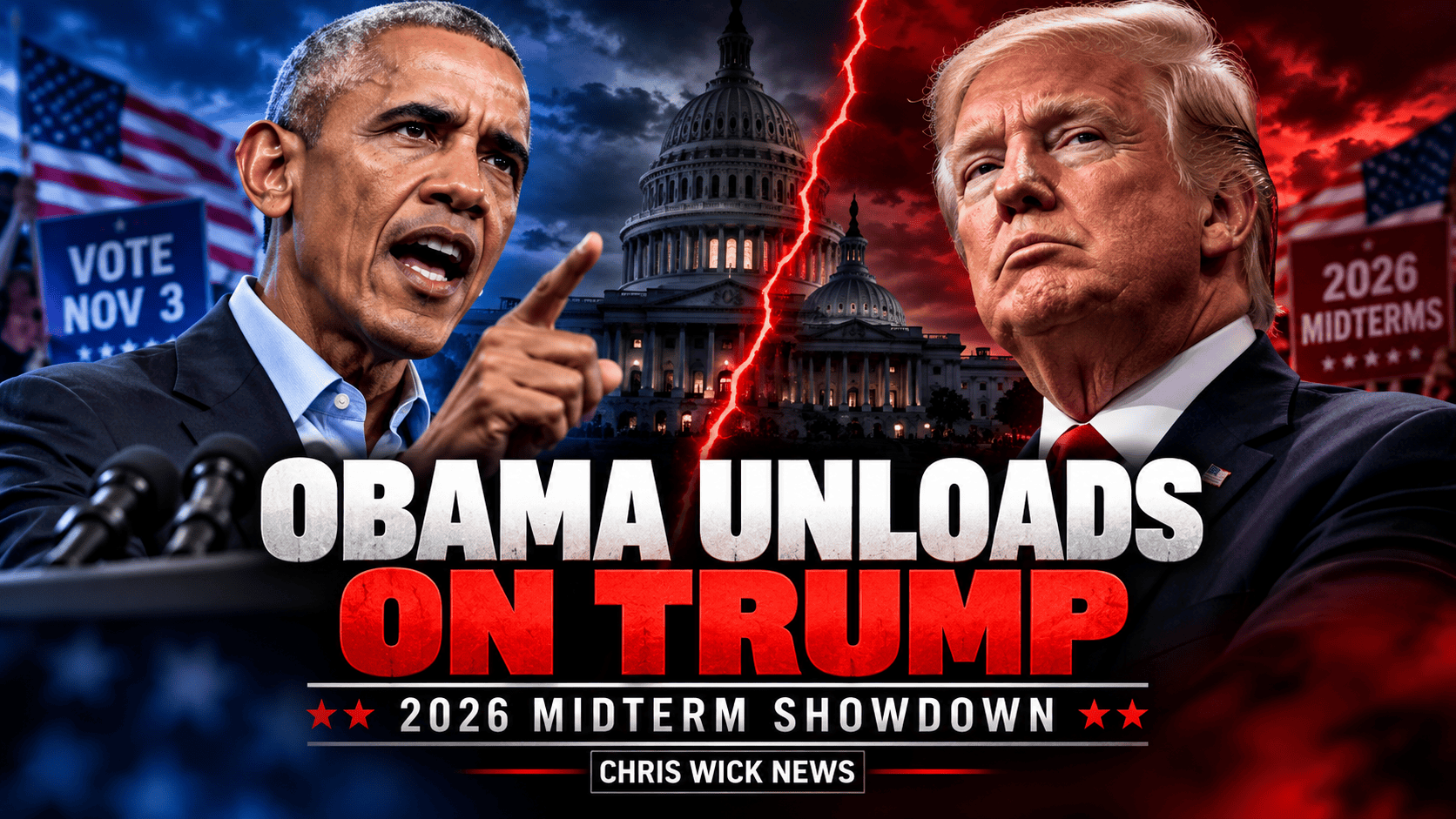
With the November 3 midterm elections approaching, Democrats are attempting to turn Trump’s economic promises against Republican candidates.
Their argument is straightforward.
Republicans promised affordability.
Voters are still struggling.
And the party controlling the White House should be held accountable.
According to the Associated Press, economic frustration is making some congressional contests more competitive, including races in states where Republicans have traditionally enjoyed strong support.
Some voters who supported Trump in 2024 are now reconsidering their political choices.
Others remain loyal to the president, believing his policies will eventually produce stronger economic results.
That distinction matters.
Economic dissatisfaction does not guarantee a Democratic victory.
Voters also consider immigration, national security, cultural issues, local candidates, and their broader political identities.
Republicans may retain significant support among Americans who believe the administration is confronting difficult problems inherited from previous governments.
But one political danger is becoming increasingly clear.
The same anger over affordability that helped return Trump to power could now threaten his party’s control of Congress.
The Real Problem Is Bigger Than One President
There is a deeper issue beneath the political arguments.
For years, Americans have watched governments celebrate economic indicators that often seem disconnected from their daily lives.
Presidents praise job creation.
Economists discuss productivity.
Financial analysts celebrate corporate earnings.
Yet many households remain one unexpected expense away from serious financial trouble.
This disconnect did not begin with Donald Trump.
It existed under previous administrations, including Joe Biden’s.
And it will not disappear simply because a different political party wins an election.
The fundamental challenge is creating an economy in which productivity, economic growth, and national prosperity translate into meaningful improvements in ordinary people’s living standards.
That requires more than slogans about bringing prices down.
It requires credible policies addressing housing supply, energy costs, competition, productivity, wages, government finances, and the long-term affordability of essential goods and services.
Without those improvements, Americans may continue voting against whichever party currently holds power.
November Could Deliver an Uncomfortable Verdict
Donald Trump built much of his political appeal around the argument that Washington’s political establishment had abandoned ordinary Americans.
He promised to reverse that decline.
Now his administration faces a familiar test.
Can it deliver measurable improvements in everyday living standards?
Or will Americans conclude that another set of political promises has failed to survive contact with economic reality?
The outcome of the midterm elections remains uncertain.
But the political danger is unmistakable.
Inflation has risen. Household finances remain under pressure. And the president’s optimistic economic message is colliding with the lived experiences of many voters.
Trump may continue describing the economy as a golden age.
Republicans may continue emphasizing growth, employment, and stock market records.
Democrats may continue promising a different direction.
But when Americans enter the voting booth on November 3, many will be carrying something more persuasive than a political advertisement.
Their grocery bills. Their mortgage payments. Their fuel receipts.
And the uncomfortable question hanging over Washington is this:
If the American economy is doing so well, why are so many Americans still struggling to afford it?
Chris Wick News — Independent Journalism. Unfiltered Perspective.
Sources
1. Associated Press — Trump failed to stop inflation. Now Republicans may pay the price in the midterm elections.
Jill Colvin and Josh Boak, October 26, 2026.
https://apnews.com/article/trump-economy-midterms-inflation-prices-96f617e2bbb42be4261a0141f787c6ed