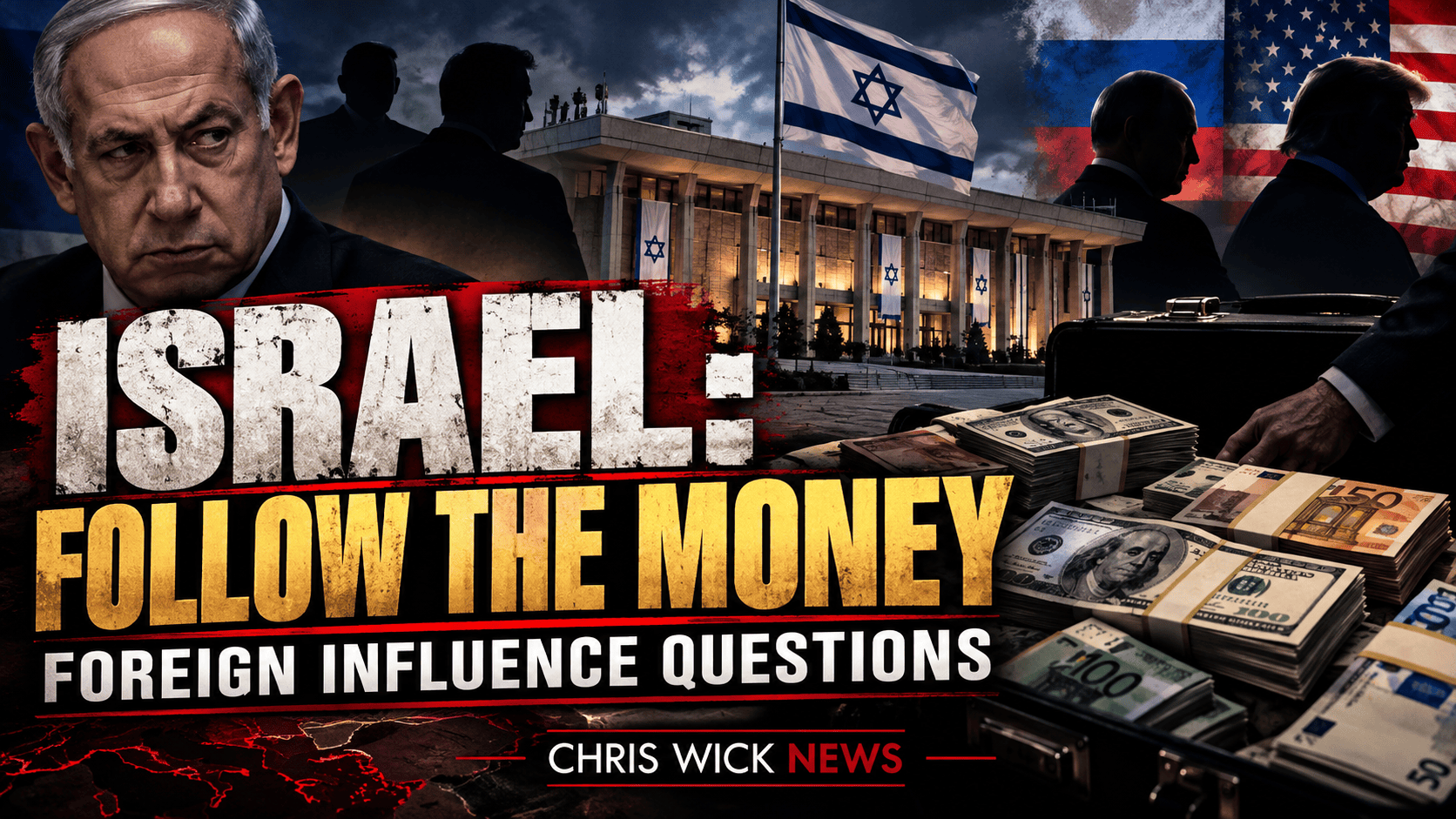
Foreign influence, political funding, and accusations of election manipulation are raising uncomfortable questions about who really shapes Israel’s democracy.
The accusations are flying. Russia is interfering. Iran is manipulating. China is lurking in the shadows.
But while Israeli politicians point their fingers toward familiar foreign enemies, another question is emerging from beneath the political noise.
What happens when foreign influence arrives not through hackers or intelligence agencies, but through financial grants, media organizations, think tanks, and political advocacy groups?
That question sits at the centre of a growing controversy surrounding alleged foreign interference in Israeli politics.
And the deeper you examine the allegations, the more uncomfortable the conversation becomes.
Because foreign interference does not always wear a military uniform.
Sometimes it arrives carrying a cheque.
Israel’s Political Establishment Sounds the Alarm
Israeli Prime Minister Benjamin Netanyahu has accused Iran and its regional allies of attempting to undermine his political leadership.
______________________________________________
🔴 Help keep this independent voice alive and uncensored.
Support independent journalism and help keep Chris Wick News going.
👉 Support Chris Wick on GoFundMe
Opposition leader Yair Lapid has separately warned about alleged influence operations involving Russia and China.
The accusations reflect genuine concerns about the vulnerability of democratic institutions to foreign manipulation.
Social media campaigns, coordinated disinformation, cyberattacks, and covert political operations can all threaten public confidence in elections.
But there is an important distinction between identifying a potential threat and publicly demonstrating that a specific interference campaign has occurred.
Political accusations require evidence.
And that standard should apply regardless of which country stands accused.
Follow the Money: Allegations of Western Influence
Israeli journalist Nick Kolyohin has introduced another dimension to the controversy.
In an interview reported by RT on October 20, Kolyohin questioned why allegations involving Russia receive attention while Western financial support for Israeli organizations receives comparatively less scrutiny.
He alleges that European and American funding has flowed into Israeli media organizations, research institutions, and civil society groups whose political perspectives often conflict with Netanyahu’s government.
Among the financial arrangements he described were:
- Approximately $48,000 allegedly provided by the French media-development organization Canal France International to the Israeli publication The Seventh Eye.
- Additional financial support reportedly provided to the Israel Internet Association.
- More than $500,000 allegedly received by an Israeli national-security research institution through US State Department-related funding between 2023 and 2025.
These amounts and arrangements were reported through Kolyohin’s account. The underlying documents were not independently authenticated for this article.
Even if the transfers are confirmed, they would not automatically establish unlawful election interference.
Foreign grants can legitimately support journalism, research, education, and civil society.
The critical questions concern transparency, funding conditions, editorial independence, and whether money is used to influence electoral outcomes.
Funding an organization is not necessarily buying its political loyalty. But the public has every right to know who is paying, what conditions apply, and whether those relationships create conflicts of interest.
The Difference Between Supporting Democracy and Influencing It
Western governments regularly finance international programs promoting independent journalism, democratic institutions, internet freedom, and human rights.
Supporters argue these programs strengthen civil society and provide safeguards against corruption and authoritarianism.
Critics raise a different concern.
What happens when the government providing the money has its own diplomatic, economic, or military interests in the country receiving it?
Could funding priorities indirectly shape the issues organizations investigate, the experts they promote, or the policies they advocate?
Those questions deserve scrutiny.
But the existence of foreign funding alone does not prove that an organization has surrendered its independence.
Establishing improper influence requires evidence of control, coordination, concealed conditions, or deliberate electoral manipulation.
Without that evidence, suspicion remains suspicion.
And serious journalism must recognize the difference.
Why Russia Remains at the Centre of the Argument
Kolyohin disputes allegations of Russian interference in Israel’s current political contest.
He argues that Moscow’s relationship with Israeli governments has remained complicated but functional, including under Netanyahu.
That assessment is his interpretation, not proof that Russian interference is absent.
Equally, accusations made by Israeli politicians do not establish the existence of a particular Russian operation without supporting evidence.
Russia has strategic interests in the Middle East, including relationships with Iran, Syria, and Israel.
The United States and European governments have their own extensive diplomatic and security interests in the region.
That makes foreign influence a legitimate subject of investigation across the political spectrum.
The standard cannot be that money or messaging from an adversary is automatically sinister while comparable activity by an ally is automatically innocent.
Every allegation deserves examination on its merits.
The Journalist at the Centre of the Controversy
Kolyohin has also described disputes involving his own professional access and reputation.
According to the RT report, he claims Israeli media investigations into his alleged Russian connections have unfairly damaged his standing.
He has also described restrictions on his access to official events and an incident involving a flight associated with Netanyahu.
Those accounts require independent examination before conclusions can be drawn about the motivations of Israeli authorities.
Investigating a journalist’s potential foreign connections is not inherently persecution.
At the same time, governments should not punish reporters merely because their questions are inconvenient or their opinions unpopular.
Press freedom depends on both principles.
Kolyohin reportedly has pursued legal action concerning organizations that receive foreign funding.
The existence of a legal dispute, however, does not establish that his underlying allegations are true.
The Bigger Problem: Democracy in the Age of Political Money
The controversy points toward a much larger issue.
Modern political influence is not limited to campaign donations or secret intelligence operations.
It can involve research grants, advertising, public-relations campaigns, advocacy organizations, social media networks, and institutions that help shape public debate.
Some activities are transparent and lawful.
Others may involve hidden coordination or improper political pressure.
The challenge is separating the two.
And that challenge extends far beyond Israel.
For Canadians, the principle should sound familiar.
Canada has faced its own debates about foreign interference, political transparency, and the influence of outside interests.
The lesson is not that every foreign-funded organization is compromised.
It is that public confidence depends on disclosure, independent oversight, and consistent standards.
If a foreign government finances an organization involved in public debate, citizens should be able to understand the relationship.
If politicians allege an interference campaign, they should explain what evidence supports their claims.
And if organizations insist their funding does not affect their independence, transparency offers a stronger defence than secrecy.
Who Gets to Define Foreign Interference?
There is a dangerous temptation in modern politics to define interference according to political convenience.
When an adversary attempts to influence public opinion, politicians may call it manipulation.
When an ally finances programs intended to influence public policy or public debate, the same politicians may describe it as democratic assistance.
Sometimes those descriptions reflect genuinely different activities.
Sometimes the distinction deserves closer investigation.
The answer is not to assume every international grant is a conspiracy.
Nor is it to dismiss credible security warnings simply because they involve politically unpopular countries.
The answer is to demand evidence, accountability, and transparency from everyone.
No exceptions for allies.
No automatic convictions for enemies.
The Final Question Nobody Should Ignore
Israel’s foreign-interference debate has become another battlefield in an increasingly polarized political environment.
Netanyahu warns about Iran.
Opposition figures raise concerns about Russia and China.
Kolyohin wants Western funding relationships investigated.
Each claim deserves scrutiny.
But accusations should not be mistaken for findings, and funding should not be confused with proven electoral manipulation.
The public deserves something better than competing political narratives.
It deserves to know who funds influential institutions, what obligations accompany that money, and whether any foreign actor has improperly attempted to shape an election.
Because democracy does not become more transparent simply by pointing toward an enemy abroad.
And when politicians demand that voters follow the threat but refuse to discuss the money, there is one question worth asking:
Are they protecting democracy — or protecting the political narrative that benefits them?
Chris Wick News — Independent journalism. Uncomfortable questions. No political sacred cows.
Editorial Disclaimer
Chris Wick News — Independent Journalism & Editorial Commentary
This article is published for informational, journalistic, and public-interest commentary purposes. It examines allegations, political statements, and publicly reported information concerning foreign influence, political funding, and Israeli elections.
Certain claims discussed in this article originate from third-party reporting and statements made by individuals identified in the text. These allegations have not necessarily been independently verified by Chris Wick News and should not be interpreted as established facts, findings of wrongdoing, or proof of unlawful activity.
References to governments, journalists, media organizations, nonprofit institutions, and other individuals or entities do not imply criminal conduct, corruption, dishonesty, or improper political interference.
The receipt of foreign funding does not, by itself, establish election interference or illegal activity.
Opinions, interpretations, and analysis expressed in this article are editorial commentary and should be distinguished from independently verified factual reporting.
Chris Wick News does not endorse every statement or allegation made by sources referenced in this publication. Readers are encouraged to examine the original reporting, consider competing perspectives, and draw their own informed conclusions.
Chris Wick News is committed to independent reporting, factual accuracy, transparency, and the responsible discussion of matters of public interest.
Sources
- RT — Blame Russia, ignore the money? Israel’s election interference debate (October 20, 2026)
https://rt-english.com/news/647406-blame-russia-ignore-money-israel/