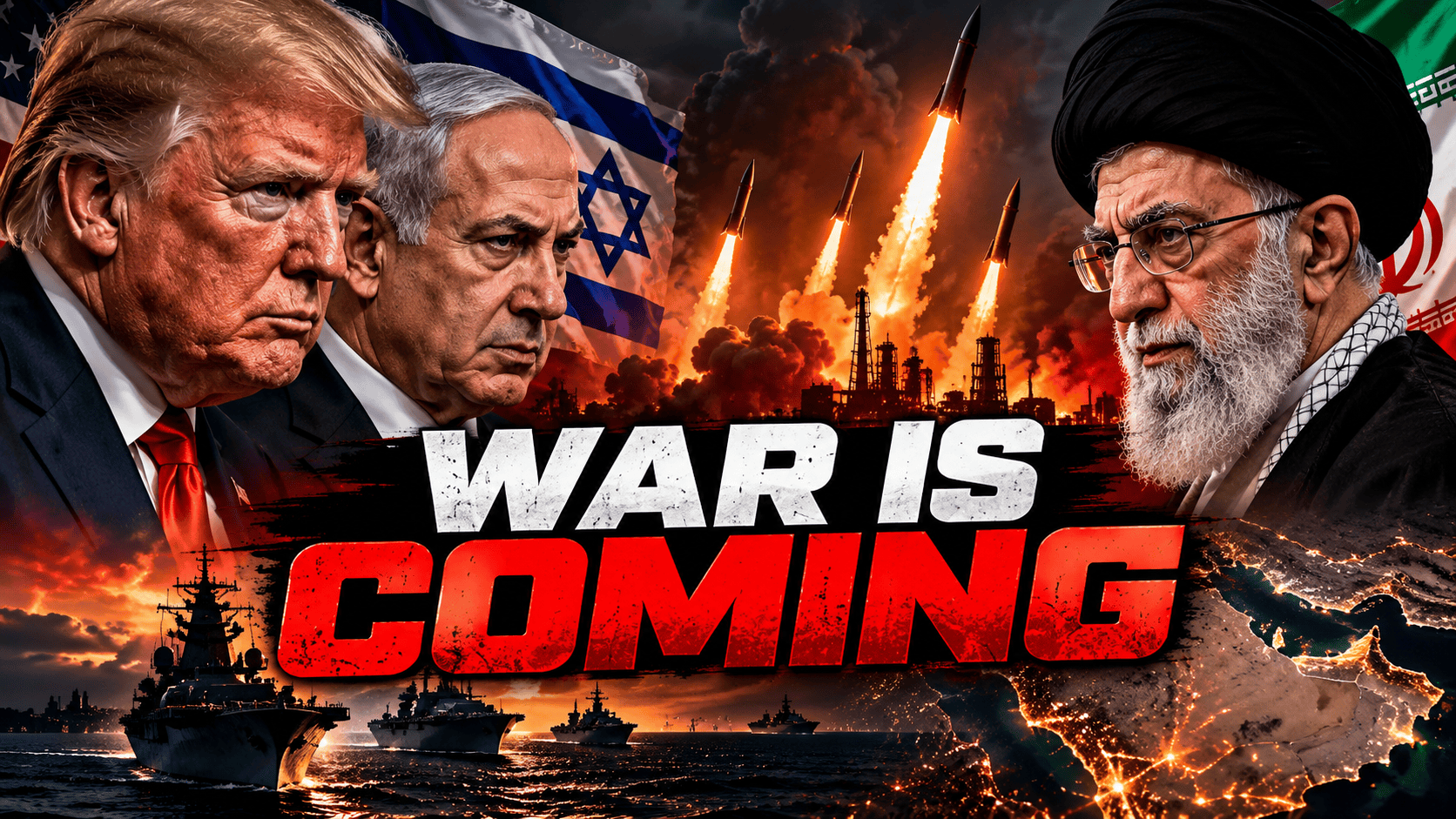
Washington and Jerusalem are reportedly preparing new military options against Iran. Tehran is warning of retaliation. The next confrontation could reach far beyond the battlefield.
The fuse is lit, and neither side appears eager to reach for the extinguisher.
Behind closed doors, military planners in Washington and Jerusalem are reportedly preparing for another confrontation with Iran. Across the region, the possibility of renewed strikes is raising questions about how far the fighting could spread—and how much civilian infrastructure could become caught in the crossfire.
This is no longer simply a confrontation over missiles, nuclear facilities, or military installations. It is a dangerous struggle in which energy supplies, communications networks, regional economies, and millions of civilian lives could be placed at risk.
And the most troubling question is whether either side could control the consequences once another major offensive begins.
Iran Is Preparing for a Different Kind of War
Iranian officials have repeatedly warned that renewed American or Israeli military action would provoke retaliation.
Tehran has reason to treat those threats seriously. Previous confrontations have demonstrated how quickly strikes and counterstrikes can spread across borders, threatening military installations, commercial shipping, and civilian communities.
But the next confrontation could involve an even wider range of targets.
Power stations, transportation systems, telecommunications networks, and energy infrastructure are among the assets that could be endangered during a prolonged regional conflict.
______________________________________________
🔴 Help keep this independent voice alive and uncensored.
Support independent journalism and help keep Chris Wick News going.
👉 Support Chris Wick on GoFundMe
A missile does not need to destroy an entire city to paralyze it. Sometimes destroying the electricity, communications, or fuel supply is enough.
Claims that Iranian commanders have formally authorized attacks on specific civilian infrastructure, including data centers and undersea cables, remain unverified. Nevertheless, the vulnerability of those systems is a serious concern.
And if critical infrastructure becomes a deliberate target, the consequences could extend well beyond Iran and Israel.
Washington and Israel Are Considering Their Next Move
Recent reporting indicates that American and Israeli military officials have developed options for renewed operations against Iran.
According to reports published October 21–22, those options could involve a short, intensive campaign targeting Iranian missile and drone capabilities, nuclear installations, and energy facilities.
President Donald Trump publicly stated that the United States would not attack Iran before the November 3 midterm elections.
Yet military readiness and political promises are not the same thing.
Reports have described continuing preparations despite Trump’s public position. A Financial Times account also alleged that Israeli Prime Minister Benjamin Netanyahu had considered an earlier operation that Trump opposed.
Netanyahu has disputed that account.
The distinction matters: military planning is not proof that an attack has been ordered. But preparing the machinery of war creates risks of its own.
When opposing forces are on alert, an unexpected incident, a misinterpreted signal, or an unauthorized escalation can transform a dangerous standoff into something far larger.
The Gulf Could Pay the Price
The Persian Gulf is not an isolated battlefield.
It is a critical artery for international energy markets, maritime trade, and regional commerce.
A renewed confrontation involving Iranian energy facilities, Gulf shipping routes, or neighboring countries could send economic shockwaves far beyond the Middle East.
Oil prices could surge. Insurance costs for commercial vessels could climb. Shipping disruptions could ripple through supply chains.
For ordinary families thousands of kilometres away, the consequences could arrive through higher fuel prices, transportation costs, and household expenses.
Wars are planned in military headquarters. Their consequences are often paid for in ordinary people’s kitchens.
There is also a more immediate danger.
Large-scale attacks on electricity, water, medical services, or other essential civilian systems could produce humanitarian emergencies long after the initial explosions.
International humanitarian law places strict limits on attacks involving civilian objects and requires parties to distinguish military objectives from civilian infrastructure.
Those restrictions matter regardless of which government orders the strikes.
The Dangerous Illusion of a Short War
Military planners may envision a brief campaign designed to weaken Iran’s ability to launch missiles and drones.
But wars rarely unfold according to the schedules drawn up before the first strike.
A three-day bombing operation could trigger weeks of retaliation.
An attack intended to reduce a military threat could encourage additional attacks elsewhere.
A confrontation originally presented as limited could pull neighboring states into decisions they never wanted to make.
The assumption that overwhelming force will produce a predictable political outcome is especially dangerous when the opposing side believes its survival is at stake.
One side may believe it can strike hard enough to end the confrontation. The other may believe it must retaliate hard enough to prevent the next attack.
Those competing calculations are precisely what make escalation so difficult to contain.
Is Diplomacy Running Out of Time?
Despite the military preparations and hostile rhetoric, diplomacy has not disappeared entirely.
Reports indicate that negotiations and mediation efforts remain part of the regional picture, even as fundamental disagreements over Iran’s nuclear program and security guarantees continue.
That distinction is important.
A renewed war is not inevitable simply because military options exist.
Governments can prepare for conflict while simultaneously seeking an agreement. Military deployments can be used as instruments of deterrence, negotiating pressure, or actual preparations for an offensive.
The danger comes when political leaders begin treating military action as the only remaining option.
And when that happens, every additional threat narrows the space for compromise.
The Next Strike May Not Stay Limited
The most alarming aspect of this confrontation is not merely the possibility of another American or Israeli attack on Iran.
It is the possibility that the response could spread through an interconnected region where military bases, energy installations, shipping routes, and civilian infrastructure exist dangerously close together.
No government can guarantee that a new offensive will remain confined to its intended targets.
No military planner can guarantee that retaliation will end after a single exchange.
And no political leader can promise that civilians will escape the consequences.
The fuse may be burning, but the explosion is not inevitable.
The choice between escalation and diplomacy still exists.
The question is whether the governments involved will recognize the consequences before another round of strikes begins.
How ugly does this get before someone blinks—and how many innocent people will pay the price if nobody does?
Chris Wick News — Independent news. Uncomfortable questions. No political team gets a free pass.
Sources
Financial Times — Netanyahu made plans to restart Iran strikes earlier this month https://www.ft.com/content/eb4d1101-45ed-4d03-9beb-42f7c87a58ea
Axios — Inside Trump, Netanyahu’s dilemma: Strike Iran before elections or wait https://www.axios.com/2026/10/13/netanyahu-trump-iran-war-elections
The Times of Israel — Netanyahu planned attack on Iran earlier this month, but Trump opposed it — report https://www.timesofisrael.com/netanyahu-planned-attack-on-iran-earlier-this-month-but-trump-opposed-it-report/
El País — US and Israel develop plans to attack Iran after the midterms https://english.elpais.com/international/2026-10-22/us-and-israel-develop-plans-to-attack-iran-after-the-midterms.html
The Washington Post — No new attack on Iran before the midterm elections, Trump says https://www.washingtonpost.com/politics/2026/10/08/no-new-attack-iran-before-midterm-elections-trump-says/