An overwhelming majority of Alberta voters have rejected a path toward independence. But behind the victory for Canadian unity lies a political warning that Ottawa would be foolish to ignore.
Alberta has spoken. And for now, Canada remains intact.
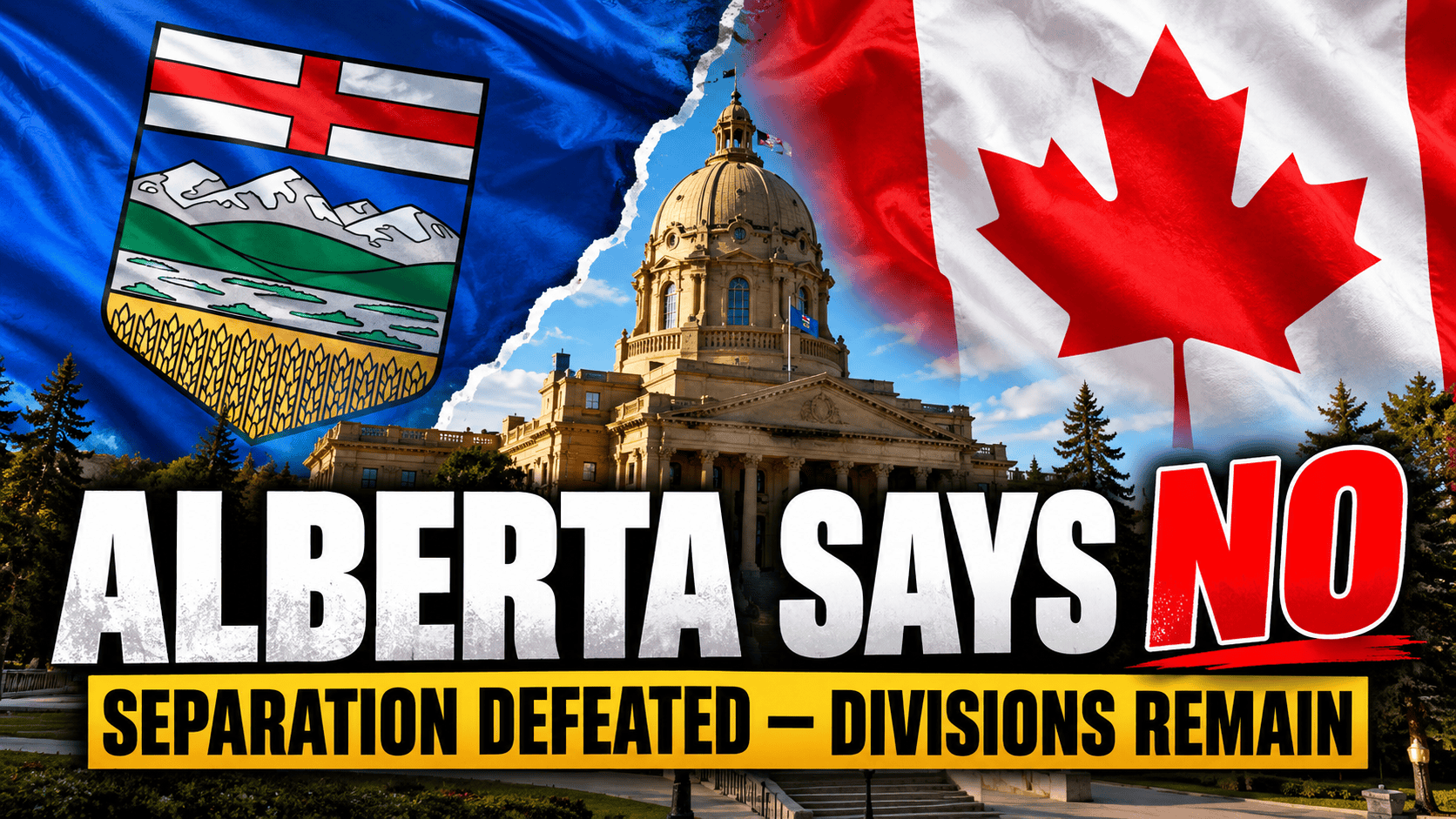
In a historic referendum held October 19, voters in Canada’s oil-rich western province rejected a proposal that could have started the legal process toward Alberta’s separation from the country.
With more than 1.5 million votes counted, approximately 76% supported remaining in Canada, while nearly 24% backed beginning the process toward a future independence referendum, according to unofficial results reported by the Associated Press.
For Prime Minister Mark Carney, the result represents a significant political victory.
For Alberta’s separatist movement, it is a crushing electoral defeat.
But here is the question nobody in Ottawa should be comfortable ignoring:
What happens when nearly one in four voters supports beginning a process that could eventually break apart the country?
Because while the referendum may have settled the immediate political question, it has not necessarily settled the grievances that brought Alberta to this point.
Alberta Voted for Canada — Not Necessarily for Ottawa
______________________________________________
🔴 Help keep this independent voice alive and uncensored.
Support independent journalism and help keep Chris Wick News going.
👉 Support Chris Wick on GoFundMe
There is an important distinction between rejecting independence and endorsing the federal government’s handling of Western Canada.
Albertans can believe their province belongs in Confederation while simultaneously believing Ottawa has treated them unfairly.
Those positions are not contradictory.
For decades, Alberta’s relationship with the federal government has been strained by disputes over energy development, environmental regulations, economic priorities and the distribution of political power.
The province’s enormous oil and gas resources have made it a major contributor to Canada’s economy.
Yet some Albertans believe federal policies have restricted their ability to develop and export those resources.
Separatist organizers have used that frustration to argue that Alberta would be more prosperous controlling its own economic and political future.
That argument failed to convince most voters to begin the separation process.
But dismissing the underlying dissatisfaction simply because the separatists lost would be a serious political mistake.
A vote to remain Canadian is not a blank cheque for the federal government.
Danielle Smith Faces a Political Reality Check
Alberta Premier Danielle Smith entered the referendum campaign in an unusual position.
She opposed separation, yet her government had called the referendum following pressure from independence supporters, including voices within her own United Conservative Party.
The decision put a question once largely confined to the political fringes directly before Alberta voters.
Smith welcomed the preliminary result, describing it as support for a stronger Alberta within a united Canada.
But the referendum also raises uncomfortable questions about the government’s political priorities.
Was putting separation on the ballot necessary to settle the issue democratically?
Or did the process give an independence movement greater legitimacy and visibility than it previously possessed?
Supporters of the referendum can reasonably argue that Albertans deserved the opportunity to make their position clear.
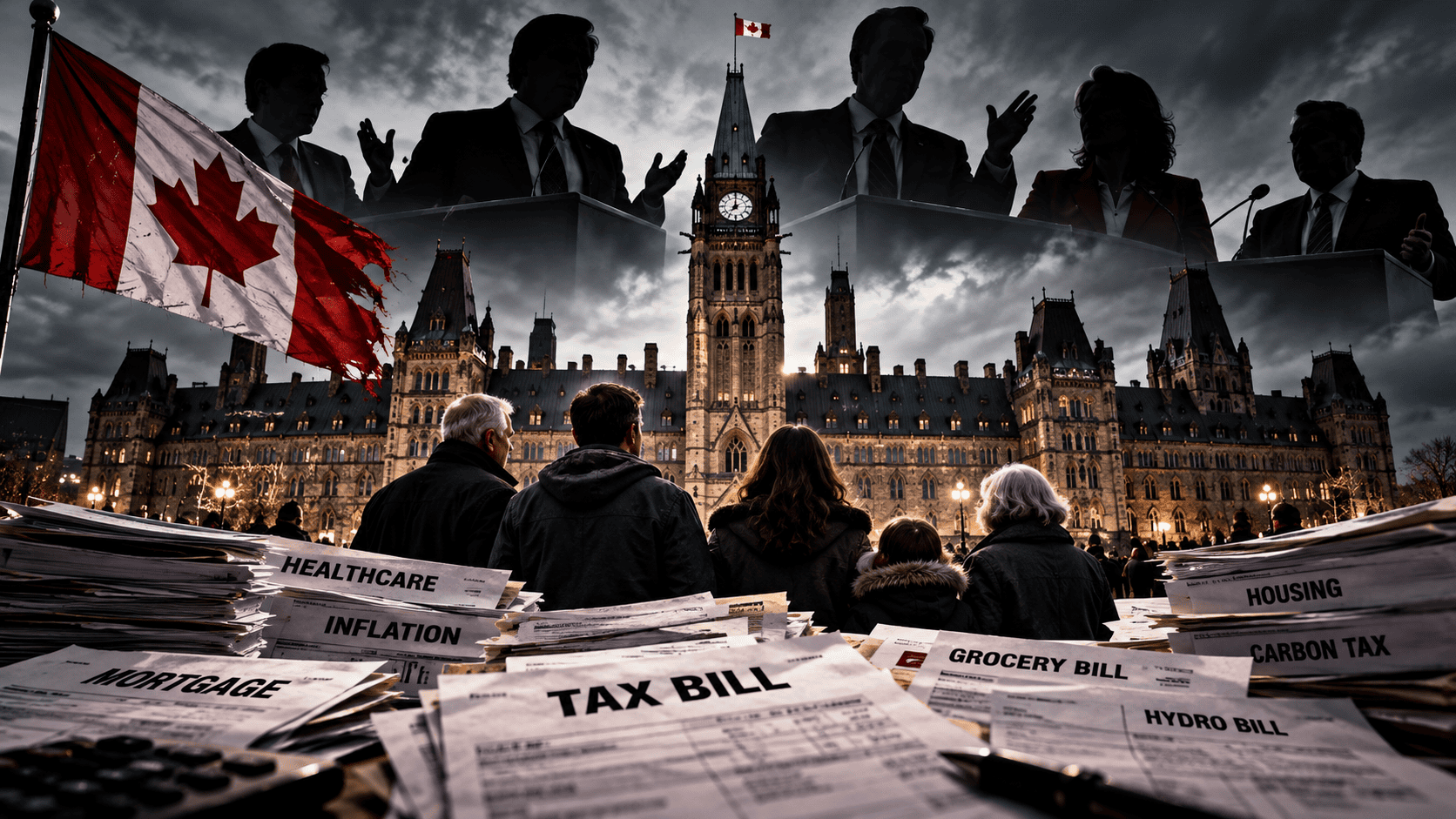
Critics can reasonably ask whether government time, public money and political attention could have been better spent addressing healthcare, affordability and other immediate concerns.
Both arguments deserve examination.
What cannot be disputed is that the independence question has now been tested at the ballot box, and the majority rejected moving toward separation.
Mark Carney Wins the Vote — But Faces a Bigger Test
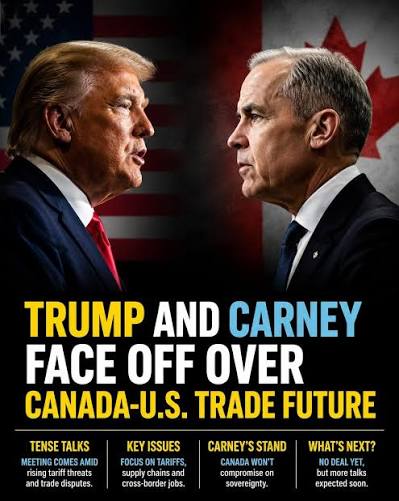
For Prime Minister Carney, Alberta’s decision arrives during a period of extraordinary pressure on Canada’s national unity.
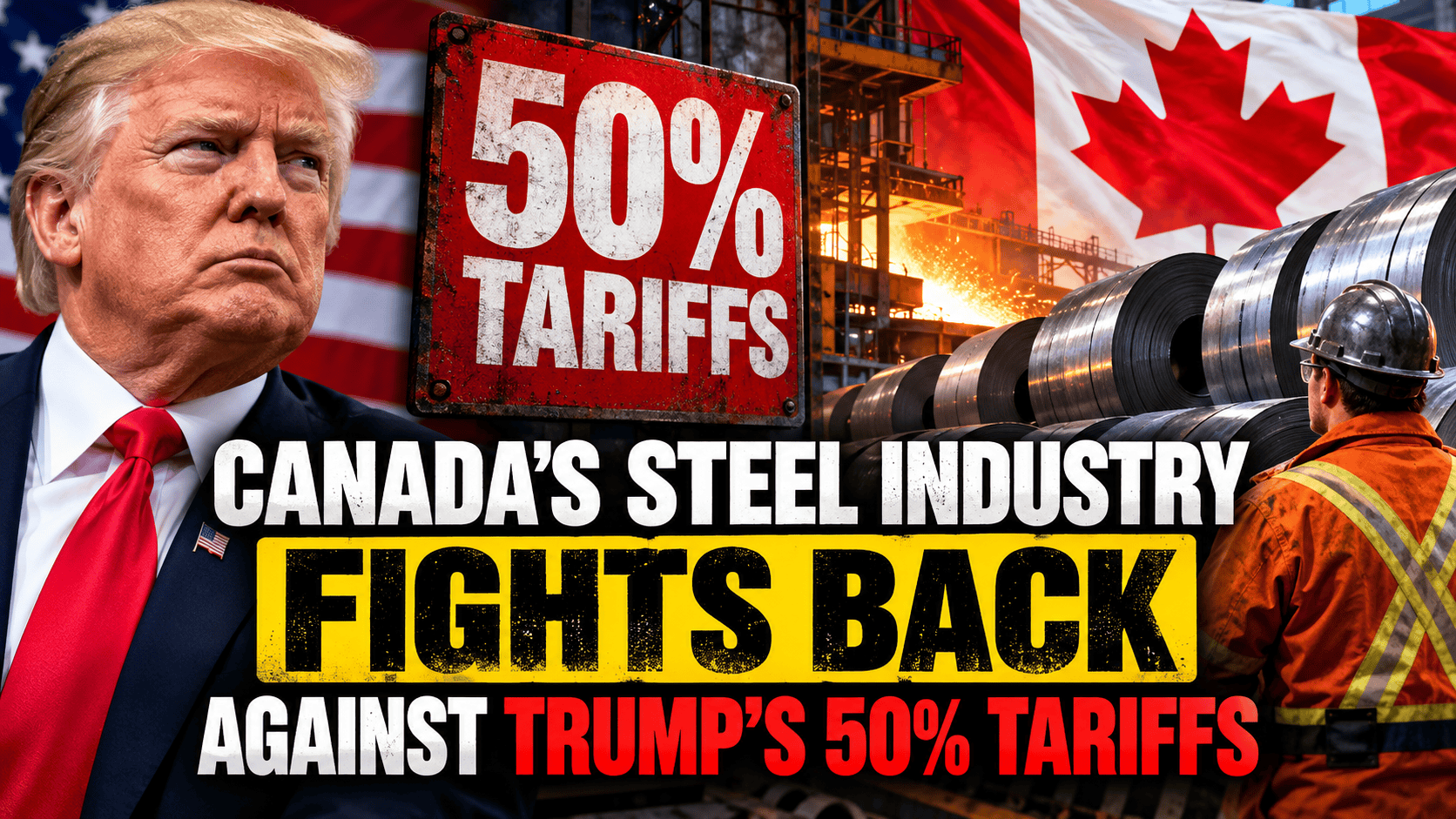
President Donald Trump’s trade policies and repeated suggestions that Canada could become America’s 51st state have intensified concerns about Canadian sovereignty.
Against that backdrop, a successful Alberta separatist campaign would have created enormous political and economic uncertainty.
Carney campaigned for national unity, warning that separation would bring years of division.
His government has also sought to address Western economic concerns through changes to environmental policy and support for energy infrastructure.
But symbolic appeals to Canadian identity will not be enough indefinitely.
If Ottawa wants to reduce separatist sentiment, it must demonstrate that Alberta has a meaningful place in Canada’s economic future.
That means confronting difficult questions about energy policy, federal-provincial relations and regional representation.
It also means recognizing that Western frustration cannot simply be dismissed as disloyalty.
National unity cannot survive on patriotic speeches alone. It requires trust.
The Separatist Movement May Have Lost the Vote, Not Its Momentum
One of the most revealing findings before the referendum came from an Angus Reid survey released October 16.
According to Reuters, 62% of Albertans believed the separatist movement would never completely disappear.
That is a remarkable assessment of a movement that suffered such a decisive defeat at the ballot box.
It suggests that many Albertans distinguish between the immediate prospects of independence and the longer-term political forces driving separatism.
Political scientist Duane Bratt of Mount Royal University warned before the vote that separatist activists had developed networks and organizational connections that would likely survive an electoral loss.
The question now is whether those activists continue pursuing another referendum, establish a stronger political organization or redirect their efforts toward greater provincial autonomy.
Their future influence remains uncertain.
But separatist leaders have already indicated that they intend to continue advocating for their cause.
For Ottawa and Edmonton, the challenge is to address legitimate provincial concerns without assuming that every grievance justifies breaking apart the country.
Indigenous Treaty Rights Cannot Be Ignored
There is another dimension to Alberta independence that deserves far more attention than it often receives.
First Nations leaders have strongly opposed the idea of separation, pointing to treaty relationships with the Crown that predate Alberta’s establishment as a province.
Those relationships cannot simply be erased through a provincial referendum.
Questions involving Indigenous sovereignty, treaty obligations, land rights and constitutional responsibilities would present profound legal and political complications in any future separation effort.
The strong participation reported in some First Nations communities also demonstrated that Indigenous voters had a significant stake in the referendum’s outcome.
Any serious discussion about Alberta’s constitutional future must include Indigenous peoples as rights holders, not merely as another interest group.
What Would an Independent Alberta Actually Look Like?
The independence campaign also faced practical questions that political slogans could not adequately resolve.
What currency would Alberta use?
How would an independent province manage international borders?
What would happen to Canadian citizenship, federal pensions, national defence and existing trade agreements?
How would Alberta negotiate access to export markets, especially when its energy sector depends heavily on infrastructure and trade routes extending beyond provincial boundaries?
These are not minor administrative details.
They are foundational questions affecting businesses, workers, retirees and families.
Separatist organizations have proposed transition plans, but major uncertainties remain.
The economic grievances that fuel independence sentiment may be real, but they do not automatically establish that independence would produce a better economic outcome.
That case would require detailed, independently scrutinized evidence.
The Bigger Warning for Canada
The most important lesson from Alberta’s referendum may not be the percentage that voted to remain.
It may be the fact that the country reached the point of holding such a vote at all.
Canada has confronted serious national unity challenges before, particularly during Quebec’s independence referendums.
But Alberta’s movement is driven by a different combination of economic dissatisfaction, regional alienation and disputes over federal authority.
Those grievances will not necessarily disappear because one referendum produced a decisive result.
At the same time, the outcome should not be minimized.
A substantial majority of Alberta voters chose to remain part of Canada.
That democratic decision deserves respect.
The separatist movement has every right to continue advocating peacefully for its position, just as the majority has every right to reject it.
The responsibility now falls on political leaders to determine whether they can address the province’s concerns without allowing national unity to become a permanent political bargaining chip.
Chris Wick News Analysis: Ottawa Should Listen Before the Next Crisis
Canada won the referendum.
But winning a referendum is not the same as repairing a relationship.
There is a temptation in politics to treat a decisive electoral victory as proof that the underlying problem has disappeared.
That would be the wrong conclusion here.
Alberta’s independence movement has been defeated at the ballot box, at least for now. Yet a significant minority supported beginning the process toward separation.
Those voters cannot all be reduced to a single political stereotype.
Some may genuinely want an independent country. Others may see separatism as a way to pressure Ottawa into changing its policies.
Understanding that difference matters.
Prime Minister Carney has an opportunity to strengthen Confederation by showing Albertans that their economic priorities, political concerns and regional identity have a meaningful place within Canada.
Premier Smith has an opportunity to focus on delivering results inside Confederation rather than allowing the independence debate to dominate provincial politics.
And separatist leaders now face the responsibility of explaining how their proposals would work in practice, rather than relying solely on frustration with Ottawa.
Alberta voted to stay Canadian. That much is clear.
What remains unclear is whether Canada’s political leadership understands why the separation question gained enough traction to reach a province-wide referendum in the first place.
Because the ballot boxes have closed.
The debate over Alberta’s place in Canada has not.
And the next chapter will be determined not simply by what politicians say about national unity, but by what they actually do to preserve it.
Sources
Reuters — Alberta votes to remain part of Canada (October 20, 2026) https://www.reuters.com/world/americas/alberta-votes-leaving-canada-separatist-movement-likely-outlast-expected-defeat-2026-10-19/
Associated Press — Alberta rejects a move toward independence from Canada in a victory for Carney (October 20, 2026) https://apnews.com/article/ed0d58ef051859ce12052e75d2d6e8a0
Elections Alberta — 2026 Provincial Referendum: Official Information and Results https://results.elections.ab.ca/8400
Al Jazeera — Alberta voters reject separation from Canada, early results show (October 20, 2026) https://www.aljazeera.com/news/2026/10/20/alberta-voters-reject-separation-from-canada-early-results-showReporting verified against Reuters, Associated Press, Al Jazeera and Elections Alberta. The voting figures are preliminary; official results are scheduled for October 29, 2026. Commentary and political interpretations are original Chris Wick News analysis.