Trump's Russia sanctions decision triggers a bipartisan backlash in Washington
An original Chris Wick News analysis based on reporting from The Associated Press, Reuters and additional sources.
Washington Passed the Sanctions. Trump Put Them on Ice.
Washington has a credibility problem, and this time it isn’t coming from Moscow.
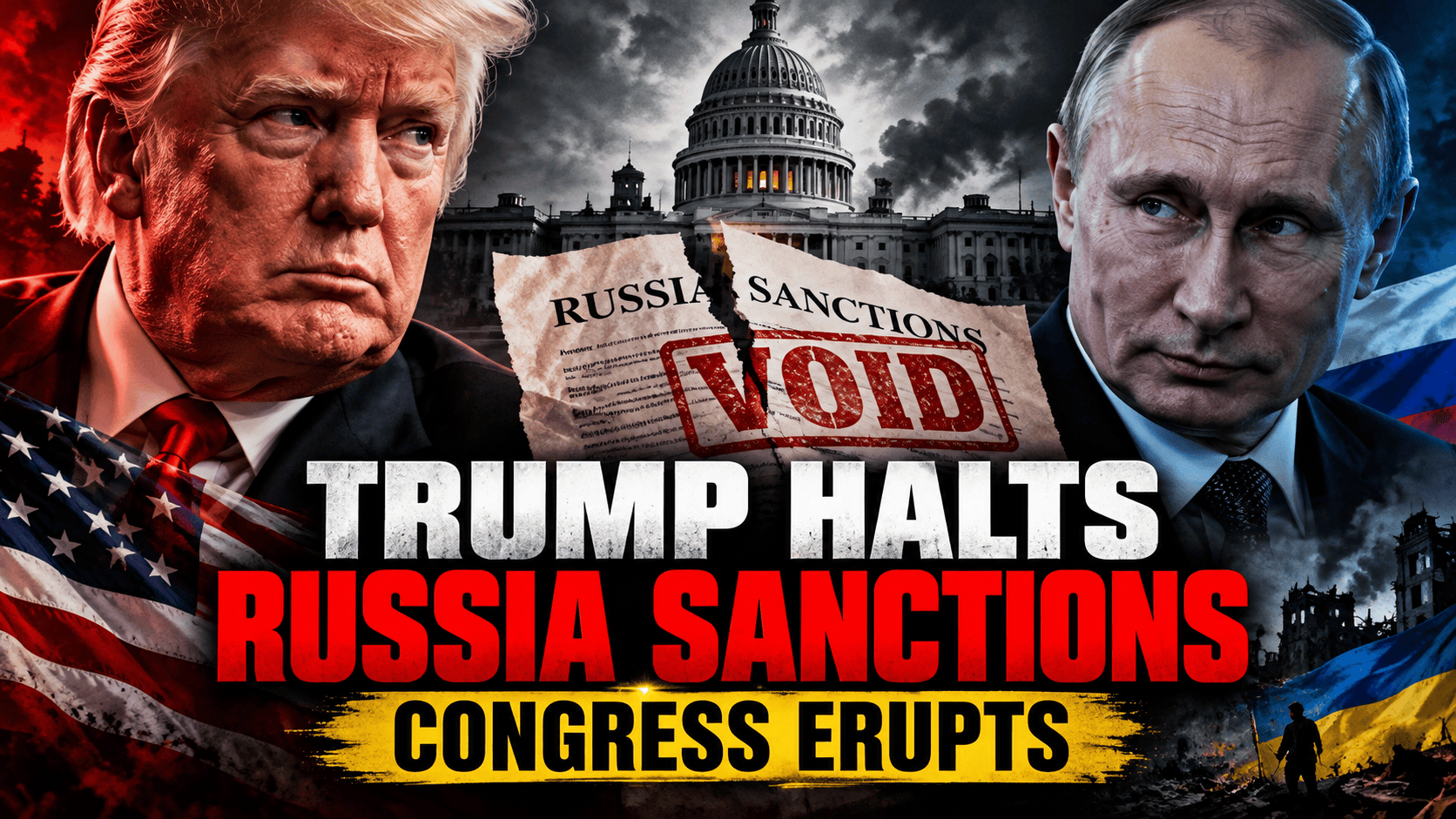
President Donald Trump has suspended a major package of new sanctions targeting Russia, triggering anger among Republicans and Democrats who had overwhelmingly supported legislation designed to squeeze the Russian economy and pressure President Vladimir Putin over the war in Ukraine.
The decision came Friday, October 16, just days before the sanctions were scheduled to take effect.
Trump justified the move by invoking America’s national interest.
But that explanation raises an uncomfortable question: If punishing Russia was in America’s national interest when Congress passed the law, what changed before the penalties could even begin?
The White House had not publicly provided a detailed explanation of the national-interest justification in the initial reporting, although it said a report had been submitted to Congress.
And that leaves Washington arguing over something much bigger than sanctions.
It leaves the country questioning who actually controls American foreign policy.
A Sanctions Law With Bipartisan Support
______________________________________________
🔴 Help keep this independent voice alive and uncensored.
Support independent journalism and help keep Chris Wick News going.
👉 Support Chris Wick on GoFundMe
The legislation, named after the late Republican Senator Lindsey Graham, was designed to increase economic pressure on Moscow.
Its measures targeted Russian financial institutions, officials and the network of tankers used to move Russian energy around the world.
It also provided for tariffs of up to 100% on certain major purchasers of Russian oil and natural gas, subject to provisions and exceptions in the legislation.
The strategy was straightforward: make financing Russia’s war more expensive and strengthen Washington’s negotiating position.
Congress supported the measure across party lines. The Senate passed it by an 86–11 vote, according to Republican Senator Thom Tillis.
Trump signed the legislation into law.
Then he suspended key provisions before they took effect.
Congress passed the weapon. The president signed off on it. Then the president chose not to use it.
That sequence does not automatically establish wrongdoing. Presidents can possess significant statutory discretion over sanctions enforcement.
But legal authority and political accountability are two very different things.
Republicans Are Questioning Trump, Too
This controversy cannot be dismissed as another predictable fight between Democrats and Republicans.
Republican Senator Thom Tillis publicly condemned the waiver and questioned why the administration was declining to enforce legislation overwhelmingly approved by the Senate.
Texas Republican Senator John Cornyn also criticized the decision, invoking the memory of Lindsey Graham, who had spent considerable political energy advocating tougher measures against Moscow.
Democrats were equally forceful.
Senate Democratic leader Chuck Schumer accused Trump of giving Russia economic relief, while Senator Richard Blumenthal, who helped develop the sanctions legislation, argued that the waiver undermined the intended pressure on Putin.
The unusual element is not that Washington is divided.
It is that members of Trump’s own party are openly challenging a decision that appears to reverse the purpose of legislation they helped pass.
Yet criticism does not necessarily translate into action.
Congress could pursue additional legislation or oversight, but reversing presidential decisions requires political agreement, procedural cooperation and potentially enough votes to overcome a veto.
That makes an immediate reversal uncertain.
The Russian Diesel Deal Changes the Equation
The sanctions decision did not happen in isolation.
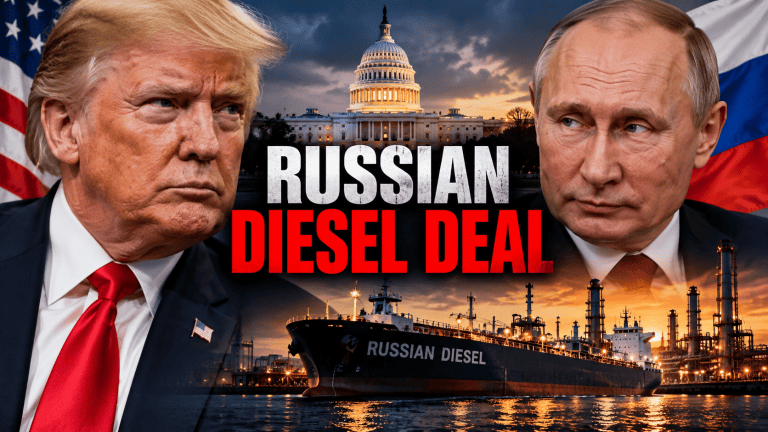
Trump had recently announced an agreement involving Russian diesel supplies, presenting the arrangement as part of an effort to reduce energy prices.
The timing matters.
Americans are dealing with elevated fuel costs, and the November 3 midterm elections are approaching.
Lower gasoline and diesel prices could provide economic and political relief for the administration.
But there is a contradiction worth examining.
Washington has spent years using economic restrictions to limit Russia’s ability to finance its war.
Now the United States is seeking additional Russian energy supplies while delaying new penalties intended to restrict Russian revenues.
Supporters of the administration’s approach could argue that stabilizing energy markets serves immediate American interests and that keeping economic channels open may create diplomatic leverage.
Critics argue that purchasing Russian energy and suspending sanctions risks strengthening Moscow’s finances without securing meaningful concessions.
Both positions deserve scrutiny.
What matters is whether the administration can demonstrate that its approach produces results.
If sanctions are supposed to pressure Putin, what does removing that pressure actually buy Washington?
Ukraine Is Watching the Pressure Disappear
For Ukrainian President Volodymyr Zelenskyy, the waiver represents another troubling development in an increasingly strained relationship with Washington.
Ukraine has relied heavily on Western military, financial and diplomatic support since Russia launched its full-scale invasion in February 2022.
Economic sanctions have been one component of that support.
They have not ended the war, but they were intended to restrict Moscow’s access to revenue, technology and international financial systems.
Zelenskyy warned that easing American pressure could encourage Putin to continue military operations.
That concern is particularly serious as Ukraine faces attacks on energy infrastructure heading toward another winter.
There is also a broader diplomatic problem.
If Russia concludes that Washington is unwilling to enforce additional economic penalties, Moscow may calculate that continuing the war carries fewer immediate consequences.
That is a possibility, not an established outcome.
The actual effect will depend on existing sanctions, Russian revenues, international cooperation and the decisions of both governments.
Still, the central question remains:
Why would Putin make concessions today if he believes the economic pressure on his government may be weaker tomorrow?
Is This Negotiating Strategy or Political Convenience?
There is a legitimate argument for flexibility in diplomacy.
Sanctions are instruments of policy, not ends in themselves.
A government might temporarily suspend penalties to encourage negotiations, stabilize markets or obtain concessions that cannot be secured through confrontation alone.
But that argument becomes convincing only when the public can understand what the government expects to receive in exchange.
Has Russia offered verifiable commitments toward ending the fighting?
Has Moscow agreed to meaningful restrictions on military operations?
Is there an enforceable diplomatic framework behind the waiver?
Or is the administration prioritizing short-term energy relief while hoping that longer-term geopolitical consequences remain manageable?
The available reporting does not establish a negotiated peace concession connected to the sanctions suspension.
That absence of a publicly demonstrated result is precisely why Congress is demanding answers.
A negotiating strategy without visible conditions risks looking less like leverage and more like surrendering leverage.
The Bigger Problem: American Credibility
The consequences extend beyond Ukraine.
Countries watching Washington will be asking whether bipartisan American legislation translates into predictable policy.
Allies need to know whether commitments will survive political changes.
Adversaries want to know how much pressure Washington is actually prepared to maintain.
Energy-importing nations, including India and China, have their own economic interests in how Russian oil and gas are treated under American sanctions.
And Russia has every reason to study the divisions emerging inside the United States.
None of this proves that Trump is deliberately acting on Putin’s behalf.
That is a political accusation, not an established fact.
But it does raise a legitimate issue of accountability.
When a president suspends legislation he recently signed, particularly legislation backed by overwhelming congressional support, Americans are entitled to a clear explanation of the objectives, expected benefits and potential costs.
A national-interest declaration may satisfy a legal requirement.
It should not automatically end public questioning.
Chris Wick’s Final Thought: The Price of Pressure
Washington tells the world that sanctions are necessary to stop wars.
Congress passes them. Presidents sign them. Governments promise consequences.
Then, just as those consequences are about to begin, the pressure disappears.
Perhaps Trump has a larger diplomatic strategy. Perhaps energy prices are driving the decision. Perhaps negotiations are taking place behind doors the public cannot see.
But secrecy is not evidence of success.
And political promises are not the same as measurable results.
The people paying the price of this war deserve more than competing statements from Washington, Moscow and Kyiv.
They deserve to know what is being negotiated, what is being sacrificed and who ultimately benefits.
Because when a government threatens consequences and then quietly removes them, the question is no longer whether the threat was serious.
The question is who was ever supposed to believe it.
Sources
Associated Press — Trump’s decision to waive Russian sanctions outrages Congress, but no quick counter seen https://apnews.com/article/trump-sanctions-waiver-russa-putin-ukraine-war-3cc9740c39e9e9eb713b1c553b5709e6
Associated Press — Trump puts new Russia sanctions that he recently signed into law on hold, citing national interest https://apnews.com/article/e50c561ab805883bb4e484c092d8fadd
Reuters — Trump waives key Russia-related sanctions, tariffs before they take effect under new law https://www.reuters.com/world/europe/trump-waives-many-russia-related-sanctions-tariffs-before-they-were-take-effect-2026-10-17/
Associated Press — The Kremlin relishes in the US-Russia diesel deal and Trump’s criticism of Zelenskyy https://apnews.com/article/d99a9aed32baeef7b7a0fcaec084509c
About the Author