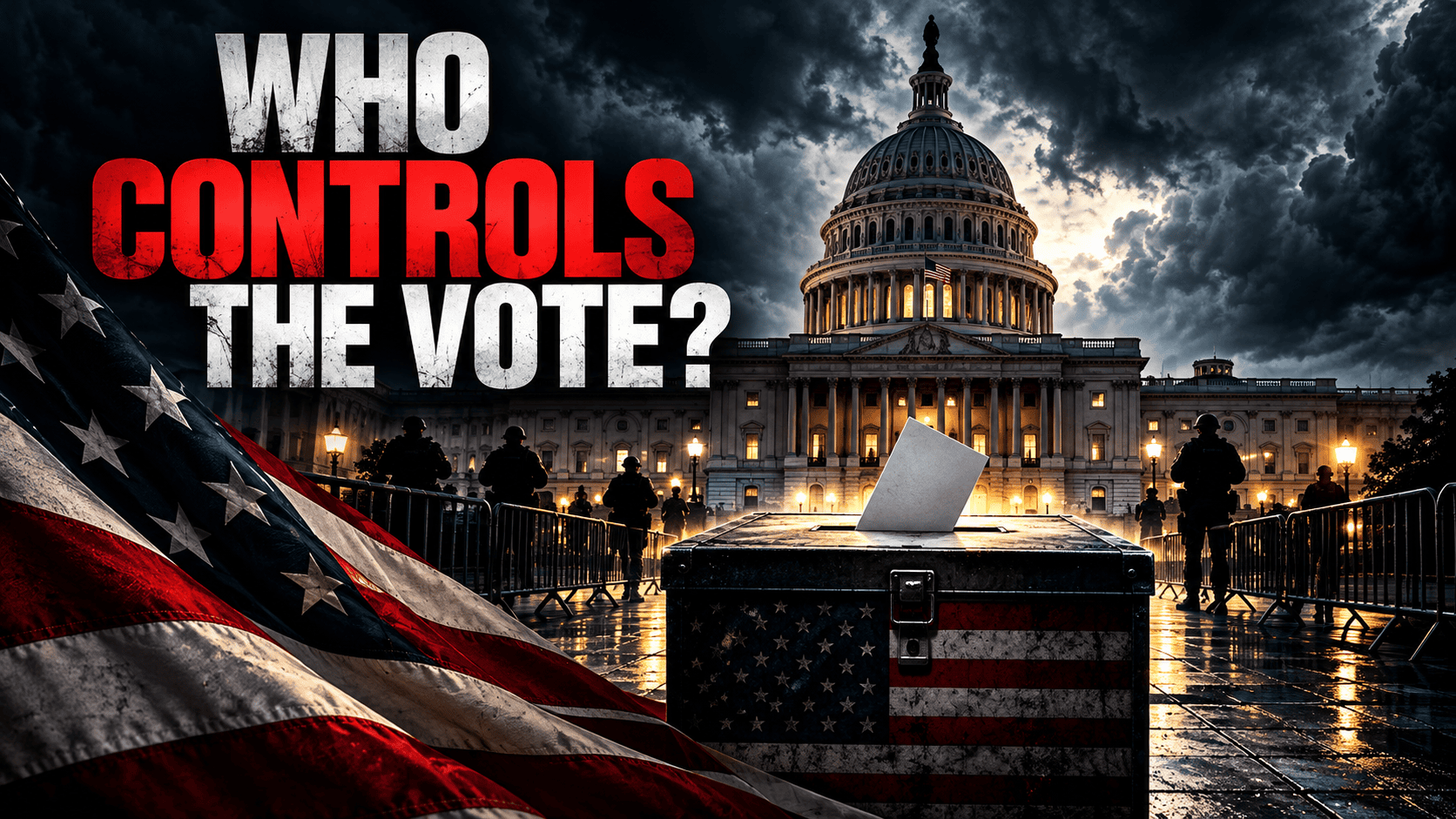
When protecting democracy becomes a struggle over who controls it
Something troubling is developing around America’s 2026 midterm elections. And the most disturbing question may not be whether Donald Trump intends to interfere with the vote.
It may be whether Americans can still distinguish between protecting an election and controlling one.
A new Reuters investigation outlines nine possible ways the Trump administration could disrupt the November midterms, ranging from federal investigations and ballot seizures to military deployments and disputes over congressional certification.
The report draws on interviews with more than 50 election officials, lawyers, and voting experts. It raises serious questions about presidential power and the independence of state election systems.
But there is another question worth asking.
Who decides when election security becomes election interference?
And perhaps more importantly, who gets to make that accusation without being subjected to the same scrutiny?
Nine scenarios, one enormous political question
Reuters identifies nine potential flashpoints surrounding the midterms: fraud allegations, pressure on election officials, ballot seizures, federal monitors, immigration enforcement near polling locations, military deployments, emergency powers, investigations of election administrators, and congressional disputes over seating elected representatives.
______________________________________________
🔴 Help keep this independent voice alive and uncensored.
Support independent journalism and help keep Chris Wick News going.
👉 Support Chris Wick on GoFundMe
These are not insignificant possibilities.
A federal seizure of election equipment during an active vote count could create serious administrative problems. A disputed certification could leave congressional seats temporarily vacant. A confrontation between state officials and federal authorities could produce weeks of litigation.
But an essential distinction must remain clear.
A possible scenario is not proof of an established plan.
Reuters presents these developments as risks identified by officials and legal experts, not as nine confirmed operations scheduled to unfold.
That distinction matters enormously.
In an atmosphere already saturated with political suspicion, the difference between what could happen and what is happening can disappear remarkably quickly.
And once that happens, speculation itself can become a political weapon.
The federal government wants oversight. The states want control.
The American constitutional system places substantial responsibility for administering elections in the hands of the states.
That division of authority is not an administrative inconvenience. It is part of the structure designed to prevent any single political office from controlling the entire electoral process.
The Trump administration argues that stronger federal involvement is necessary to protect election integrity, maintain accurate voter rolls, and prevent unlawful voting.
Critics fear that those same powers could be used to intimidate election officials, challenge legitimate results, or disrupt voting.
Both claims deserve examination.
Preventing unlawful voting is a legitimate government responsibility. So is protecting eligible voters from intimidation, improper exclusion, or interference.
But neither objective gives federal authorities unlimited power.
The critical question is whether the government is enforcing existing law or attempting to expand its authority beyond constitutional boundaries.
That question should not depend on which party occupies the White House.
When federal agents enter the election process
One of the more consequential developments described by Reuters involves federal investigations of election offices.
In January, FBI agents seized election records from Fulton County, Georgia, as part of an investigation involving allegations connected to the 2020 election.
The Justice Department defended the operation, saying the warrant had judicial authorization and that the investigation followed lawful procedures.
Critics viewed the seizure as a warning about what federal intervention might look like during a future election.
Both the legal authority and the practical consequences deserve attention.
A properly authorized investigation is not automatically election interference.
But an investigation that disrupts ballot custody, delays counting, or places inappropriate pressure on officials could create serious problems, even if it begins under lawful procedures.
The existence of a warrant does not eliminate the need for accountability. Neither does political opposition establish that an investigation is illegitimate.
The public deserves evidence, not competing slogans.
Could immigration enforcement become voter intimidation?
Another scenario involves immigration enforcement near polling locations.
Reuters reports that election officials worry the presence of immigration agents could discourage some eligible voters from approaching polling stations.
The Department of Homeland Security says ICE is not planning operations targeting polling locations, although agents could respond to major incidents or execute lawful duties.
Here again, the distinction between an actual operation and a hypothetical risk is essential.
Law enforcement does not cease to exist on Election Day.
But eligible voters must be able to cast ballots without unlawful intimidation.
If enforcement operations occur near voting locations, the public should expect clear explanations of their purpose, legal authority, and safeguards against interference.
And those standards should apply whether the administration is Republican or Democratic.
The military question: A line that must not be crossed
Perhaps the most dramatic possibility raised in the Reuters investigation concerns military involvement.
Could a president use an emergency declaration or invoke the Insurrection Act to justify deploying troops during an election crisis?
Legal experts cited by Reuters emphasize that presidential emergency powers do not simply erase election laws or state authority.
There are important legal restrictions on military involvement in election administration and on interference with voters.
General Dan Caine, chairman of the Joint Chiefs of Staff, said in an August letter that the military had no plans to deploy troops to polling places or seize election materials.
That is a significant statement.
The deployment of armed military personnel to influence voting or ballot counting would represent a profound challenge to democratic government.
But reporting that such an operation is legally and politically conceivable is different from establishing that it has been ordered.
A responsible public debate must preserve that distinction.
The media’s responsibility cannot be ignored
This is where the discussion becomes uncomfortable.
Reuters has documented legitimate concerns expressed by election officials and legal experts. Those concerns deserve public attention.
But the broader media environment also deserves scrutiny.
Would an identical expansion of federal election oversight be described the same way under a Democratic president?
Would federal investigations, emergency powers, and pressure on state officials receive the same intensity of coverage?
Would allegations of election irregularities be examined according to the same evidentiary standards, regardless of which party made them?
These are questions, not conclusions about Reuters’ motives.
A free press must investigate potential abuses of power. It must also distinguish verified conduct from speculation, apply consistent standards, and avoid allowing political expectations to substitute for evidence.
Journalism becomes less useful when its purpose shifts from testing claims to confirming what its audience already believes.
That standard applies to independent outlets as much as it does to major news organizations.
What happens if neither side accepts the result?
The November 3 election will determine control of the House of Representatives, influence the balance of power in the Senate, and shape the final two years of Trump’s current presidential term.
But the danger may extend beyond which party wins.
Imagine an election in which one side alleges fraud, the other alleges voter suppression, federal investigators demand records, state officials refuse cooperation, and lawsuits begin before the final ballots are counted.
Now imagine that millions of Americans have already decided which explanation they believe.
Under those circumstances, even a legally valid election result could face a crisis of public confidence.
That is not evidence that such a crisis will occur. It is a warning about what happens when political loyalty becomes more important than verifiable facts.
The Constitution establishes procedures for elections and transitions of power. Those procedures must remain stronger than the ambitions of any president, political party, or congressional leader.
The unanswered question: Who watches the watchers?
Election integrity cannot simply mean trusting the government when your preferred party is in charge.
Nor can it mean automatically rejecting investigations because the wrong political figure authorized them.
Real accountability requires transparent procedures, independent courts, preserved evidence, lawful investigations, and officials willing to resist improper political pressure.
It also requires a media willing to question the government without declaring every hypothetical danger an accomplished fact.
The Trump administration should be held accountable for its actions.
State election officials should be held accountable for theirs.
Congress should be held accountable for respecting lawful election outcomes.
And the press should be held accountable for the accuracy and fairness of its reporting.
No institution should receive a permanent exemption from scrutiny.
The final warning
America is approaching an election in which the battle over the legitimacy of the result may become almost as important as the vote itself.
Reuters has identified nine scenarios that election officials believe warrant preparation. The White House insists its objective is election security. Courts, state authorities, and federal law will determine how far presidential power can lawfully extend.
For now, the most serious scenarios remain possibilities rather than established outcomes.
But the underlying tension is real.
When every political faction claims to be defending democracy, the public must demand evidence of what each faction is actually doing.
Because the moment election integrity becomes a slogan reserved for one political side, its meaning begins to collapse.
And when Americans can no longer agree on the rules for choosing their representatives, the argument is no longer simply about Donald Trump, Republicans, or Democrats.
It is about whether the institutions responsible for transferring political power can still command public trust.
The ballots have not yet been counted. The accusations have already begun.
And the country is heading toward November with a question that deserves more than another partisan answer:
Who will defend the integrity of the election when the result is not the one they wanted?
Sources
Federal Election Commission — Election and Voting Information
https://www.fec.gov/introduction-campaign-finance/election-results-and-voting-information
USA.gov — Congressional Elections and Midterm Elections
https://www.usa.gov/midterm-elections
Reuters — Six reasons Democrats may fall short of a midterm landslide in November (October 12, 2026)
This article contains independent political opinion and analysis based on publicly available reporting and official information. Scenarios discussed are hypothetical unless otherwise identified as documented events. The commentary does not allege that election interference has occurred without supporting evidence. Readers are encouraged to examine the original sources and reach their own conclusions.
About the Author