Washington and Kyiv face a deepening diplomatic rift as Ukraine's military dependence on American support comes under scrutiny.
An original Chris Wick News analysis based on Reuters reporting and additional verified coverage.
The Alliance Is Cracking — and Russia Is Watching
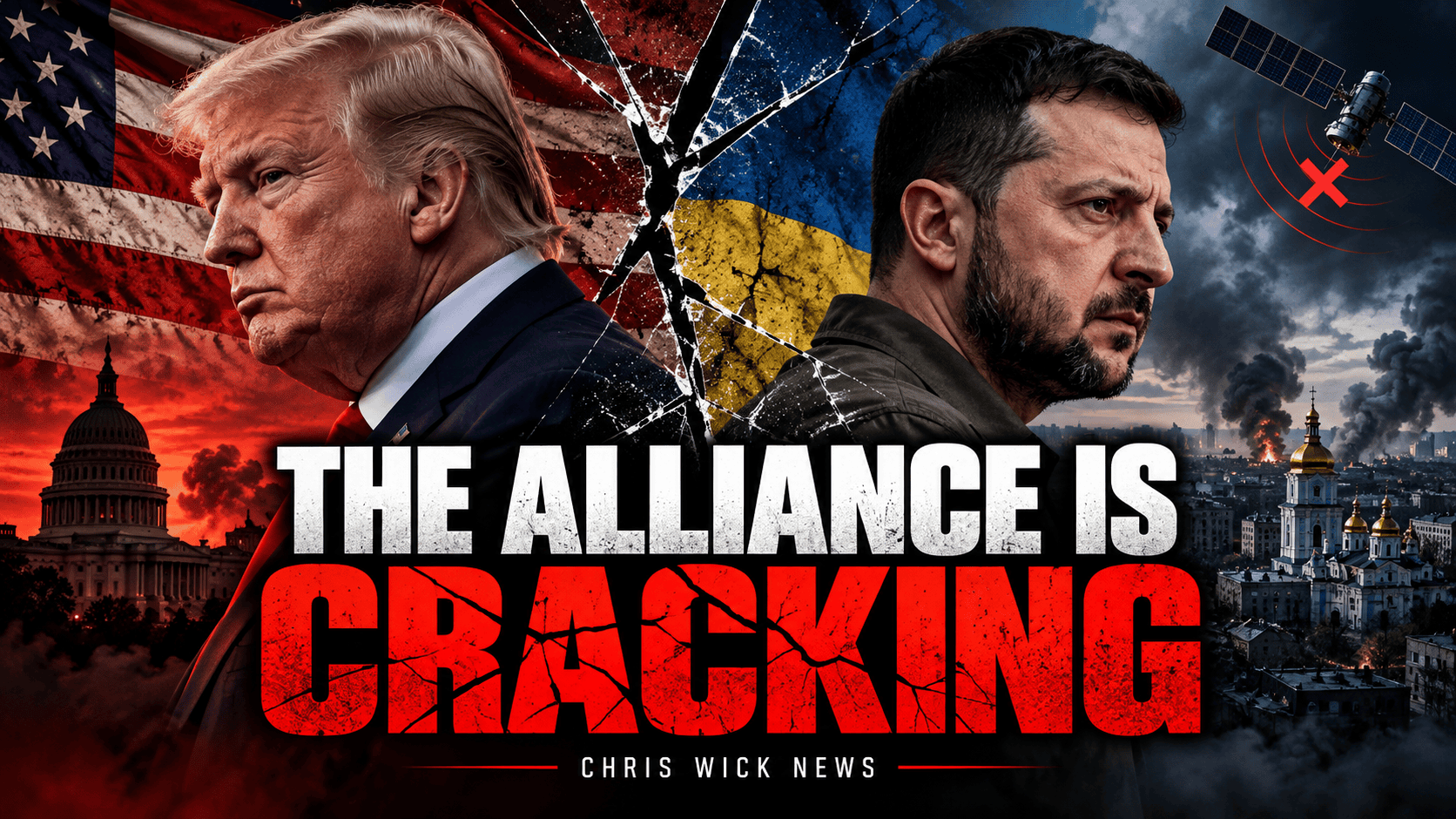
The relationship between Washington and Kyiv is entering another dangerous chapter, and the consequences could extend far beyond an increasingly bitter dispute between two presidents.
U.S. President Donald Trump and Ukrainian President Volodymyr Zelensky are once again openly at odds. But this time, the disagreement involves something far more consequential than diplomatic insults or political disagreements.
Ukraine’s access to American intelligence, military technology, weapons and potentially even its ability to defend critical infrastructure could be at stake.
According to Reuters reporting published October 17, tensions have intensified over Ukrainian attacks on Russian energy facilities, American fuel prices and Washington’s efforts to negotiate an end to the war.
The confrontation raises an uncomfortable question: What happens when a country fighting for its survival discovers that its most powerful ally may also be its greatest source of political pressure?
For Ukraine, that question is no longer theoretical.
Trump’s Energy Problem Becomes Ukraine’s Diplomatic Nightmare
At the centre of the latest dispute is a conflict between military strategy and economic interests.
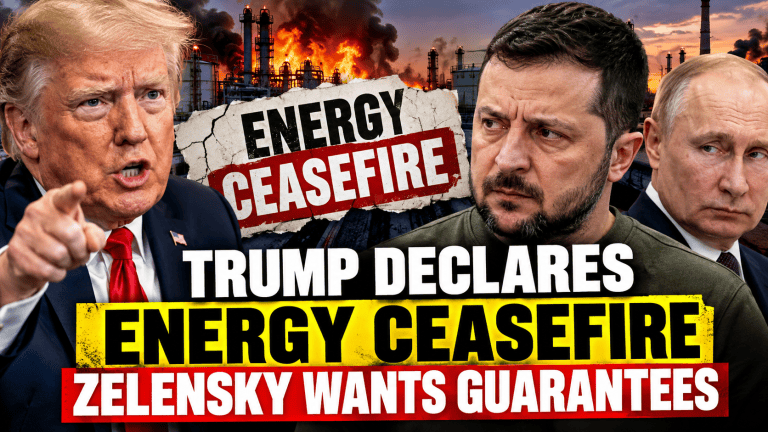
Ukraine has continued targeting Russian oil refineries and energy infrastructure, attempting to weaken Moscow’s ability to finance and sustain its military operations.
______________________________________________
🔴 Help keep this independent voice alive and uncensored.
Support independent journalism and help keep Chris Wick News going.
👉 Support Chris Wick on GoFundMe
Trump, meanwhile, faces mounting pressure over American gasoline and diesel prices ahead of November’s congressional midterm elections.
The president has criticized Ukrainian attacks on Russian energy facilities, arguing that they are contributing to rising fuel costs.
However, Reuters reports that energy analysts identify the U.S.-Israeli war with Iran and the resulting disruption around the Strait of Hormuz as major drivers of the broader increase in energy prices.
That distinction matters.
If global energy markets are primarily responding to a much larger regional conflict, how much responsibility should Ukraine bear for attempting to weaken the country invading its territory?
The political contradiction is difficult to ignore: Washington wants lower energy prices, while Kyiv wants to deprive Moscow of the resources needed to continue fighting.
Both governments are pursuing their own national interests. Unfortunately, those interests are increasingly colliding.
The Starshield Disruption Raises Serious Questions
Perhaps the most alarming development involves Ukraine’s access to American-controlled satellite technology.
Reuters reported on October 15 that an instruction to restrict Ukraine’s Starshield satellite service originated inside the White House, according to two U.S. officials and a Western official familiar with the matter.
Starshield is a military-oriented satellite communications system developed by SpaceX.
Its capabilities are important to Ukraine’s battlefield communications and drone operations.
Although service has reportedly been partially restored, the incident exposed a significant vulnerability.
Ukraine relies on technology and infrastructure that remain subject to decisions made outside its borders.
This creates a strategic problem that no battlefield victory can easily resolve.
A military can possess weapons, trained soldiers and defensive positions. But what happens when the communications systems connecting those forces become instruments of diplomatic leverage?
The reported disruption does not establish that Washington intends to abandon Ukraine. It does, however, demonstrate how quickly political disagreements can affect systems essential to modern warfare.
Intelligence Sharing: The Invisible Weapon Ukraine Cannot Afford to Lose
Satellite communications are only one part of Ukraine’s dependence on the United States.
American intelligence-sharing arrangements have helped Ukraine identify threats, monitor Russian military activity and strengthen its ability to respond to missile and drone attacks.
That support becomes particularly important as another winter approaches.
Russia has repeatedly targeted Ukrainian energy infrastructure, threatening electricity generation, heating systems and other essential civilian services.
Zelensky has warned that American officials raised the possibility of reducing or ending intelligence support.
Trump has maintained that the United States continues sharing intelligence.
These competing statements leave important questions unanswered about the future reliability and extent of American assistance.
The distinction between an actual cutoff and the threat of one is important. There is no verified basis in the cited reporting to conclude that all American intelligence support has ended.
Nevertheless, uncertainty itself can carry consequences.
Military planners depend on reliable arrangements. A government that must continually question whether critical information will arrive faces an additional burden during an already devastating war.
Washington Turns Toward Russian Fuel
Another development has complicated the relationship.
Trump announced on October 9 that he had reached an arrangement with Russian President Vladimir Putin involving temporary sanctions relief on Russian fuel and imports of Russian diesel.
The stated objective was to increase available fuel supplies and ease pressure on energy prices.
From an American domestic economic perspective, the reasoning is understandable: higher fuel prices affect consumers, businesses and political support.
From Ukraine’s perspective, however, renewed purchases of Russian energy raise serious concerns.
Energy exports provide revenue to the Russian economy, potentially helping Moscow sustain government spending during the war.
The precise financial effect of the announced arrangement remains uncertain, and it would be inaccurate to assume that every dollar of energy revenue directly finances military operations.
Still, the underlying political question remains.
Can Washington credibly pressure Russia to end its invasion while simultaneously seeking economic arrangements that may benefit Moscow?
Supporters of Trump’s approach may argue that economic engagement can create diplomatic opportunities and stabilize global markets.
Critics see the risk of weakening financial pressure on Russia before a durable peace agreement exists.
Neither position eliminates the difficult trade-offs facing policymakers.
Zelensky Pushes Back — But How Far Can He Go?
Zelensky has responded to Trump’s criticism more forcefully than in previous disputes.
The Ukrainian president has indicated that his government will not simply stop striking Russian energy targets while Moscow continues attacking Ukrainian infrastructure.
That position reflects a fundamental reality of the conflict.
Ukraine regards attacks on Russian military-supporting infrastructure as part of its defensive strategy. Washington increasingly views some of those operations through the lens of global energy prices and domestic political consequences.
Yet Zelensky faces an enormous diplomatic risk.
Publicly challenging the American president may strengthen his standing among Ukrainians who oppose concessions to Moscow.
It could also make negotiations with Washington more difficult.
Despite the increasingly confrontational rhetoric, Ukrainian officials have reportedly expressed continued interest in working with Trump’s representatives, Steve Witkoff and Jared Kushner.
That suggests Kyiv recognizes the danger of allowing the relationship to collapse entirely.
Zelensky may be willing to challenge Washington publicly, but Ukraine still needs Washington strategically.
Europe Supports Ukraine — But Can It Replace America?
European governments have responded to the deterioration in U.S.-Ukrainian relations by reaffirming their support for Kyiv.
Zelensky received strong backing during meetings in Britain, while European Union leaders also rallied around Ukraine amid concerns about Washington’s changing position.
However, political declarations and military capabilities are not interchangeable.
European countries can provide financial assistance, weapons, training and diplomatic support.
Replacing American intelligence capabilities, advanced technology and other specialized military assistance would be a much more complicated undertaking.
The challenge is not simply how much money Europe is willing to spend.
It is whether European governments can provide the necessary systems, capabilities and coordination quickly enough to prevent dangerous gaps in Ukraine’s defences.
For European leaders, the dispute also exposes a broader question about their own security.
If American support can change dramatically with political circumstances, how dependent should Europe remain on Washington for its long-term defence?
Is Putin Becoming the Biggest Beneficiary?
Russia does not need Washington and Kyiv to sever relations completely to gain a strategic advantage.
Even prolonged uncertainty could complicate Ukrainian military planning, weaken diplomatic coordination and encourage Moscow to believe that Western unity is deteriorating.
Former American officials have warned that the dispute could damage efforts to end the war.
But it is also important to distinguish between possible strategic benefits for Russia and evidence of deliberate American efforts to strengthen Moscow.
The Reuters reporting establishes significant disagreements, threats involving assistance and an announced Russian fuel arrangement.
It does not prove that Washington’s ultimate objective is a Russian victory.
Trump continues to say he wants the war to end and intends to deal with both Zelensky and Putin.
The central issue is whether his approach will produce meaningful negotiations or create additional pressure on the country defending itself against Russia’s invasion.
Those are very different outcomes.
The American Midterms Could Change the Equation
The November 2026 U.S. congressional elections introduce another layer of uncertainty.
Republicans face the possibility of losing control of one or both chambers of Congress.
A change in congressional leadership could affect debates over Ukraine assistance, sanctions and presidential foreign-policy decisions.
Some Republicans have continued to support Ukraine and expressed opposition to agreements they believe would excessively favour Moscow.
Zelensky may therefore see value in maintaining a firm position while American domestic politics evolve.
But waiting for political change carries risks.
Wars do not pause for elections.
Missiles do not stop flying while governments debate funding.
And civilians facing another winter of attacks cannot depend on future political outcomes that remain uncertain.
The Bigger Picture: When Alliances Become Negotiating Tools
The latest confrontation reveals a difficult reality about international politics.
Alliances are often described in terms of friendship, shared values and mutual commitments.
Yet they also depend on economic interests, military capabilities, domestic politics and the priorities of individual governments.
Ukraine’s dependence on American support gives Washington substantial influence over Kyiv’s decisions.
That influence may be used to encourage negotiations, but it also creates concerns about the terms Ukraine might be pressured to accept.
At the same time, the United States has legitimate reasons to examine the costs, objectives and long-term sustainability of its involvement.
Asking those questions is not inherently an endorsement of Russia.
The real test is whether American policy can pursue an end to the fighting without encouraging further aggression or undermining the prospects for a durable settlement.
A ceasefire that merely postpones another war is not necessarily lasting peace.
And military assistance without a realistic diplomatic strategy is not a complete solution either.
Final Thought: The Most Dangerous Weapon May Be Uncertainty
There is something deeply unsettling about a war in which a nation’s survival may depend not only on what happens along the front lines, but also on political decisions made thousands of kilometres away.
Ukraine can prepare for Russian missiles.
It can build fortifications, deploy drones and train soldiers.
But preparing for uncertainty inside its most important alliance is a different kind of battle.
Trump says he wants peace.
Zelensky says Ukraine must defend itself.
Putin continues pursuing Russia’s war.
And somewhere between those competing objectives are millions of civilians whose futures depend on decisions they cannot control.
Perhaps the darkest question is not whether America will abandon Ukraine.
It is whether the threat of abandonment could become powerful enough to shape the peace Ukraine is ultimately forced to consider.
And if that happens, will the world call it diplomacy — or simply another victory for the politics of pressure?
Chris Wick News | Independent News. Uncomfortable Questions. No Political Team Gets a Free Pass.
Editor’s note: This article contains original news analysis and commentary. Reported events are distinguished from political interpretations and possible future scenarios. Developments remain subject to change.
Sources
Reuters — Trump-Zelenskiy rift threatens vital support for Kyiv (October 17, 2026) https://www.reuters.com/world/europe/trump-zelenskiy-rift-threatens-vital-support-kyiv-2026-10-17/
Associated Press — Trump says Russia and Ukraine agree to an energy ceasefire but Kyiv says attacks continue (October 11, 2026) https://apnews.com/article/f621fa788196f204448e7f75fcc78c68
About the Author