For two decades, billions of dollars have been poured into a sweeping effort to transform African agriculture. The promise was enormous: better seeds, more fertilizer, higher yields and, ultimately, less hunger. But new analysis of nearly two decades of data raises an uncomfortable question — what if the model produced more inputs and farmland without delivering the promised transformation?
The findings reported by Children’s Health Defense in its September 3, 2026 article, “‘Magic Seeds’: Bill Gates and His Failed Plan to End Hunger in Africa,” focus on the Alliance for a Green Revolution in Africa, or AGRA, an initiative launched roughly 20 years ago with backing from the Gates and Rockefeller foundations.
AGRA promoted an agricultural strategy built around improved seeds, synthetic fertilizers, mechanization and commercial markets. Its original ambitions included doubling crop yields and farmer incomes while cutting food insecurity in half.
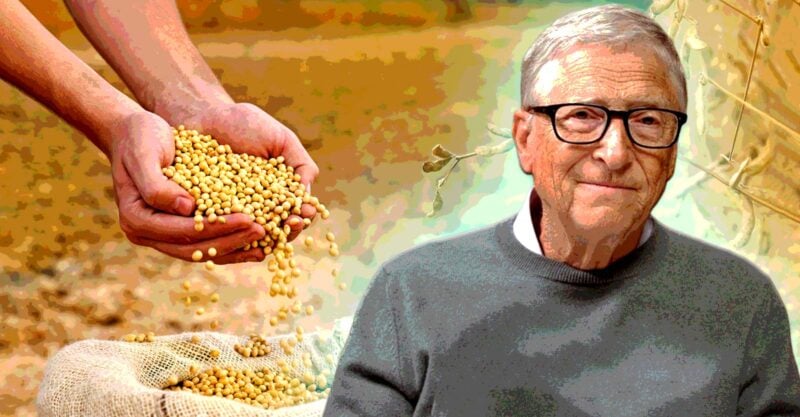
Bill Gates became one of the most prominent advocates of the approach, promoting the idea that technological advances and what he called “magic seeds” could help lift millions of Africans out of poverty.
But according to an analysis of United Nations and World Bank data covering 2006 through 2024, the results have fallen well short of those original ambitions.
More fertilizer, more farmland — but much smaller yield gains
The analysis cited by the source examined 13 countries that were the focus of AGRA’s efforts.
Across those countries, fertilizer use more than doubled while cultivated land expanded by 46%. Yet yields for major staple foods increased by only 25% — far below the doubling that AGRA initially promised.
The rate of staple-crop yield growth was approximately 1.2% annually, slightly below the 1.3% rate recorded during the 12 years before AGRA. During the most recent six-year period examined, growth slowed to roughly 0.4% per year.
Perhaps the most troubling statistic concerns hunger.
______________________________________________
🔴 Help keep this independent voice alive and uncensored.
Support independent journalism and help keep Chris Wick News going.
👉 Support Chris Wick on GoFundMe
The number of chronically undernourished people increased by an average of 58% across the AGRA countries examined.
That does not necessarily mean AGRA alone caused the increase. The source notes that African food systems have been hit by conflicts, the COVID-19 pandemic and soaring food and fertilizer prices.
But the numbers raise a larger question about whether simply increasing agricultural production is enough to solve hunger.
The crop-diversity problem
One of the less obvious consequences highlighted in the analysis is what happened to traditional crops.
As agricultural policies and subsidies encouraged commercially oriented crops such as maize and rice, indigenous crops including millet and sorghum lost ground in some areas.
That shift matters because many traditional crops are better adapted to drought, heat and poorer soils while also contributing to more diverse diets.
Zambia provides a striking example cited in the report.
The number of undernourished people there rose by 33%. At the same time, land devoted to millet declined by 42%, while sorghum production fell 62% from 2006 levels.
Fertilizer use increased 155% in Zambia, reaching the highest levels among the AGRA countries, yet maize yields increased by only 14%.
The contrast raises an important question: Does an agricultural system become more resilient simply because farmers use more commercial inputs?
Malawi offers another warning sign
Malawi was among AGRA’s stronger performers when measured by crop yields.
Staple-crop yields increased 78% between 2006 and 2024.
Yet the number of chronically undernourished people increased 61%.
Population growth accounts for part of the increase, according to the source. Still, the divergence between higher production and greater hunger illustrates a fundamental problem: producing more food does not automatically mean that people can afford it, access it or benefit economically from it.
That distinction sits at the center of the broader debate over Africa’s agricultural future.
AGRA disputes the bleakest interpretation
The story is not entirely one-sided.
AGRA’s own 20-year review acknowledges that hunger has increased and that farmers have not yet prospered to the extent hoped. Its review says the gains of the past two decades “have not added up to transformation.”
At the same time, AGRA argues that there have been real gains across Africa’s agrifood systems.
Its review cites approximately a 40% increase in cereal yields, using a narrower group of crops than the analysis cited by the source. AGRA also points to stronger agricultural economic output and argues for continued investment in market-oriented agricultural development.
That distinction is important.
The competing assessments are not simply using different opinions; they are also measuring different things.
One analysis looks broadly at staple foods, including roots and tubers, while AGRA emphasizes a narrower cereal-yield measure. And higher total agricultural revenue does not necessarily mean individual small farmers became wealthier after accounting for rising production costs.
The deeper question: Who benefits?
This is where the controversy surrounding AGRA moves beyond seeds and fertilizer.
The initiative attracted more than $1.5 billion in donations, with approximately two-thirds coming from the Gates Foundation. Governments in AGRA’s target countries also spent an estimated $1 billion annually subsidizing fertilizer and other agricultural inputs.
That represents a massive investment in a particular vision of African agriculture.
Critics argue that the emphasis on commercial seeds, fertilizer, private investment and market-driven production can make farmers more dependent on costly external inputs rather than strengthening local seed systems, soil health and crop diversity.
Supporters, meanwhile, maintain that Africa needs higher productivity, stronger markets and greater investment if its agricultural economies are to develop.
The disagreement is therefore not simply about whether farmers should use technology.
It is about which technologies, whose priorities and who ultimately controls the food system.
Twenty years later, the debate is far from settled
The original Green Revolution model was presented as a pathway from technological progress to higher yields, higher incomes and less hunger.
The data examined in the source suggest that those links are far from automatic.
Kenya, for example, saw staple-crop yields fall 8% since AGRA began, while the number of undernourished people more than doubled, according to the analysis cited.
The source also points to the environmental consequences of expanding farmland. When agricultural production grows primarily by putting more land under cultivation rather than substantially increasing productivity on existing farmland, deforestation, biodiversity loss and increased carbon emissions can become serious concerns.
AGRA representatives acknowledge that expanding cropland presents an environmental hazard and argue that the organization has been working to address the problem.
But critics say the evidence should prompt a fundamental rethink rather than another expansion of the same model.
What comes next?
The controversy arrives as African governments and institutions consider the next generation of agricultural policies.
Critics of AGRA are calling for greater emphasis on healthy soils, farmer-managed seed systems, diversified crops, local processing and regional markets.
Their argument is straightforward: Africa’s food crisis may not be solved simply by putting more fertilizer into the ground or introducing another improved seed variety.
The bigger issue may be whether agricultural development gives farmers greater resilience, economic independence and control over what they grow.
After 20 years and billions of dollars in investment, the debate over Gates’ agricultural vision has therefore entered a new phase.
The question is no longer simply whether the promised Green Revolution worked.
It is whether the evidence is strong enough to justify doing more of the same.