The machinery of diplomacy is moving again—quietly, cautiously, and far from the public eye.
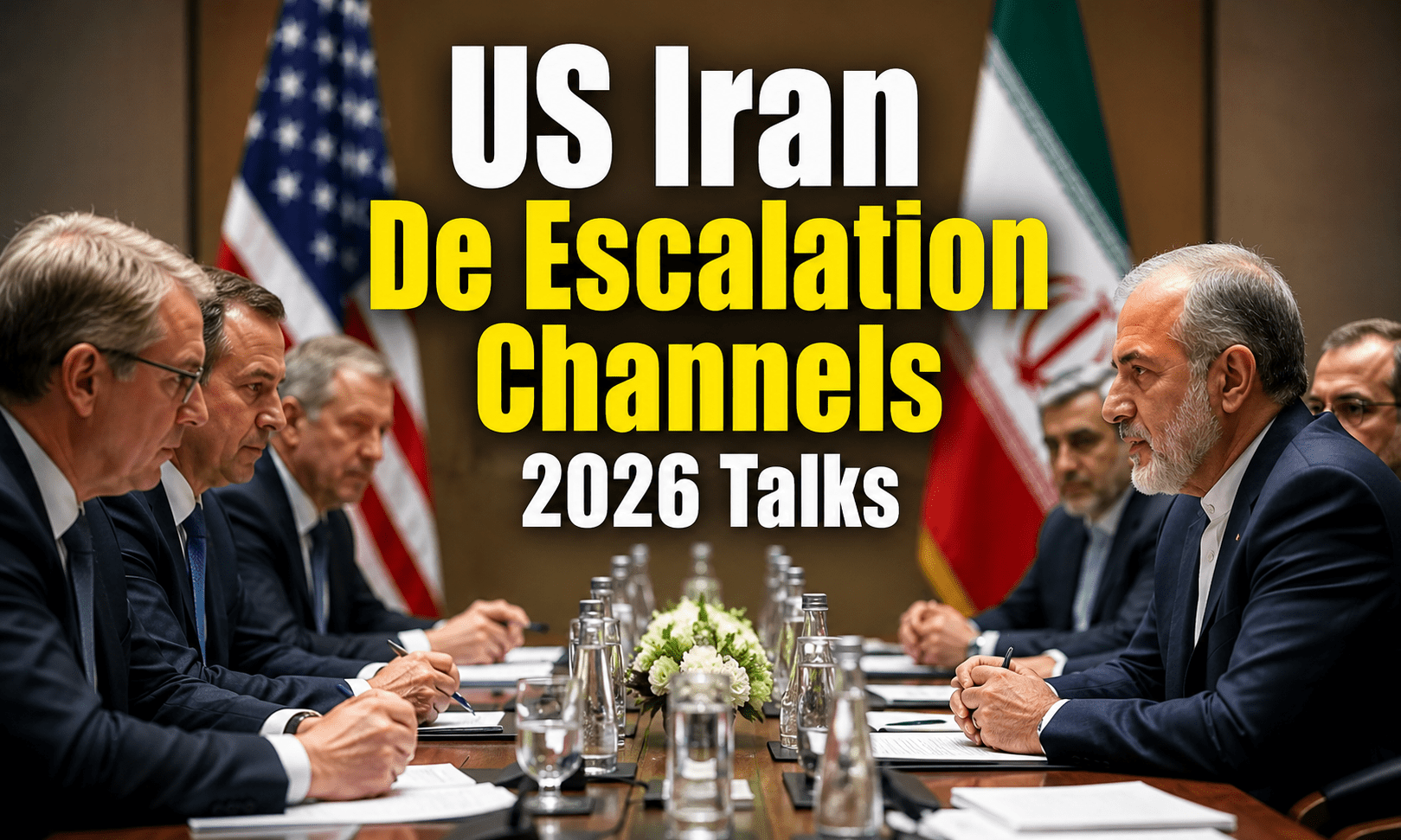
As tensions simmer across the Middle East, behind-the-scenes efforts are now underway to prevent another dangerous escalation between Washington and Tehran. According to officials familiar with the process, mediators have begun establishing discreet communication channels designed to manage risk ahead of renewed U.S.-Iran discussions—talks that could shape the region’s stability for years to come.
The development, first reported by Reuters (https://www.reuters.com/world/middle-east/mediators-set-up-de-escalation-channels-ahead-us-iran-talks-source-says-2026-06-29/), signals a subtle but significant shift: both sides appear willing, at minimum, to avoid miscalculation—even if deeper political divides remain unresolved.
These so-called “de-escalation channels” are not formal negotiations. They are more like emergency lines—mechanisms to prevent incidents from spiraling into open conflict. In a region where a single misstep can ignite broader confrontation, that distinction matters.
Sources indicate that third-party mediators are playing a central role in facilitating this effort. While details remain closely guarded, such intermediaries have historically been crucial in bridging gaps where direct communication breaks down. Their involvement suggests a recognition on both sides that tensions have reached a level where silence is no longer safe.
The timing is not accidental.
The Middle East remains a volatile landscape, shaped by overlapping conflicts, proxy engagements, and shifting alliances. Iran’s regional influence continues to be a focal point of concern for the United States and its allies, while Tehran remains wary of Western pressure and military presence near its borders. In this environment, even routine military movements can be misinterpreted—raising the risk of unintended escalation.
By opening these channels now, diplomats appear to be buying time—and perhaps creating space—for more structured dialogue to follow.
Still, skepticism lingers.
______________________________________________
🔴 Help keep this independent voice alive and uncensored -> Buy us a Coffee <-
Past attempts at diplomacy between the U.S. and Iran have often been fragile, vulnerable to political pressure, shifting leadership priorities, and unexpected events on the ground. Even when talks are scheduled, outcomes remain uncertain. What’s different this time is the apparent emphasis on preventing crisis first, before attempting resolution.
That approach reflects a hard-earned lesson from recent years: when communication breaks down entirely, the margin for error disappears.
There is also a broader strategic layer at play. For Washington, maintaining regional stability without becoming further entangled in conflict remains a delicate balancing act. For Iran, navigating internal pressures while projecting strength externally adds another layer of complexity. Both sides have incentives to avoid open confrontation—but not necessarily to compromise quickly.
That’s where these quiet channels may prove most valuable.
They create a buffer—a space where messages can be clarified, intentions signaled, and misunderstandings corrected before they escalate into something irreversible.
Whether this effort leads to meaningful progress is still an open question.
But in a region where diplomacy often unfolds in whispers before it makes headlines, the mere existence of these channels suggests something important: even at moments of peak tension, the door to dialogue is rarely fully closed.
And sometimes, it’s the conversations no one sees that matter most.
About the Author