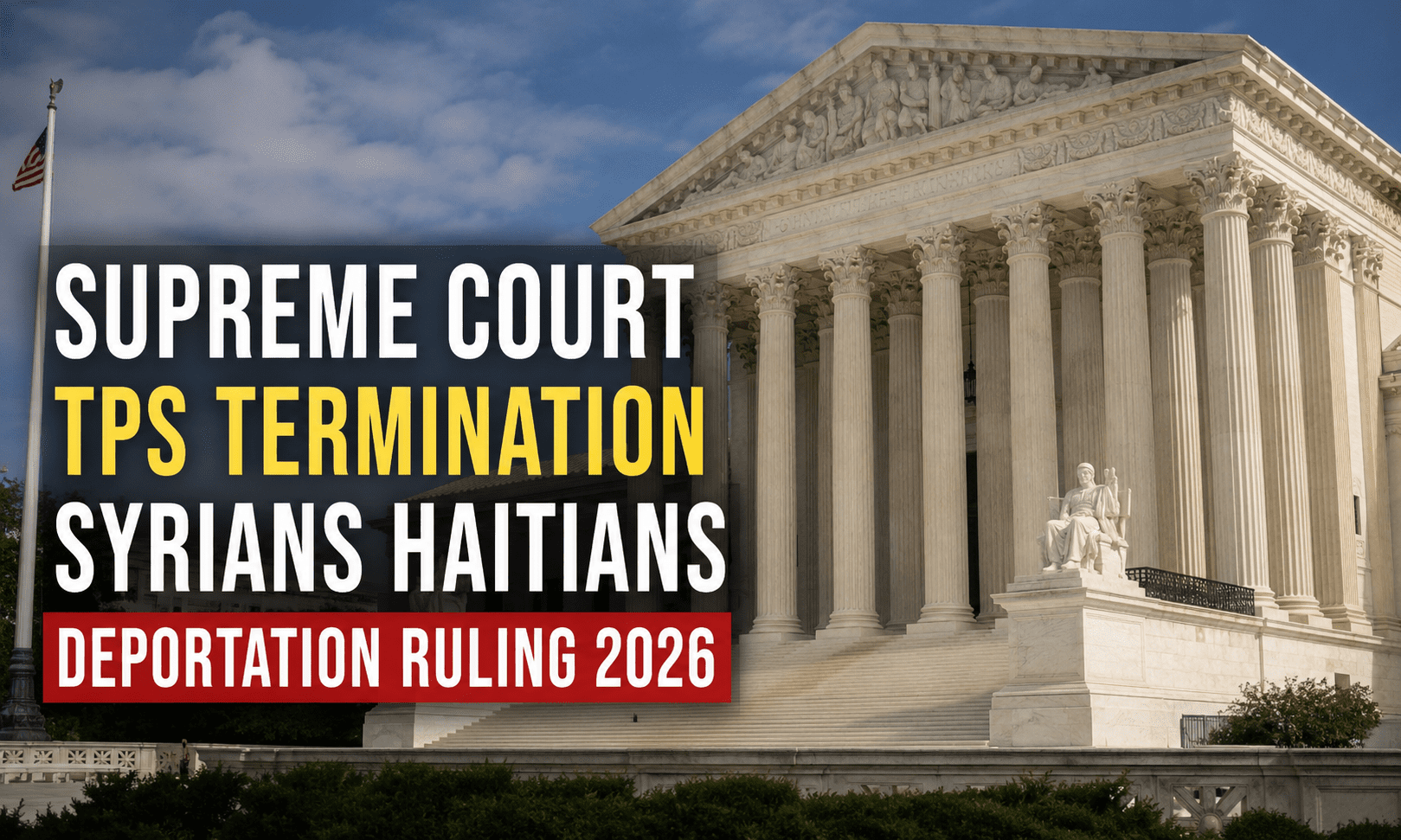
The legal landscape surrounding U.S. immigration policy shifted sharply this week after the Supreme Court of the United States allowed former President Donald Trump to move forward with ending deportation protections for thousands of Syrians and Haitians living in the United States under humanitarian status programs.
The decision marks a pivotal moment in the long-running political and legal battle over Temporary Protected Status (TPS), a program that has allowed individuals from countries facing war, natural disasters, or extreme instability to remain in the U.S. without fear of removal.
At the heart of the ruling is a question that has repeatedly surfaced in U.S. immigration policy: how long should temporary protection remain in place when conditions in a home country fail to stabilize?
According to reporting from Reuters, the Court’s decision effectively clears a legal obstacle that had prevented the termination of protections for nationals from Syria and Haiti, two countries that have remained under TPS designations for years due to ongoing crises.
While the ruling does not immediately remove protections, it opens the door for the policy change to proceed, subject to administrative action. For many affected individuals, the uncertainty now intensifies as the legal shield that has allowed them to live and work in the United States moves closer to expiration.
Supporters of ending the protections argue that TPS was never intended to become a long-term residency framework. They maintain that repeated extensions have stretched the program beyond its original scope, turning temporary humanitarian relief into what they describe as de facto permanent status.
Critics, however, warn that the decision could place vulnerable families at risk of forced return to countries still facing severe instability, including political violence, economic collapse, and infrastructure breakdown. Advocacy groups have repeatedly cautioned that abrupt policy shifts could lead to widespread disruption for communities that have spent years building lives in the United States.
The ruling also carries broader political implications. Immigration policy has remained one of the most divisive issues in American politics, and the Court’s decision is likely to reignite debate over executive authority, humanitarian obligations, and the future structure of temporary protection programs.
For now, attention turns to how federal agencies will implement the ruling and how quickly changes to TPS designations for Syrians and Haitians will move forward. Legal challenges and further administrative reviews remain possible, but the direction from the Court signals a significant narrowing of protections that have been in place for years.
______________________________________________
🔴 Help keep this independent voice alive and uncensored -> Buy us a Coffee <-
As the policy unfolds, affected communities, legal advocates, and political leaders are preparing for what could become one of the most consequential immigration shifts in recent years.
About the Author