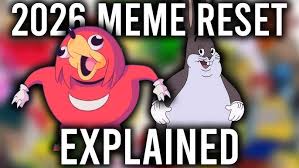
Something strange is happening online.
For years, everything moved faster.
Shorter clips. Louder jokes. Attention carved into seconds.
Then, almost without warning, the internet started looking backward.
Not out of nostalgia.
Not just for fun.
Something deeper seemed to tug.
Old memes — the ones that felt simple, human, sometimes even clumsy — are slipping back into timelines. People are resharing them like artifacts. Moments from another internet that didn’t constantly demand attention.
And quietly, there’s talk of a reset.
Not official. Not organized. More like a collective instinct.
A sense that something went off track.
The rise of “brainrot”
______________________________________________
🔴 Help keep this independent voice alive and uncensored -> Buy us a Coffee <-
Somewhere along the way, content stopped being shared — and started being engineered.
Endless loops.
Noise for the sake of noise.
Jokes that don’t land — just repeat.
People call it “brainrot.”
It isn’t about humor. It’s about pace. About how quickly thought is replaced with reaction. How scrolling becomes less like conversation and more like habit.
Old memes, by contrast, feel slower.
They carry context.
They reference moments.
They let the viewer breathe.
And maybe that’s the point: a small rebellion against a machine that constantly speeds up.
Why go back?
When culture accelerates too fast, it fractures.
People look for anchors.
For something familiar.
For humor that doesn’t require surrendering attention.
Old memes remind us of when the internet felt less strategic — before algorithms perfected the art of keeping us watching.
They are imperfect.
They are dated.
But they are also human.
And in an era built around optimization, “human” suddenly feels rare.
A quiet pattern emerging
Look closely and a pattern begins to form.
The more platforms reward speed, the more users drift toward memory.
The more content demands urgency, the more people search for subtlety.
Maybe the so-called “reset” isn’t about memes at all.
Maybe it’s about reclaiming space.
To think.
To laugh.
To not be swallowed whole by constant stimulation.
And if that’s true, the shift isn’t nostalgic — it’s corrective.
A culture pulling the brake, even if only for a moment.
A small reminder
The internet doesn’t shape itself.
People shape it.
What they share.
What they ignore.
What they quietly walk away from.
Perhaps the return of old memes isn’t regression.
Maybe it’s a signal — that beneath the noise, people still recognize when something feels off, and instinctively reach for something more grounded.
Sometimes, resetting isn’t about going backward.
It’s about remembering what mattered before everything sped up.
About the Author