





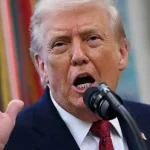

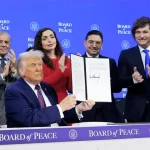


It was not a dramatic speech.
It was a warning.
When President Donald Trump responded to six House Republicans who voted to block new tariffs on Canada, the message was concise: there would be consequences. No fireworks. Just a reminder that loyalty, in moments like these, is measured in votes.
The dispute centers on Canada tariffs — a policy lever that has resurfaced as both economic tool and political signal. On paper, tariffs are about trade imbalances and leverage. In practice, they are about alignment.
The six Republicans broke ranks, siding against measures designed to apply economic pressure north of the border. Their vote did not shift the broader trajectory of U.S. trade policy overnight. But it did expose something quieter inside the party.
Division.
Trump’s approach to trade has long been grounded in confrontation as strategy. Pressure first. Negotiation second. The logic is simple: leverage must be visible to be effective. Allies included. Especially allies.
Canada, however, occupies a complicated space in the American imagination. It is partner and competitor. Neighbor and negotiator. The largest bilateral trading relationship in the world rarely moves without friction. Lumber, dairy, energy corridors — disputes ebb and flow.
But this moment feels less about dairy quotas and more about discipline.
When party members diverge from a signature economic strategy, the disagreement becomes symbolic. It raises questions about who sets direction, and whether dissent inside the caucus is tactical independence or quiet resistance.
Help keep this independent voice alive and uncensored.
Buy us a coffee here -> Just Click on ME
Are these lawmakers signaling concern about economic blowback in their districts? Or are they testing the boundaries of Trump’s influence ahead of a broader political recalibration?
Tariffs carry real consequences. Supply chains tighten. Prices shift. Industries adjust. Voters notice.
Behind closed doors, corporate stakeholders likely weigh the risks. Manufacturers dependent on cross-border materials. Energy producers navigating regulatory overlap. Agricultural exporters studying ripple effects. Trade policy rarely exists in isolation; it threads through daily commerce.
Yet politics simplifies what economics complicates.
Trump’s warning serves as reinforcement — a reminder that economic nationalism remains central to his platform. To oppose it is to step outside a defined lane. The message was not subtle.
Still, six votes matter.
They suggest that even within a party often described as unified, there are calculations underway. Regional interests. Electoral math. Strategic patience. Not every Republican district experiences tariffs the same way. For some, cross-border trade is lifeblood.
The Canada tariffs debate may ultimately reshape little in the near term. Or it may signal the beginning of a quieter rebalancing inside the Republican conference.
Power rarely fractures loudly at first. It shifts in margins. In committee rooms. In single-digit vote counts.
For now, the warning stands. The tariffs remain a tool. And the larger question lingers beneath the headlines: in an era of sharpened trade policy, how much room exists for dissent inside a movement built on economic force?
Sometimes the story is not the policy itself.
It is who dares to question it.


