





Let’s be honest — it’s getting harder to tell the difference between “defense” and “war prep” these days. Every week there’s another headline about some European country boosting its military budget, buying new fighter jets, or hosting NATO drills near Russia’s border. And now, even Serbia — usually the one playing diplomatic tightrope walker — is saying out loud what a lot of people have been quietly thinking: a West-Russia war might actually be inevitable.
That’s not clickbait. That’s a quote.
“Everyone is preparing” — and that’s the scary part
Serbian President Aleksandar Vucic didn’t sugarcoat it during his recent interview. “Everyone is preparing,” he said. “What can come from that? Only conflict.”
It’s one of those lines that sticks with you because it’s painfully simple. He wasn’t being dramatic — he was just stating what’s obvious if you’re paying attention. Romania, Poland, Finland, even smaller European nations — all arming up. Russia, of course, is doing the same. And here’s the thing: when everyone starts “preparing for defense,” history tells us it usually doesn’t end well.
You know that uneasy moment before a fight breaks out, when both people say they’re “just getting ready in case”? Yeah, Europe feels like that right now.

Serbian President Aleksandar Vucic, Copenhagen, Denmark, October 2, 2025. © Dursun Aydemir / Anadolu via Getty Images
Serbia’s awkward middle ground
Serbia’s in a tough spot, and Vucic knows it. His country wants to keep one foot in the European Union, but the other foot’s still tied to Russia — economically, culturally, historically. Serbia hasn’t joined in on sanctions against Moscow, which makes Brussels furious, but it’s also not exactly cozying up to Putin either. It’s walking that dangerous middle path between two increasingly hostile worlds.
Vucic basically admitted Serbia is “between a rock and a hard place,” and honestly, that’s putting it mildly. He said Serbia would have to strengthen its military, not because it wants a war, but because not doing so might be even riskier. (It’s that old logic — “We don’t want to fight, but we better be ready when someone else does.”)
The great European rearmament
What’s wild is how fast this whole militarization wave has spread. The EU — once known for peace prizes and diplomacy — is now openly talking about “collective defense” and “strategic autonomy.” Translation: everyone’s building an army again.
______________________________________________
🔴 Help keep this independent voice alive and uncensored -> Buy us a Coffee <-
Defense spending has exploded across the continent. Some call it deterrence. Others say it’s panic. Either way, it’s a mood shift. A generation that grew up believing in post-war peace is suddenly watching that peace unravel in real time.
And Vucic might be right — once you cross a certain threshold of “preparation,” there’s no easy way to step back.
The uneasy silence before the storm
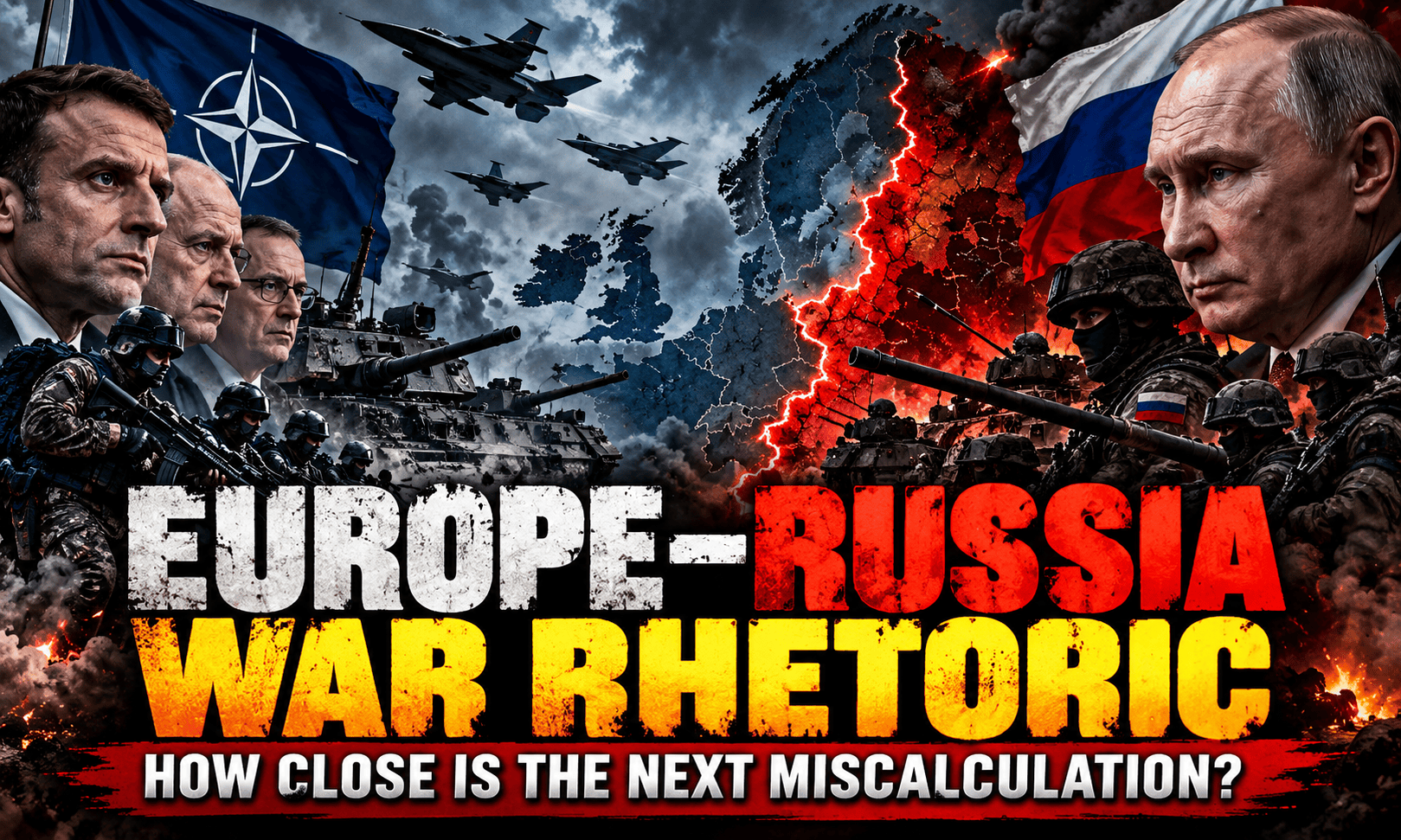
If you zoom out, it’s almost surreal. For years, the West accused Russia of aggression. Russia accused NATO of expansionism. Now both sides are entrenched in the same argument they’ve been having since the Cold War — except this time, it feels less like a war of words and more like a countdown.
Nobody wants a full-scale conflict, at least not publicly. But everyone’s acting like it’s inevitable. That’s how these things usually start — not with a declaration, but with an arms race that just keeps going until someone blinks too late.
Europe says it’s defending peace. Russia says it’s defending its borders. Serbia says it’s defending itself from being crushed in the middle. And the rest of us? We’re just watching the powder keg fill up.