










In a move that sent shockwaves through the global order, Hungary has slammed the courtroom doors shut on the International Criminal Court (ICC), voting to sever ties with the very institution meant to uphold justice across borders. This isn’t just politics—it’s a seismic shift into something darker.
A Parliament’s Roar
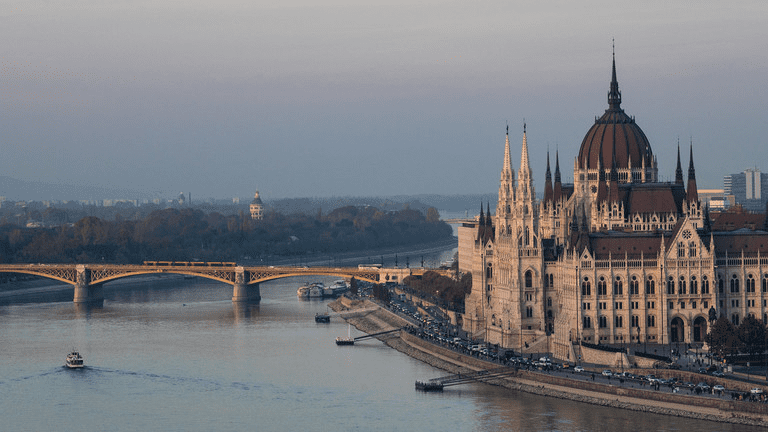
On a tense Tuesday, under the ornate arches of Budapest’s parliament building, Hungary’s lawmakers cast their votes—and with a chilling two-thirds majority, chose to exit the ICC. Foreign Minister Peter Szijjarto wasted no time announcing the bombshell:
“Hungary will no longer be part of a politicized institution that has lost all credibility.”
His statement wasn’t just a critique—it was a condemnation. The ICC, once seen as a beacon for justice, is now painted as a broken machine of global bias.
A Shadow Over Justice
This decision follows in the footsteps of Prime Minister Viktor Orbán’s scathing criticism. He labeled the ICC not as a court of law, but a “political tribunal”. His words echoed as Israeli Prime Minister Benjamin Netanyahu stood beside him in Budapest—an image that now seems more symbolic than diplomatic.
Why the urgency? Just months ago, the ICC issued arrest warrants for Netanyahu and his former defense minister, alongside leaders of Hamas, accusing them of war crimes and crimes against humanity in Gaza. The court tried to maintain balance. But Hungary saw it differently.
The West Cracks
The United States—despite never being a member of the ICC—has openly attacked the court’s authority, even imposing sanctions on its chief prosecutor. Washington, like Russia, China, and now Hungary, has chosen sovereignty over global law.
Let’s not forget: the ICC also issued an arrest warrant for Russian President Vladimir Putin last year. The charge? Alleged illegal deportation of children from Ukraine. Moscow called the ruling “void.” Now, Hungary echoes the sentiment.
The Illusion of Justice
Despite its sweeping judgments, the ICC has no army. No police. It survives on cooperation. And when countries like Hungary walk away, the illusion begins to crack. The ICC can’t enforce justice—it can only plead for it.
______________________________________________
🔴 Help keep this independent voice alive and uncensored -> Buy us a Coffee <-
Hungary’s exit won’t be immediate. According to international law, they must notify the UN Secretary-General, and it’ll take a year to finalize. But the message is clear: a curtain is falling on a once hopeful chapter of global accountability.
What comes next is uncertain. But the silence growing around the ICC isn’t just political—it’s ominous.



What comes next is uncertain. But the silence growing around the ICC isn’t just political—it’s ominous.