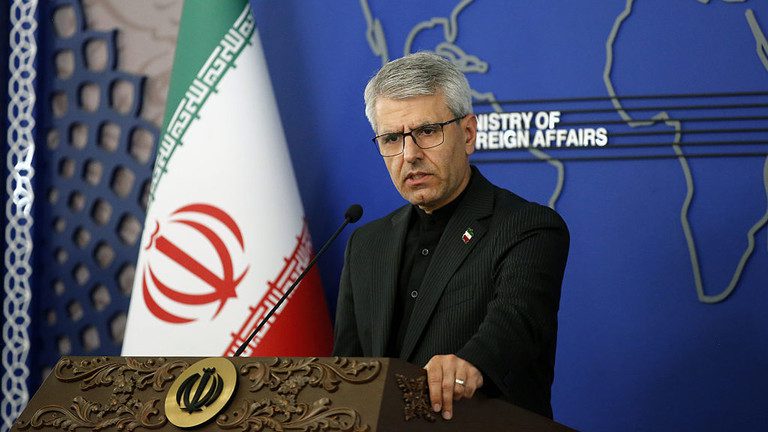
In a recent development that has sent shockwaves across the Middle East, Iranian Foreign Minister Hossein Amir-Abdollahian issued a dire warning about the escalating conflict in Gaza. As diplomatic efforts to quell Israeli airstrikes and prevent a ground offensive face obstacles, the risk of uncontrollable escalation looms large, with the potential for multiple regional players to join the fray.
The Gaza Crisis – A Volatile Situation:
- The Israeli Offensive and Its Consequences: The situation in Gaza has reached a critical juncture, with Israeli airstrikes causing considerable civilian casualties, including children. Amir-Abdollahian emphasized the immediate need to halt these attacks. If diplomatic efforts fail to do so, the situation may spiral out of control.
- Potential for a Ground Offensive: The Iranian Foreign Minister also highlighted the possibility of Israel launching a ground offensive in Gaza. In such a scenario, the resistance leaders of Gaza, particularly Hamas, have vowed to defend their territory vigorously.
Iran’s Diplomatic Initiatives:
- Meeting with Hamas Leader: During his diplomatic tour of the region, Amir-Abdollahian met with Ismail Hanieyh, a political leader of Hamas in Qatar. This meeting aimed to rally support from other Islamic countries for Palestine and to assure that Iran will continue its efforts to address the “war crimes” perpetrated by Israel.
- Support from Islamic Nations: Amir-Abdollahian reiterated Iran’s unwavering commitment to supporting the Palestinian cause, emphasizing that Iran will not waver in its principles and values in backing the Palestinian nation.
- International Appeal to China: To seek a resolution to the Gaza crisis, Amir-Abdollahian discussed the “sensitive situation in the region” with Chinese Foreign Minister Wang Yi. Iran urged China to use its influence within the United Nations Security Council to alleviate the suffering of Gaza’s residents and to establish a humanitarian corridor.
- Mobilizing Muslim Leaders: Iranian President Ebrahim Raisi engaged with various Muslim leaders, raising concerns about the situation in Gaza and calling for “decisive and immediate” action by the Arab League and other international bodies to halt Israeli aggression.
Supreme Leader’s Call for Support:
- Ayatollah Ali Khamenei’s Encouragement: Iran’s Supreme Leader, Ayatollah Ali Khamenei, called on Muslim countries to support the Palestinian cause and expressed his belief in the eventual victory of the Palestinian people.
- U.S. Deployment of Forces: The United States responded to the escalating situation by deploying a second aircraft carrier group to the Eastern Mediterranean. This move is seen as an attempt to exert pressure on Iran, Hezbollah in Lebanon, and other pro-Palestinian forces to refrain from involvement in the Israel-Gaza conflict.
- U.S. Stance on Iran’s Involvement: Despite speculations in U.S. media regarding Iran’s potential involvement in supporting Hamas, President Joe Biden acknowledged that, as of now, there is “no clear evidence” that Tehran assisted in planning the attack carried out by Hamas militants.
Conclusion:
The escalating tensions in Gaza, as highlighted by Iranian Foreign Minister Hossein Amir-Abdollahian, present a serious risk to regional stability. As diplomatic efforts continue, the international community must focus on finding a peaceful resolution to prevent further loss of life and the potential involvement of multiple regional players in the conflict. The situation in Gaza remains a critical issue that demands immediate attention and action.
About the Author