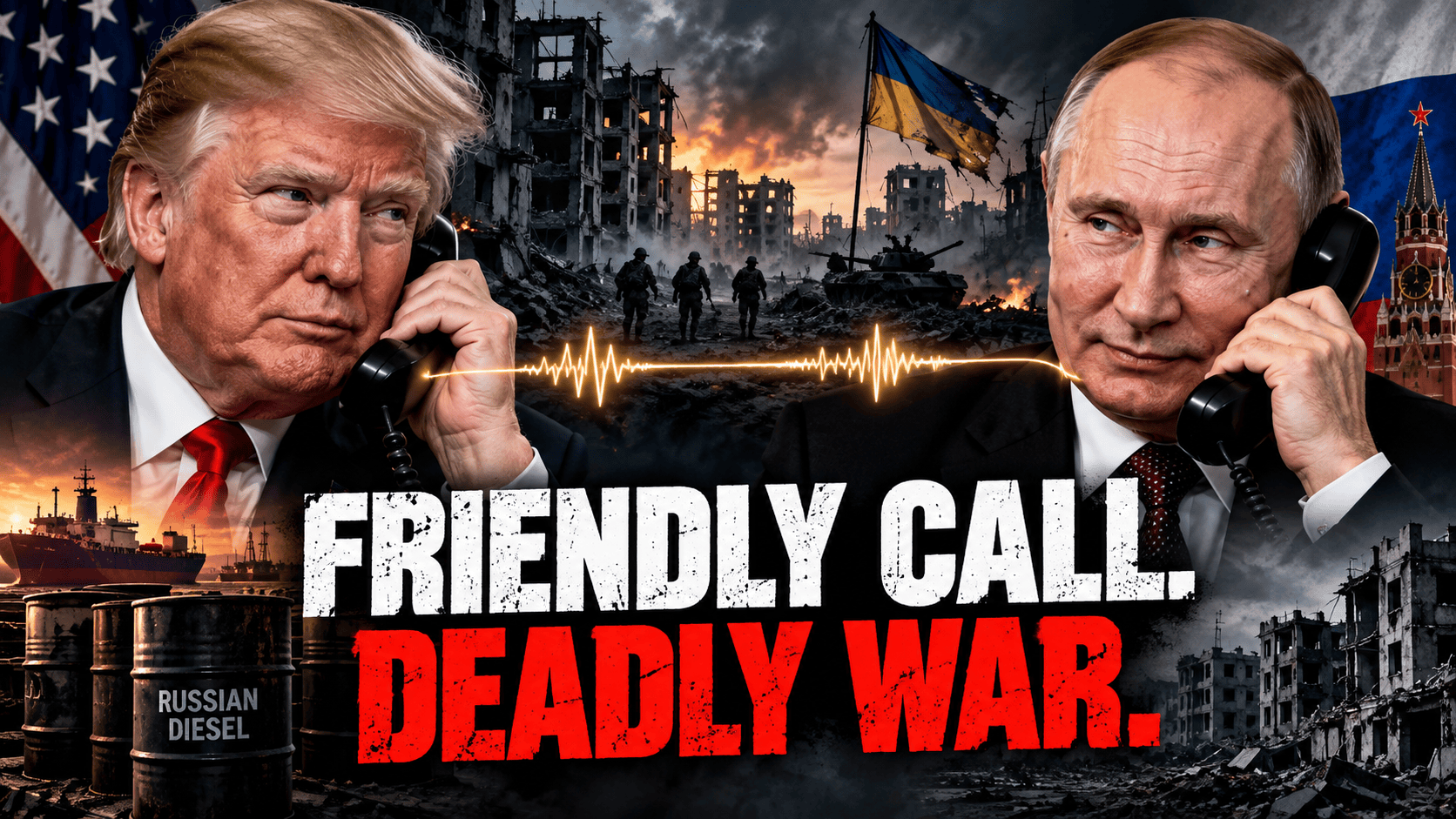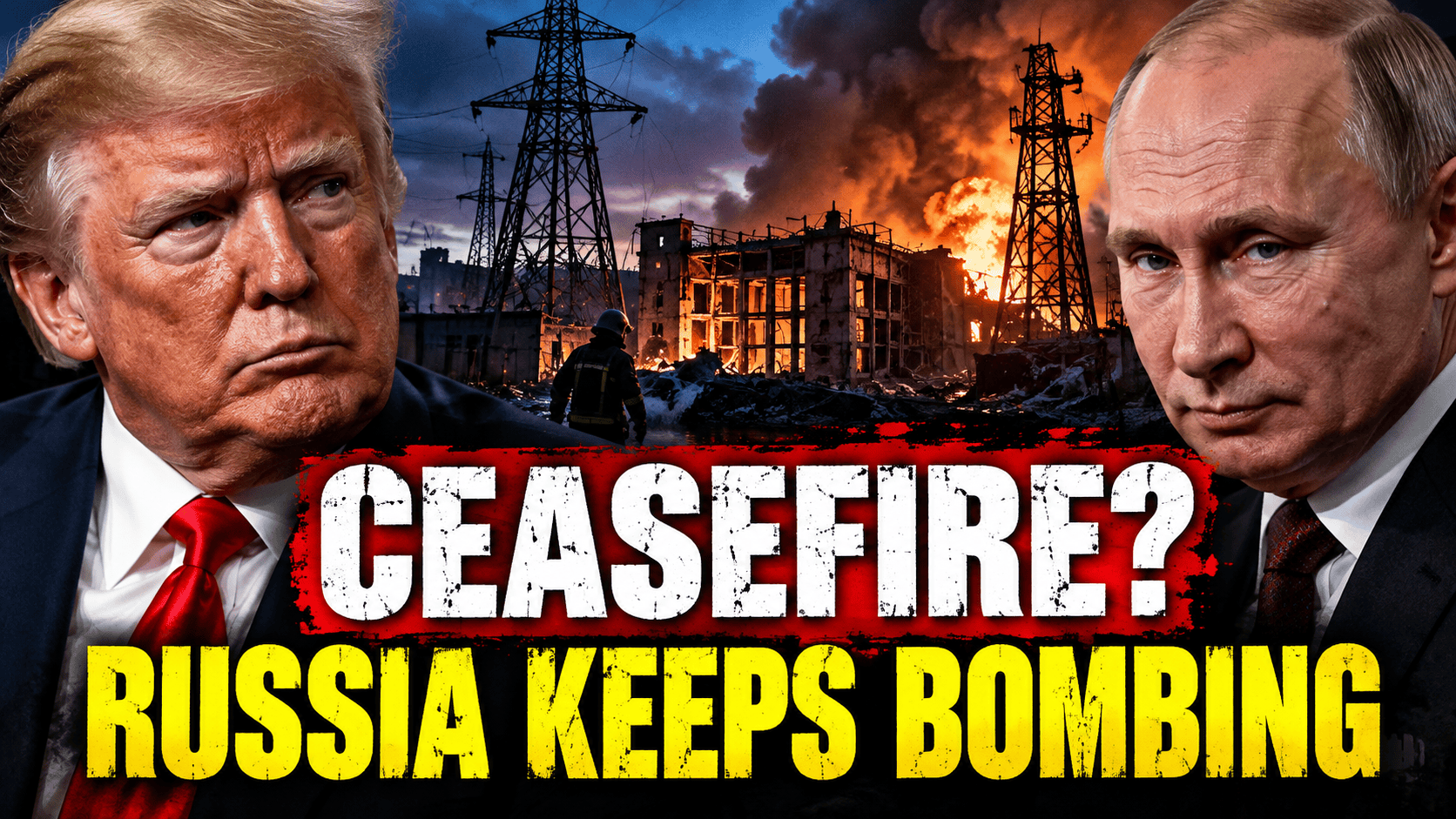
Donald Trump says there’s an energy ceasefire between Russia and Ukraine.
There’s just one rather disturbing problem.
Russia apparently didn’t get the message. Or worse, it did and decided to keep bombing anyway.
While Washington talks about diplomatic breakthroughs, Ukrainian power facilities are still being struck, civilians are still dying, and President Volodymyr Zelenskyy is questioning whether the supposed agreement exists in any meaningful form.
And that raises a question nobody in Washington should be comfortable answering.
How do you announce a ceasefire when the people fighting the war haven’t clearly agreed to stop?
A Ceasefire Announced in Washington, but Not Respected on the Battlefield
On October 12, Zelenskyy accused Russia of continuing its attacks on Ukrainian energy infrastructure despite Trump’s announcement of an agreement to halt such strikes.
Speaking at the Warsaw Security Forum, the Ukrainian president said his government had learned about the supposed arrangement through media reports.
Think about that for a moment.
______________________________________________
🔴 Help keep this independent voice alive and uncensored.
Support independent journalism and help keep Chris Wick News going.
👉 Support Chris Wick on GoFundMe
The United States announces what sounds like a significant diplomatic breakthrough in one of the world’s most dangerous conflicts, yet the Ukrainian government says it wasn’t properly informed beforehand.
That’s not exactly a reassuring foundation for peace.
According to reports from Associated Press and Reuters, Russian attacks continued against Ukrainian energy facilities, including a thermal power plant in Kharkiv.
Zelenskyy indicated that Ukraine was prepared to respect a reciprocal halt in energy attacks, provided Moscow did the same.
But a ceasefire cannot function on promises, press conferences, and wishful thinking alone.
It requires clear commitments, agreed terms, and consequences when those terms are broken.
So far, those essential ingredients remain in serious doubt.
Russia’s Bombs Are Delivering a Different Message
While political leaders debate diplomatic arrangements, ordinary Ukrainians continue paying the price.
Russian drone attacks have struck civilian areas and infrastructure, leaving people dead, injured, and facing disruptions to essential services.
In Kharkiv, a reported drone strike killed three civilians and injured nine others.
These aren’t abstract geopolitical statistics.
They’re families living with the possibility that another night of bombardment could destroy their homes, their electricity supply, or their lives.
Energy infrastructure has become one of the war’s most consequential targets.
Destroy a power station and the damage doesn’t stop at the facility itself.
Hospitals, water systems, businesses, communications, and ordinary households can all suffer.
That’s what makes the continuing attacks particularly disturbing.
A ceasefire that exists in Washington’s announcements but not in Ukraine’s power stations is not delivering protection to the people who need it.
Trump’s Russian Diesel Deal Raises Another Uncomfortable Question
The ceasefire controversy is unfolding alongside another contentious development: Trump’s effort to bring Russian diesel supplies into the international energy market.
The administration has presented increased fuel availability as one way to ease pressure on energy prices.
With Americans facing expensive fuel and the November midterm elections approaching, the political incentive to reduce those prices is obvious.
But there is another side to this arrangement.
Russia’s energy industry remains an important source of revenue for Moscow, and critics argue that easing restrictions on Russian petroleum could weaken economic pressure on the Kremlin.
That doesn’t automatically mean every energy transaction directly finances a particular military operation.
But the broader question is unavoidable.
Can Washington credibly pressure Moscow to stop attacking Ukraine while simultaneously pursuing energy arrangements that could improve Russia’s economic position?
European officials and American lawmakers have raised concerns about the policy.
Supporters may argue that stabilizing fuel markets serves legitimate economic interests and could create room for diplomacy.
Critics see a dangerous contradiction.
Both arguments deserve examination.
What cannot be ignored is that Russian military operations have continued while these discussions unfold.
Ukraine Is Being Asked to Show Restraint. What About Moscow?
Another troubling element is the pressure being placed on Ukraine to stop attacking Russian oil refineries.
Ukraine has used long-range strikes against Russian energy infrastructure as part of its effort to weaken Moscow’s ability to sustain the war.
Trump has criticized those attacks, linking disruptions in oil supplies to rising fuel prices.
But there’s an obvious imbalance here.
Ukraine is being urged to stop striking Russian energy facilities while its own power infrastructure remains vulnerable to Russian attacks.
Zelenskyy has said Ukraine is willing to halt such operations if Russia reciprocates.
That’s an important distinction.
There is a difference between a mutual agreement and one side being pressured to surrender a military option without receiving comparable protection.
A genuine energy ceasefire would need to establish precisely which facilities are protected, when the restrictions begin, and how violations are investigated.
Without those details, every new explosion risks becoming another argument over who violated an agreement that may never have been fully established.
Europe Isn’t Buying the Optimism
European leaders have expressed skepticism about Moscow’s intentions and the effectiveness of the proposed arrangement.
European Union foreign policy chief Kaja Kallas has questioned Russia’s commitment to ending attacks, while European governments continue pursuing additional sanctions.
Their concern is understandable.
Europe has spent years watching ceasefire proposals, diplomatic initiatives, and negotiations struggle against the reality of continuing Russian military operations.
But skepticism should apply to every government involved.
Moscow must be judged by its actions.
Kyiv must be judged by its commitments.
And Washington must be judged by whether its diplomatic announcements produce verifiable results rather than favorable headlines.
Nobody gets a free pass simply because they claim to be working for peace.
Peace Cannot Be Declared Into Existence
There is nothing wrong with Trump attempting to negotiate an end to attacks on energy infrastructure.
In fact, an enforceable agreement that protects civilians and essential services would be a meaningful achievement.
The problem begins when political announcements run ahead of what has actually been agreed.
Diplomacy requires more than confidence.
It requires the participation of the governments involved, enforceable terms, and evidence that those terms are being followed.
Otherwise, the public is left trying to distinguish between an actual breakthrough and a diplomatic performance.
And the people living under the bombs are left with something much worse than political confusion.
They’re left with the same danger they faced before the announcement.
The Chris Wick Perspective: Judge the Ceasefire by What Stops Exploding
Here’s where I stand.
I don’t care whether a ceasefire comes from Trump, Zelenskyy, Putin, Brussels, or anyone else.
If it genuinely saves civilian lives, protects infrastructure, and creates a path toward ending the war, it deserves serious consideration.
But I’m not interested in applauding an agreement simply because a politician announces one.
Not when power stations are still being hit.
Not when civilians are still being killed.
And certainly not when fundamental questions about the arrangement remain unanswered.
The real measure of this proposed ceasefire isn’t how confidently it was presented in Washington.
It’s whether Russia and Ukraine actually stop attacking each other’s energy infrastructure.
Until that happens, calling it a diplomatic breakthrough is premature.
Because peace isn’t measured by what politicians say into microphones. It’s measured by what stops falling from the sky.
And right now, Ukraine is still looking up.
Sources
Associated Press — Russia Strikes Ukraine Energy Sites Despite Energy Ceasefire Announcement
Reuters — Ukraine Accuses Russia of Violating Trump’s Energy Ceasefire as EU Imposes New Sanctions
Financial Times — Putin Is Breaching Trump’s Energy Ceasefire, Zelenskyy Says
https://www.ft.com/content/863619b6-c4a7-4b1a-8a53-6950d47d1833
Axios — Trump Bears Down on Zelensky as Russia Keeps Up Attacks on Ukraine
https://www.axios.com/2026/10/11/russia-ukraine-oil-energy-ceasefire-trump-putin-zelensky