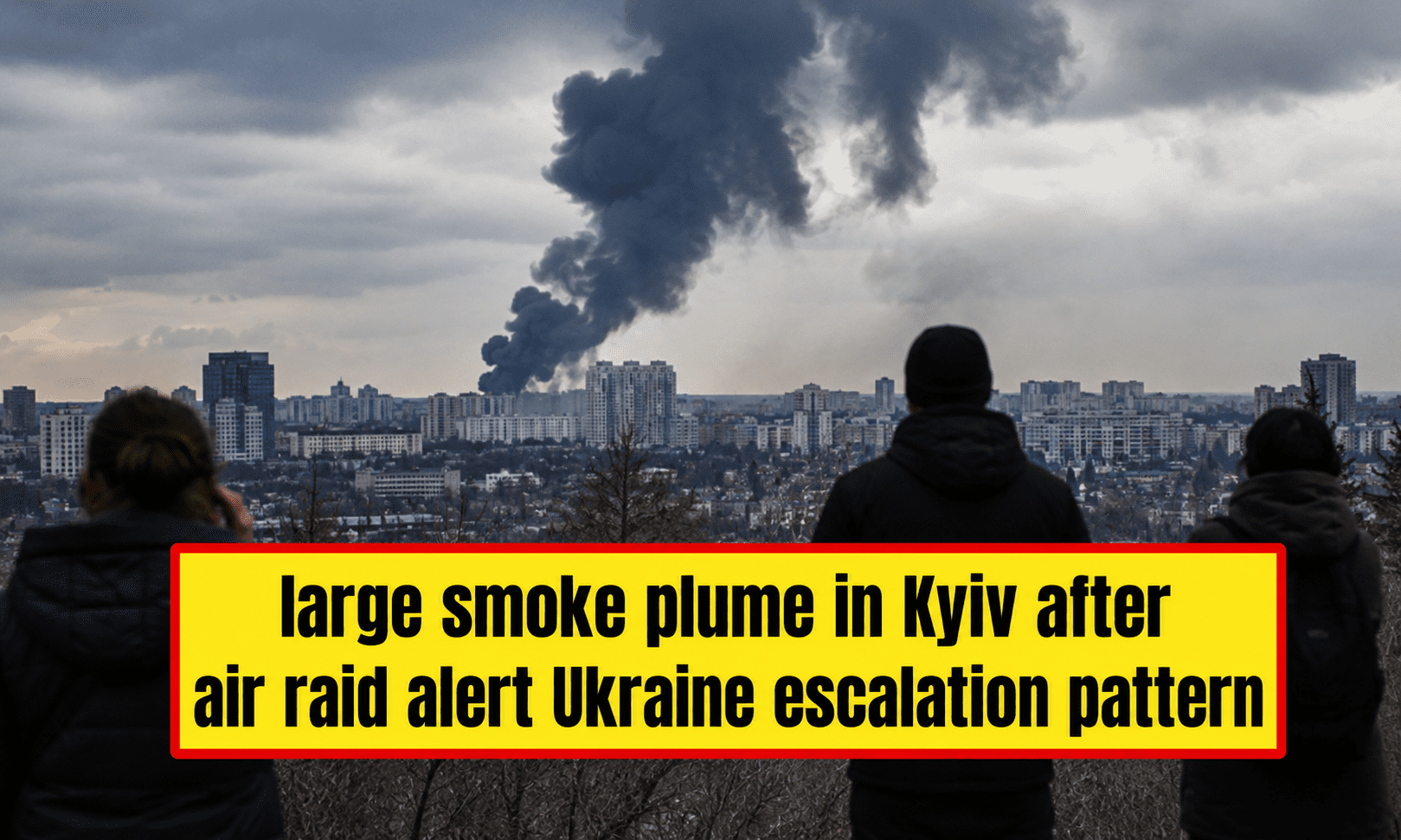
A large smoke plume in Kyiv after air raid alert Ukraine escalation pattern appeared over the Ukrainian capital following renewed warnings of incoming strikes, according to Reuters witness reporting from the city.
What makes the moment harder to read is not only the visible aftermath, but the speed at which alerts and impacts are now blending into the same sequence of events. Air raid sirens sound, residents move to shelters, and within minutes, smoke becomes part of the skyline. What is still unclear is the full scale of the strike and what specific targets were hit inside Kyiv.
Reuters reported eyewitness accounts of a large pillar of smoke rising after air raid alerts were issued in Kyiv:
https://www.reuters.com/world/large-pillar-smoke-seen-kyiv-after-air-raid-alert-issued-reuters-witness-reports-2026-06-01/
The situation adds another layer to a conflict where information often arrives in fragments, shaped by timing, access, and safety constraints on reporting from within active strike zones.
What Actually Happened
According to Reuters witness reporting, a large plume of smoke was seen rising over Kyiv after air raid alerts were activated across the Ukrainian capital.
The alerts prompted residents to seek shelter as Ukrainian air defense systems and emergency protocols were activated in response to the threat of incoming strikes.
The Ukrainian government, operating through its air force and emergency alert systems, regularly issues nationwide warnings when missile or drone activity is detected.
At this stage, details such as the exact target, extent of damage, and casualty reports have not been fully confirmed in public reporting.
The primary entities involved include the Ukrainian government, Russian military forces conducting long-range strikes, and civilian populations concentrated in Kyiv’s urban districts.
Why This Moment Matters
______________________________________________
🔴 Help keep this independent voice alive and uncensored -> Buy us a Coffee <-
Kyiv has remained one of the most closely watched cities in the war in Ukraine, serving as both a political and symbolic center of state authority.
Each air raid alert reflects not only an immediate threat but also the broader pattern of long-range strike capability being used across urban infrastructure.
The Ukrainian capital’s emergency systems are designed to respond quickly, but repeated alerts place pressure on civilian routines, infrastructure resilience, and communication systems.
In broader geopolitical terms, incidents like this continue to shape how Western governments, including NATO member states, assess the trajectory of the conflict and Ukraine’s defensive requirements.
The large smoke plume in Kyiv after air raid alert Ukraine escalation pattern becomes part of a growing dataset of repeated strike-and-response cycles that define the current phase of the war.
The Pattern Behind the Event
Air raid alerts followed by visible aftermath in major cities like Kyiv have become a recurring feature of the conflict.
Over time, these events form a pattern of rapid escalation cycles:
- detection of aerial threat
- public alert activation
- defensive response measures
- post-impact confirmation or reporting delays
This structure is shaped by the nature of modern missile and drone warfare, where speed of engagement often outpaces verification of impact.
Institutions such as Ukraine’s Air Force Command and emergency response agencies operate within tight information windows, often releasing partial updates until full assessments are complete.
The pattern also reflects how information warfare and physical strikes overlap, as both sides of the conflict manage narratives alongside operational activity.
Where the Tensions Are Building
The immediate tension centers on Kyiv itself, where repeated alerts place sustained pressure on civilian safety systems and infrastructure continuity.
There is also a broader strategic layer involving Russia’s continued use of long-range strike capabilities and Ukraine’s evolving air defense network supported by Western military aid.
Geographically, Kyiv remains a central node in the conflict due to its political significance and population density, making it a persistent focus of military attention.
Internationally, governments monitoring the war are watching whether strike intensity increases or stabilizes as seasonal and strategic factors shift.
What remains uncertain is whether this event signals an isolated strike cycle or part of a wider pattern of intensified aerial operations across Ukraine.
What This Could Signal Next
One possible direction is continued periodic strike activity on Kyiv, consistent with previous phases of the war where pressure is maintained through intermittent escalation.
Another possibility is a shift in targeting patterns, where strikes become more distributed across regions rather than concentrated on the capital.
There is also the question of how Ukraine’s air defense capacity adapts over time, particularly as external military support continues to evolve through allied governments.
For now, no single incident fully defines the trajectory, but each alert and visible aftermath adds another layer to an ongoing operational pattern that is still developing in real time.
The situation remains open, shaped by incomplete information and unfolding events that are not yet fully visible from outside the immediate zone of impact.
About the Author