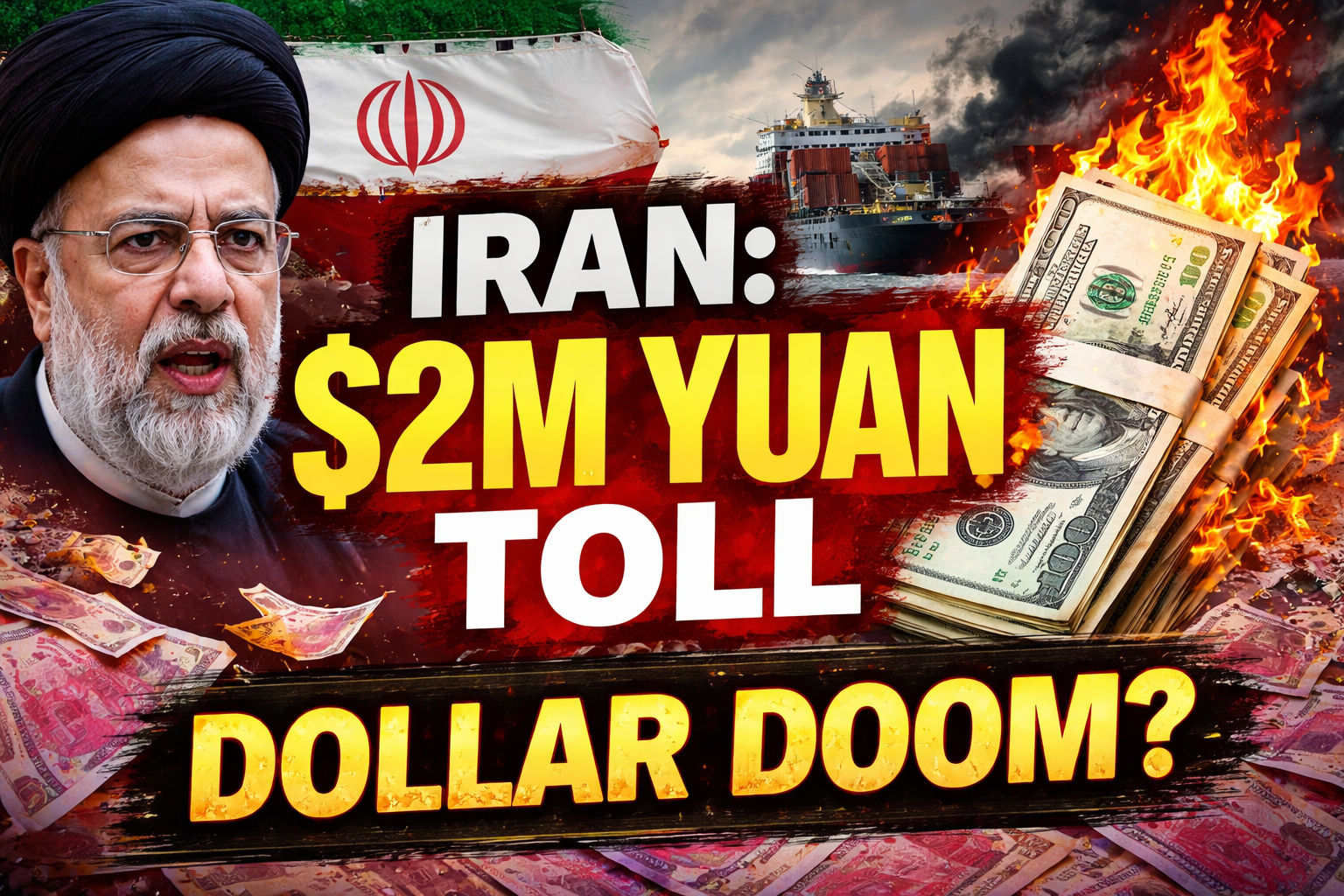
Ships now pause at the edge of the waterway. They wait. Their captains know the price: 2 million in Chinese yuan. No dollars. No negotiation.
It doesn’t look like a crisis yet. But something fundamental is shifting beneath the surface.
For decades, the Strait of Hormuz was simply a chokepoint — a narrow stretch of water where a third of the world’s oil passed every day. Now it is a test of global financial order. Iran’s new requirement isn’t about transportation costs. It’s a signal. A quiet repositioning of economic gravity.
This becomes clearer when looking at how international trade has leaned on the U.S. dollar for generations. The greenback was more than currency; it was certainty. It was the rhythm beneath everything from crude tankers to central bank reserves. That rhythm still plays. Yet, along these shores, something different is being written.
The decision to insist on Chinese yuan for passage fees did not happen overnight. It follows a pattern — not loud, not dramatic, but persistent. China’s influence in global energy markets has been growing. A similar pattern appeared in how some oil exporters have quietly diversified away from dollar settlements. None of this made headlines with bold graphics or urgent alerts. It just unfolded.
On the decks of those ships waiting off Hormuz, one hears the ordinary sounds: a horn from a pilot boat, the crackle of radio static, a distant call from a seagull. But beneath those sounds is the hum of calculation. Owners, charterers, traders — all recalibrating. They are not just thinking about where the cargo goes next. They are thinking about what currency they will need to move it.
What happened next raised more questions for those tracking the deeper currents of global finance. Iran’s move is not an isolated curiosity. It connects to a broader shift in how countries are thinking about reserve holdings, trade settlements, and geopolitical leverage. If a major oil transit route starts to trade in yuan, what does that say about the confidence in the dollar’s future?
It is not that the dollar will vanish tomorrow. It is that its dominance may no longer be assumed. This does not make headlines on the front page of newspapers yet. But in boardrooms and central bank vaults, the calculus is already underway.
No single event defines an era. Yet, when multiple small tremors align, they become something harder to ignore. This feels like one of those moments.
______________________________________________
🔴 Help keep this independent voice alive and uncensored -> Buy us a Coffee <-
What just happened in global energy finance may change how this is understood
A deeper look at this pattern reveals something unexpected
This may connect to a broader shift that’s quietly underway.
Sources:
Iran may permit oil tankers to pass Hormuz if trade uses yuan: Report — Daily Sabah coverage of Iran’s possible conditions for tanker transit in Chinese yuan.
👉 https://www.dailysabah.com/business/economy/iran-may-permit-oil-tankers-to-pass-hormuz-if-trade-uses-yuan-report?utm_source=chatgpt.com
Two India tankers pass through Hormuz as standoff simmers — Reuters report on shipping movement through the strait amid heightened tensions.
👉 https://www.reuters.com/business/energy/gas-tankers-sail-through-hormuz-india-most-ships-still-stuck-data-shows-2026-03-23/?utm_source=chatgpt.com
Iran considers levying transit fees on ships in Hormuz Strait, lawmaker says — Reuters reporting on Tehran’s consideration of tolls for vessels passing through the strategic waterway.
👉 https://www.reuters.com/world/middle-east/iran-considers-levying-transit-fees-ships-hormuz-strait-lawmaker-says-2026-03-19/?utm_source=chatgpt.com
About the Author

1 thought on “Iran Just Put a $2M Yuan Toll on the Strait of Hormuz — Is the Dollar Dead Next?”
Comments are closed.