





War rarely begins the moment the first missile is launched.
By the time explosions appear on television screens, the deeper contest has already been unfolding for years—sometimes decades—just beneath the surface of global politics.
The current confrontation surrounding Iran feels like one of those moments when something older and larger begins to show itself.
At first glance, the narrative is familiar. Security threats. Strategic strikes. Retaliation and deterrence. Military officials speak in the language of precision and objectives, reporting thousands of targets struck and major portions of Iran’s military infrastructure damaged as the campaign intensifies.
But war reporting often focuses on movement—bombers, missiles, fleets—while the real story sits quietly in the background.
Power.
For decades, the global order has rested on a relatively simple premise: a single dominant power capable of projecting military and financial influence almost anywhere on Earth. Many analysts call this the era of American hegemony.
Iran has long positioned itself as one of the states openly resisting that structure. Its leadership frequently frames its confrontation with Washington not simply as a regional dispute, but as part of a wider challenge to what it sees as a Western-led system of control built on sanctions, military alliances, and economic pressure.
That perspective doesn’t make headlines in the same way explosions do. But it helps explain why the conflict persists.
To Iran, the struggle is about sovereignty.
To Washington, it is about maintaining stability and preventing threats from emerging in a volatile region.
Both narratives exist at the same time. Both shape the decisions being made.
And somewhere in between sits the quiet question that rarely appears in official statements:
Is this war about a country… or about the system surrounding it?
History offers clues.
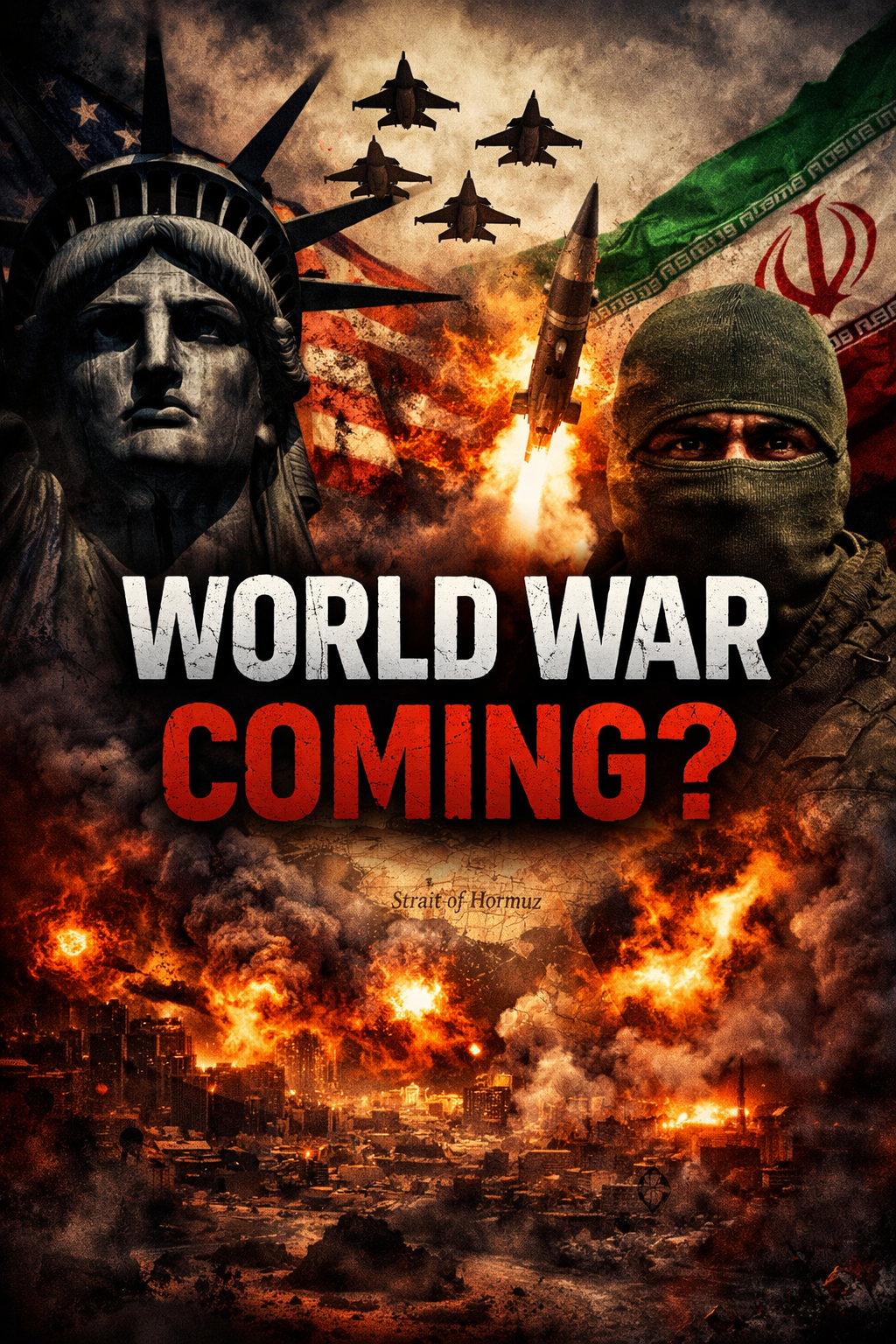
The Middle East has long been a testing ground for the balance of power between global players. Military operations in the region often ripple outward, affecting energy markets, trade routes, and alliances far beyond the battlefield. Analysts warn that disruptions around the Strait of Hormuz alone could shake global energy supplies if the conflict escalates further.
That reality explains why so many governments are watching carefully from a distance.
Because when large powers move, the consequences rarely stay local.
Even the language surrounding the conflict hints at something larger. Officials describe operations designed to dismantle infrastructure, cripple military capacity, and reshape strategic realities on the ground.
These are not small adjustments. They are structural ones.
Yet beneath the strategies and speeches lies a quieter tension.
The world itself is changing.
New economic blocs are forming. Regional powers are asserting more independence. Technology has redistributed military capability in ways that once seemed impossible. The global balance is slowly becoming less predictable.
In that environment, conflicts like this begin to look different.
Not simply battles between states, but pressure points in a shifting international system.
Perhaps that is why moments like this feel strangely unsettled.
Not chaotic. Not random.
Just uncertain.
Because when an established order begins to strain, the signs rarely appear all at once.
They arrive gradually.
In speeches.
In sanctions.
In alliances tightening or quietly drifting apart.
And sometimes, eventually, in war.
Whether this confrontation stabilizes the old order or accelerates the arrival of a new one remains impossible to say.
But history suggests one thing with quiet consistency.
The deeper struggles of power rarely end where they begin.
______________________________________________
Help Keep Independent Journalism Alive & Support a Senior
Even a small contribution to my GoFundMe helps me continue this work and get a used car to stay mobile.