








Rebuilding begins long before the first brick is laid.
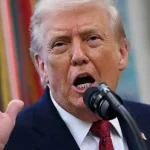
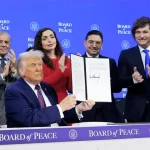
It starts with a promise. A figure on paper. A boardroom statement delivered in measured tones. This week, attention turned to a funding pledge connected to former President Donald Trump’s circle — a commitment aimed at Gaza’s reconstruction after another devastating chapter in a conflict that never fully cools.
The headline was simple. Major funding. Rebuild Gaza.
But the landscape it enters is anything but simple.
Gaza is not just rubble and concrete. It is politics layered over history, sovereignty woven through grief. Every dollar that moves toward it carries more than financial weight. It carries alignment. Recognition. Signal.
The announcement, framed by supporters as a humanitarian effort, suggests that private and political actors in the United States are stepping into reconstruction discussions traditionally dominated by governments and international agencies. It also raises a familiar question: when money flows into contested ground, who defines the terms?
The idea of a Trump-backed Gaza rebuilding plan lands in a region where trust is scarce and optics matter. For some, it reflects pragmatic engagement — an acknowledgment that stability requires infrastructure, and infrastructure requires capital. For others, it prompts caution. Reconstruction can heal. It can also reshape influence.
Funding pledges often arrive wrapped in moral language. Relief. Renewal. Hope. Those words resonate, particularly after destruction. But long-term rebuilding is less poetic. It is bureaucratic. Negotiated. Conditional.
Who oversees the funds?
Which contractors are selected?
What political commitments accompany the aid?
These are quieter questions, yet they determine the substance behind the promise.
Help keep this independent voice alive and uncensored.
Buy us a coffee here -> Just Click on ME
There is also the timing. Global attention shifts quickly, but financial commitments tend to endure. A pledge today can become leverage tomorrow. In regions marked by fragile ceasefires and shifting alliances, economic involvement is rarely neutral.
The broader Middle East has seen this pattern before. Aid becomes architecture. Architecture becomes influence. Influence becomes alignment.
None of that invalidates the need for reconstruction. Civilian populations bear the brunt of conflict. Homes, hospitals, utilities — these are not abstract concepts. They are daily survival. Funding directed toward rebuilding can ease immediate suffering.
Still, the deeper context remains.
Any major financial initiative connected to prominent political figures inevitably intersects with foreign policy calculations. Is it purely humanitarian? Strategically symbolic? A bridge toward future negotiations? Or something less defined — an opening to remain relevant in a volatile arena?
Public statements often emphasize compassion. Behind the scenes, strategy rarely disappears.
The region itself complicates every narrative. Gaza’s governance structure, regional rivalries, and the involvement of international actors create a web of dependencies. Money entering that web does not float freely. It binds.
And yet, reconstruction is necessary. Without it, instability calcifies. With it, new variables emerge.
The announcement of major funding is not the final chapter. It is the first sentence in a longer paragraph. One that will unfold in contracts signed, alliances tested, and expectations adjusted.
In conflict zones, rebuilding is never just physical.
It is political.
It is symbolic.
It is strategic.
The question is not whether Gaza will be rebuilt. It is who shapes the blueprint — and what that blueprint quietly signals about the next phase of regional power.
Time, more than headlines, will answer that.


