

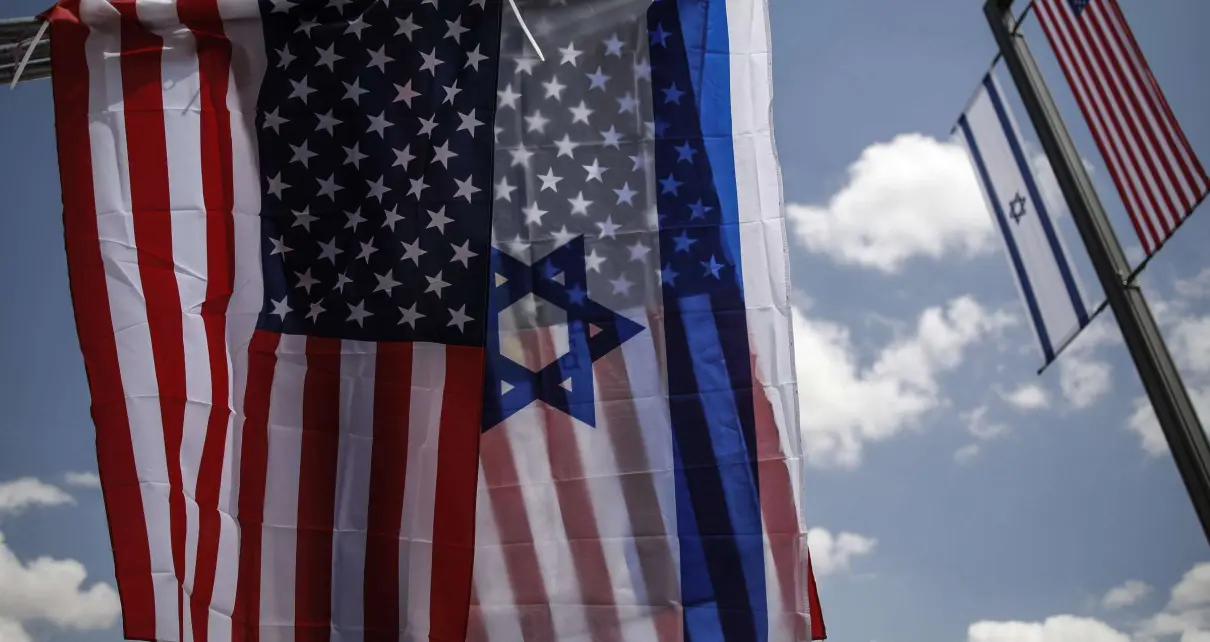
There is a quiet assumption built into American politics that foreign aid is temporary. Strategic. Conditional. A tool used sparingly in moments of real necessity.
Israel breaks that assumption.
For decades, U.S. taxpayers have been underwriting something very different. Not emergency support, but structural dependence. An economy kept upright not by organic growth, but by constant external reinforcement. Remove the flow of dollars, guarantees, and political shielding, and the system does not wobble. It freezes.
This is what economists quietly call a zombie economy. Functioning on paper. Hollow underneath.
The scale of that support is rarely discussed in plain terms. Conservative estimates place the cumulative cost to American taxpayers in the trillions. Not billions. Trillions. A meaningful slice of the national debt absorbed by a single foreign state, justified year after year as strategic necessity.
Help keep this independent voice alive and uncensored.
Buy us a coffee here -> Just Click on ME
Yet the economic return to Americans has always been vague. The costs, increasingly concrete.
Behind the diplomatic language, Israel’s economy has entered a period of sustained strain. Investment has slowed. Tourism has collapsed. Ports have shut down or declared bankruptcy. A once-celebrated tech sector has seen capital flee at a staggering pace. War has accelerated every weakness that was already present.
Growth has turned negative. Consumption has dropped. Exports have fallen sharply. Budget deficits have widened to historic levels.
In a normal system, these signals would force correction. Spending would tighten. Markets would recalibrate. Risk would be priced honestly.
Instead, the gap is filled from abroad.
Israel has turned aggressively to debt. Not just sovereign bonds sold to private investors, but instruments designed to shift risk directly onto American shoulders. U.S.-guaranteed bonds allow Israel to borrow cheaply while transferring default risk to Washington. If Israel stumbles, American taxpayers absorb the impact.
That guarantee is not abstract. It is written into law.
At the same time, Israel Bonds have been marketed relentlessly to U.S. states, counties, pension funds, and public institutions. Not as risky foreign debt, but as moral statements. Shows of solidarity. Civic duty framed as investment.
The numbers tell a different story.
As credit agencies downgraded Israel and warned of junk status, public funds continued flowing in. Pension systems bought bonds that underperformed comparable assets. Retirement accounts lost value. Risk caps were raised quietly. Losses were absorbed silently.
This is not accidental.
Israeli officials have openly acknowledged that influencing policy is easier at the state and local level. Laws follow investments. Anti-boycott statutes pass. Speech restrictions harden. Financial exposure deepens.
Today, dozens of states enforce laws that punish economic boycotts of Israel. Many equate political criticism with hate speech. Some legally prohibit divestment from Israeli debt, even when that debt carries elevated risk.
This is how financial entanglement becomes political enforcement.
Public officials attend sponsored trips. Gala dinners. Closed-door briefings. Ethics blur. Oversight fades. Investment decisions are framed as loyalty tests rather than fiduciary responsibility.
Universities are drawn into the same web. Bonds donated under the guise of philanthropy lock institutions into long-term financial relationships that make divestment impossible. Student protests are met not with debate, but with discipline. Doxing. Arrests. Expulsions. Immigration threats.
The economic pressure runs in one direction. Compliance upward. Silence outward.
Meanwhile, U.S. taxpayers fund military aid, replenish weapons stocks, and bankroll wars that are framed as shared security but generate no clear benefit at home. Domestic infrastructure decays. Social systems strain. Yet foreign obligations expand without pause.
This is not generosity. It is dependency management.
A zombie economy survives by feeding on external energy. It cannot reform itself because reform would expose the rot. Instead, it demands continued infusion, protected by law, politics, and moral framing.
The deeper question is no longer about Israel alone.
It is about what happens when American public money is used to prop up foreign systems indefinitely, while dissent is criminalized and risk is socialized without consent. When pensions are gambled for ideology. When solidarity replaces scrutiny.
At some point, taxpayers begin to notice.
Local resistance is already forming. Questions are being asked at council meetings and pension boards. Transparency requests are filed. The math no longer hides behind rhetoric.
Zombie systems persist until they don’t.
And when they finally collapse, the cost is never borne by those who designed them, but by those who were told not to look too closely while paying the bill.