



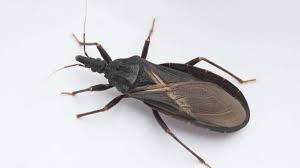
For years, Chagas disease has been a shadow lurking just beyond U.S. borders—a problem tied to distant lands and foreign travelers. But that narrative is shifting. A recent study out of the University of Texas at El Paso reveals a troubling trend: the “kissing bugs” that carry the Trypanosoma cruzi parasite are not only crossing borders, they are embedding themselves deeper into communities along the Texas-Mexico line. Nearly 85% of bugs sampled in the El Paso and Las Cruces region now carry the parasite, a sharp increase from 63% recorded just a few years ago.
This data signals more than a scientific curiosity. It hints at a quiet expansion of risk—a creeping endemic presence that challenges old assumptions about Chagas as a disease imported from Latin America alone. The bugs are no longer confined to wild, remote areas. Instead, they are showing up in the spaces where people live: under patios, near woodpiles, inside garages. The borders they cross are no longer just physical lines on a map but invisible threads weaving a connection between wild ecosystems and human neighborhoods.
The danger of Chagas lies in its subtlety. The kissing bug’s bite itself is relatively harmless. The true threat emerges from a less obvious source—feces deposited near the bite, which can infect the host when scratched into the skin or mucous membranes. This indirect mode of transmission has long contributed to Chagas slipping under the radar in the United States.
But the consequences are far from minor. The disease’s nickname, “silent killer,” is well-earned. The acute phase is often mild or symptomless, easily confused with other illnesses. Decades later, the parasite can wreak irreversible havoc on the heart and digestive system. Heart failure, arrhythmias, stroke risk, and digestive tract enlargement are grim realities for many infected individuals who often remain unaware of the source.
This unfolding public health story is rooted in history as much as science. The parasite and its insect carriers have been part of the Americas for centuries, even millennia. What is new is the scale and proximity of exposure. Urban sprawl pushes housing into previously wild areas. Cross-border travel remains constant. The desert ecosystems on both sides share conditions favorable for these insects. While Mexico hosts dozens of triatomine species, southern U.S. states face a unique vulnerability with their own populations of efficient parasite vectors.
What does this mean for those living in the border region—and beyond? Experts advocate for practical vigilance rather than panic. Blanket pesticide spraying offers limited returns and risks unintended harm. Instead, preventive measures at home become the frontline defense: sealing cracks, clearing debris and woodpiles, securing pets indoors, maintaining screens, and managing outdoor lighting.
Heightened awareness among healthcare providers is equally essential. Early diagnosis and treatment with antiparasitic drugs are most effective during the acute phase, yet many cases go unnoticed until serious complications arise years later. The disease’s underreporting in the U.S. obscures its true reach, making education and surveillance vital components of a response.
The story of Chagas disease at the Texas-Mexico border is no longer about distant threats. It is about recognizing what has quietly established itself in our own backyards. A silent, insidious presence demands that we look beyond borders—both physical and mental—and confront an emerging endemic reality. Only then can we hope to curb the toll of this overlooked parasite before it claims more lives in the decades to come.