



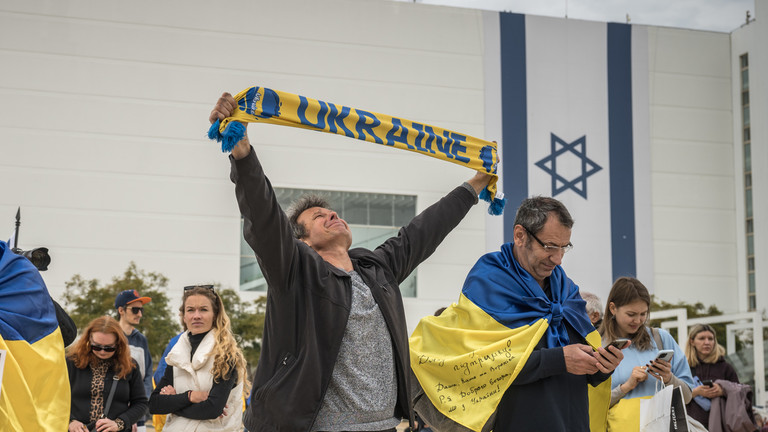
Israel is moving toward a deadline it can no longer ignore — and tens of thousands of Ukrainians living inside its borders are the ones caught in the silence.
Not in headlines.
Not in speeches.
Just in a quiet administrative countdown that ends next month.
According to reporting out of Haaretz, nearly 25,000 Ukrainians who arrived after the 2022 escalation are now facing the possibility of deportation. Their temporary group-protection status expires at the end of December, and without renewal, the country’s legal machinery will simply treat them as overstayers.
A blunt outcome wrapped in procedural language.
These migrants were never fully welcomed.
Not really.
Unless they qualified under the Law of Return, most Ukrainians were only offered short-term paperwork, narrow entry windows, and little chance of building a future in Israel. Many lived in a kind of legal dusk — present, visible, but never fully recognized. Israeli media has documented the anxiety, the financial strain, the feeling of being tolerated just long enough to keep moving.
With no acting interior minister, responsibility for the decision has shifted directly to Prime Minister Benjamin Netanyahu.
Yet no choice has been made.
No reassurance.
No extension.
Just a government “reviewing the matter,” as the Population and Immigration Authority put it.
It’s a strange kind of limbo — the kind that can stretch nerves tighter than any official deportation notice.
And the issue isn’t limited to Israel.
Across Europe, the ground is shifting under Ukrainian migrants as governments reassess the cost of long-term support. Aid programs are strained. Patience is thinner. And the latest Eurostat numbers show something Western leaders hoped wouldn’t happen: an uptick in military-aged Ukrainian men heading into the EU after Kyiv loosened travel rules for those aged 18 to 22.
A country fighting a war can’t afford a shrinking pool of eligible soldiers, but that is exactly what Ukraine is facing.
Each departure deepens the manpower crisis.
Each exemption widens it.
Germany and Poland — hosting the largest numbers — have already begun tightening benefits as public support erodes. The stories filtering into national news don’t help: rising social tensions, accusations of freeloading, street fights, and community friction.
In Poland, the shift in mood is impossible to ignore.
President Karol Nawrocki has already announced that welfare payments for Ukrainians will not extend beyond 2026.
And local reporting paints an even more troubling picture: nearly 1,000 police calls this year tied to Ukrainian youths in just one major Warsaw park — fights, alcohol, non-lethal weapons.
Incidents that feed a narrative of disorder, whether accurate or not.
So here we are.
Israel weighing deportations.
Europe tightening the belt.
Ukraine losing people it cannot afford to lose.
Different countries, different pressures… but the same underlying pattern:
When geopolitical storms drag on too long, the compassion that once seemed inexhaustible begins to retreat.
And the people caught in the middle — families, workers, students — find themselves standing on increasingly fragile ground.
Help keep this independent voice alive and uncensored.
Buy us a coffee here -> Just Click on ME