Something subtle happened while the world was watching Ukraine.
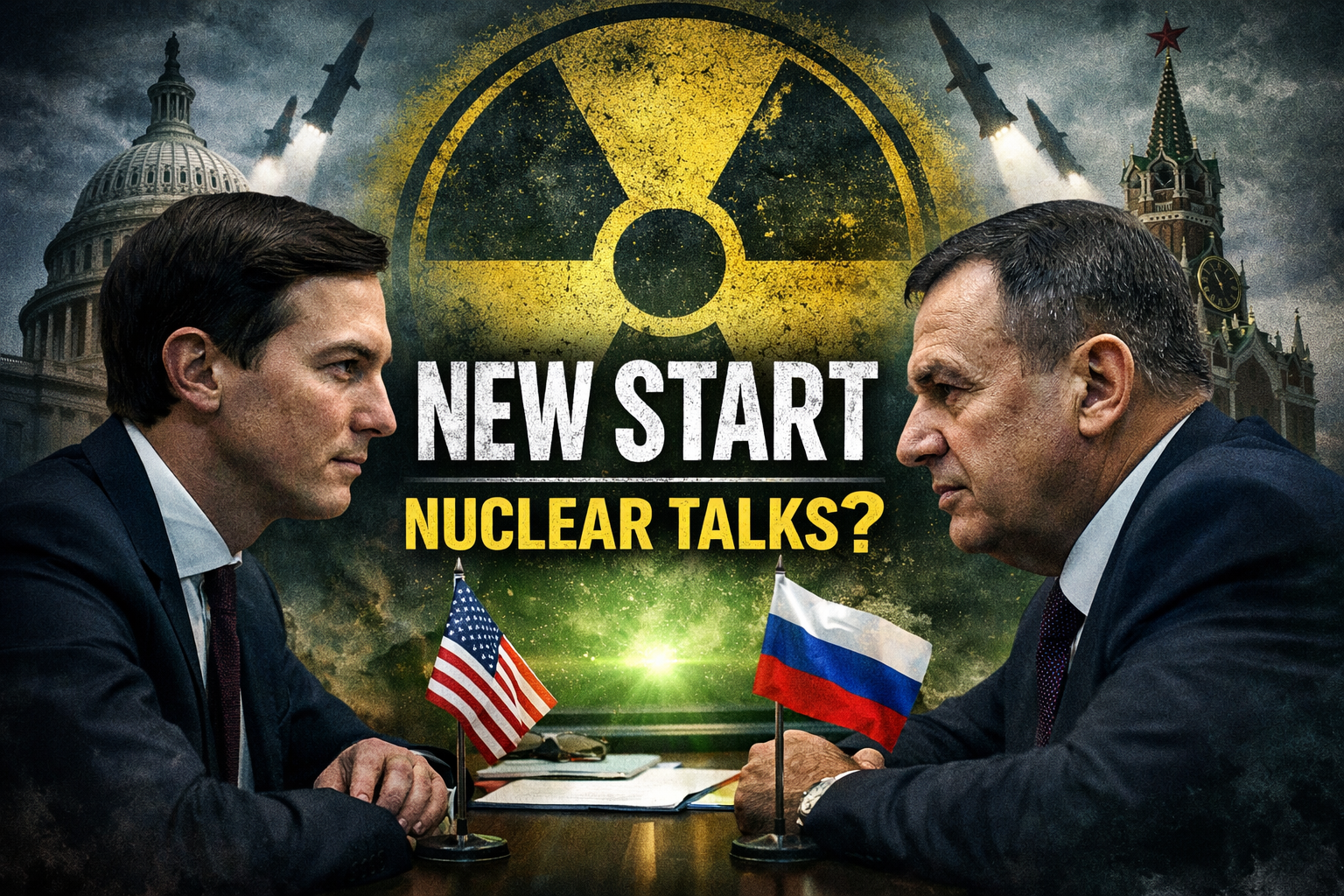
Away from podiums and press briefings, American and Russian officials reportedly revisited one of the last remaining restraints on nuclear power: the New START treaty. No ceremony. No grand announcement. Just quiet conversations on the margins of peace talks in Abu Dhabi.
That alone is worth paying attention to.
The New START agreement, first signed in 2010, placed firm limits on how many strategic nuclear warheads and delivery systems Washington and Moscow could deploy. It also created verification rules that forced both sides to look inside each other’s arsenals, a rare exercise in enforced transparency between rivals. The treaty expired on February 5, leaving a legal and symbolic vacuum.
According to reporting from Axios, discussions are now underway to keep those guardrails standing a little longer. Not as a full renewal, at least not yet, but as a temporary extension built on good faith and quiet consent. Sources suggest both sides may continue observing the treaty’s limits for several months while negotiations unfold.
That phrasing matters. Good faith is not a term commonly associated with modern nuclear diplomacy.
The talks reportedly involved figures close to the Trump political orbit, including Jared Kushner and special envoy Steve Witkoff, meeting with Russian representatives on the sidelines of the Ukraine discussions. It is an unusual venue for arms control, but perhaps that is the point. Formal channels have frozen. Informal ones are doing the work instead.
Moscow’s public posture has been cautious but consistent. Kremlin spokesman Dmitry Peskov acknowledged that Russia proposed sticking to New START provisions for another year, an offer he says received no official response. Still, he emphasized that Russia would continue acting responsibly in matters of strategic stability, while keeping its national interests firmly in view.
That balance between restraint and self-interest has always defined nuclear policy. What feels different now is the thinness of the margin for error.
______________________________________________
🔴 Help keep this independent voice alive and uncensored -> Buy us a Coffee <-
The United Nations has already sounded the alarm. Secretary-General Antonio Guterres called the treaty’s expiration a grave moment for global security, warning that the risk of nuclear weapon use is higher than it has been in decades. Those words landed quietly, but they linger. Treaties do not prevent war on their own. What they do prevent is miscalculation.
China remains the unspoken complication. Former President Donald Trump has long argued that any future arms agreement must include Beijing. Moscow, for its part, says China sees participation as pointless, given the vast difference between its arsenal and those of the US and Russia. For now, Beijing stays out, and the original nuclear rivals circle each other once again.
What emerges from this moment is not reassurance, but something more fragile. A pause. A recognition that even adversaries understand the danger of letting nuclear limits vanish entirely.
New START negotiations between the US and Russia may not capture headlines the way troop movements or sanctions do. But they shape the background reality against which everything else unfolds. When those talks go silent, the world becomes louder in all the wrong ways.
Sometimes stability is not announced. It is merely maintained, quietly, by people who understand what happens when it disappears.
About the Author