The Middle East is sliding deeper into a dangerous confrontation, and the consequences are no longer confined to military bases, government buildings, or distant battlefields.
Saudi Arabia’s capital has become the latest warning sign.
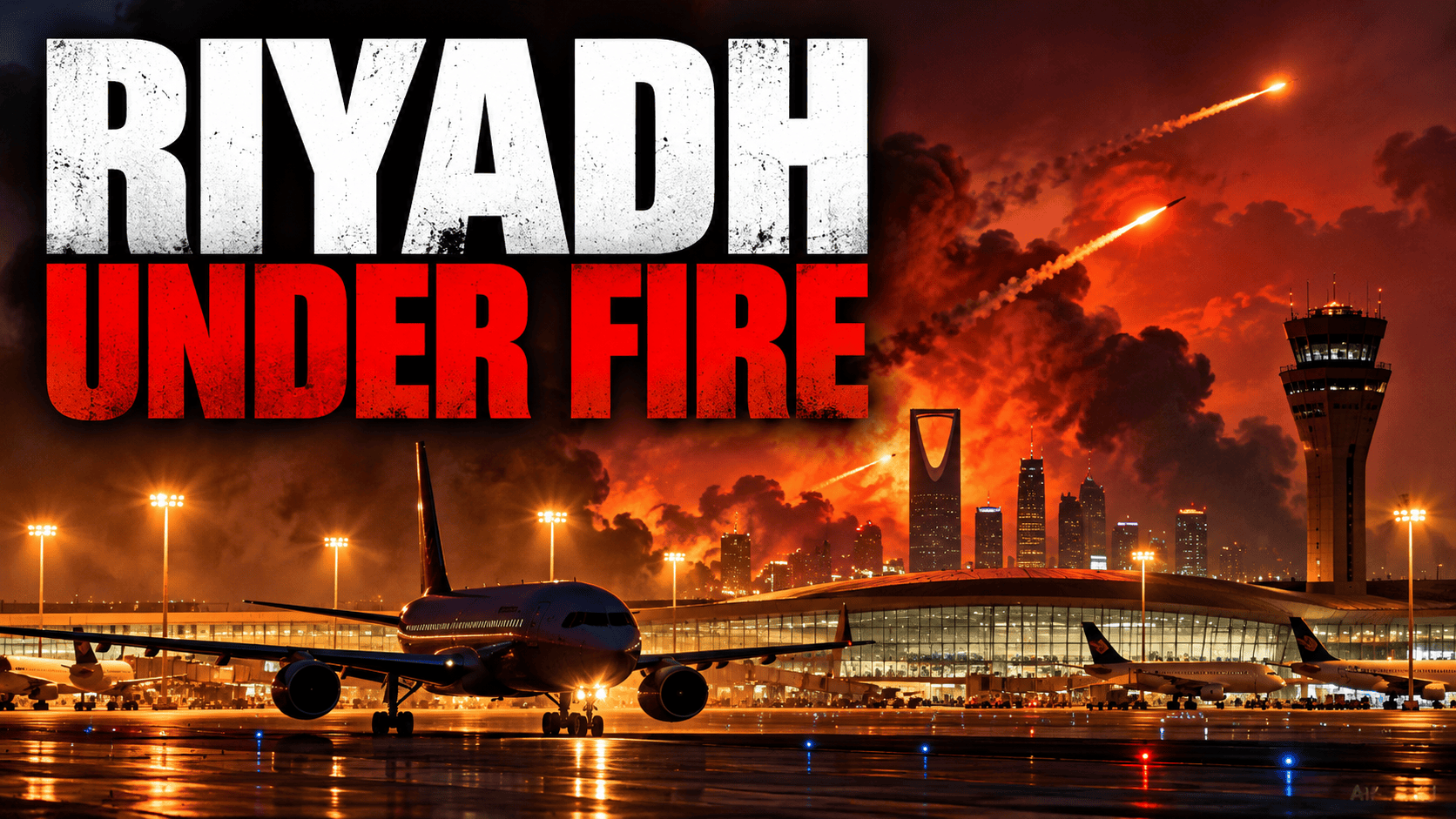
Missile and drone attacks attributed to Yemen’s Houthi movement have forced the suspension of operations at Riyadh’s King Khalid International Airport, disrupted international flights, and left civilians dead and hundreds injured.
Meanwhile, US President Donald Trump has accused the Houthis of “misbehaving very badly.”
But behind the political language lies a far more serious question: How much longer can this conflict expand before the entire region is dragged into a confrontation that nobody can control?
Riyadh Airport Shutdown Exposes a Dangerous New Reality
Saudi Arabia’s King Khalid International Airport is not some remote military installation. It is a major civilian transportation hub connecting the kingdom with international destinations.
Yet the airport has become a target in the widening confrontation involving Yemen’s Houthis and Saudi Arabia.
According to reporting from Reuters and Associated Press, an October 10 attack killed at least 13 people and injured more than 300. Further strikes and casualties followed, with subsequent reporting putting the broader death toll higher.
Saudi authorities extended the airport’s suspension of operations until October 17 while security and operational assessments continued.
______________________________________________
🔴 Help keep this independent voice alive and uncensored.
Support independent journalism and help keep Chris Wick News going.
👉 Support Chris Wick on GoFundMe
Major international airlines have responded by cancelling or suspending flights, affecting passengers far beyond Saudi Arabia.
This is what makes the situation particularly troubling.
A regional war does not need to reach every country militarily to begin affecting the entire world economically.
Disrupted aviation, increased security costs, delayed commercial travel, and uncertainty surrounding vital energy infrastructure can spread the consequences across borders almost immediately.
And those consequences are already becoming visible.
Trump Condemns the Houthis, but What Comes Next?
President Trump has publicly criticized the Houthis following their attacks on Saudi Arabian infrastructure.
His description of the group’s conduct as “misbehaving very badly” attracted attention, but the more consequential issue is whether Washington will become directly involved in another military confrontation.
Saudi Arabia remains a major American security partner. Its strategic importance extends beyond regional politics to energy markets, military cooperation, and international commerce.
The Houthis, meanwhile, have demonstrated their willingness to strike infrastructure far beyond Yemen’s borders.
That combination creates a dangerous calculation for Washington.
Military intervention could demonstrate American support for Saudi Arabia, but it could also create another front in an already expanding conflict.
Refusing to intervene directly carries its own diplomatic and strategic risks.
Neither option comes without consequences.
And that is precisely why political statements alone tell us very little about where this crisis is heading.
The Houthis Have Turned Civilian Infrastructure Into a Pressure Point
The Houthis have spent years developing missile and drone capabilities that allow them to challenge militarily stronger opponents.
Their recent attacks highlight how comparatively inexpensive weapons can produce enormous disruption when directed at strategically important infrastructure.
An airport does not need to be completely destroyed to become unusable.
Even the credible possibility of another attack can force airlines to suspend operations, authorities to restrict airspace, and passengers to abandon travel plans.
That gives armed groups a powerful means of applying pressure without achieving conventional military superiority.
But there is a human cost that should never disappear behind discussions of strategy.
Civilian airports are not legitimate targets simply because striking them produces political leverage.
Passengers, airport employees, maintenance workers, and families have no control over the decisions being made by military commanders or political leaders.
Yet they are increasingly the people paying the price.
Saudi Arabia Faces a Serious Security Test
The attacks have also raised uncomfortable questions about Saudi Arabia’s ability to defend its most important infrastructure.
The kingdom has invested heavily in military equipment and air defence systems.
Nevertheless, the recent strikes have demonstrated that even sophisticated defensive networks can be challenged by coordinated missile and drone operations.
Saudi authorities are investigating how the deadly attack penetrated airport defences.
That investigation matters because the implications extend beyond Riyadh.
Saudi Arabia’s economic ambitions depend on attracting foreign investment, international business, tourism, and major global events.
Those ambitions become considerably harder to achieve when airports are closing and foreign airlines are reconsidering their operations.
The kingdom now faces a difficult choice between military retaliation and the danger of further escalation.
A stronger military response could weaken Houthi capabilities.
It could also trigger additional attacks.
The Iran War Is Becoming a Regional Security Crisis
The renewed confrontation with the Houthis is unfolding against the backdrop of the wider US-Israeli war involving Iran.
That broader conflict has already intensified concerns about shipping routes, energy supplies, and the security of Gulf states.
Qatar’s Emir Sheikh Tamim bin Hamad Al Thani has called for stronger efforts to protect navigation through the Gulf and the Strait of Hormuz, as well as energy facilities and civilian infrastructure.
His concerns reflect a reality that extends well beyond the immediate fighting.
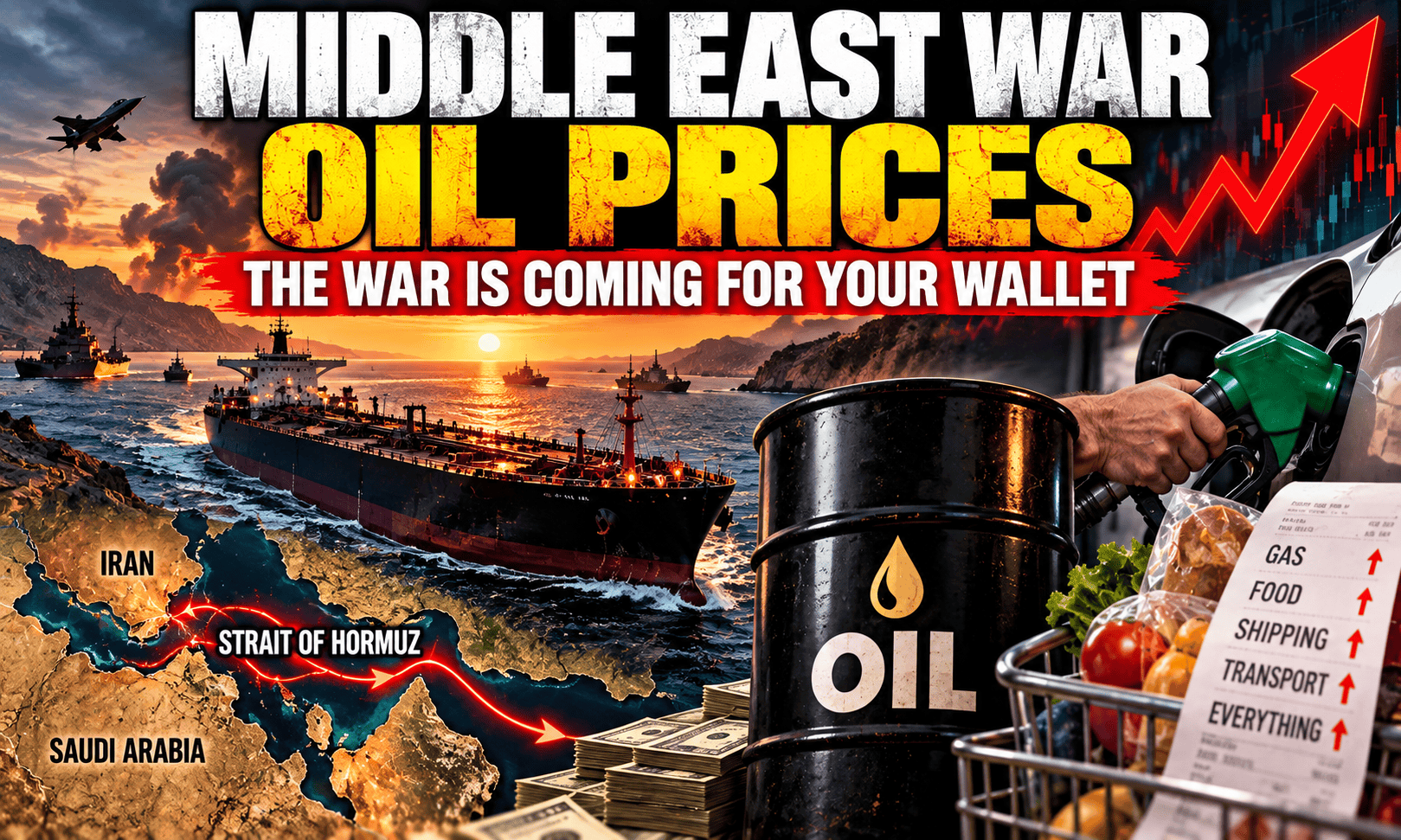
The Strait of Hormuz is one of the world’s most strategically important energy corridors.
Disruptions to shipping or energy infrastructure can influence global oil prices, transportation costs, and inflation.
For ordinary households thousands of kilometres away, the consequences may eventually appear in fuel bills, airline prices, and the cost of everyday goods.
The war may be geographically concentrated in the Middle East, but its economic effects are not necessarily contained there.
Every Government Claims Security. Civilians Keep Paying.
There is a recurring pattern in modern conflicts.
One side launches an attack and describes it as necessary for security, deterrence, or retaliation.
The other side responds with its own military justification.
Then another strike follows.
And another.
Eventually, what began as a confrontation between governments and armed groups becomes a much larger crisis affecting people who had no role in starting it.
The attacks on Saudi civilian infrastructure deserve condemnation.
So do attacks that unlawfully endanger civilians elsewhere, regardless of which government or armed organization carries them out.
There should not be one standard for civilian suffering when an American ally is attacked and another standard when civilians are killed by that ally’s military operations.
If civilian protection is a principle, it must apply consistently.
Otherwise, it becomes little more than another political talking point.
The Bigger Question Nobody Can Afford to Ignore
The shutdown of Riyadh’s international airport should be understood as more than another dramatic headline from the Middle East.
It is evidence of how quickly a regional conflict can threaten the infrastructure that modern societies depend upon.
Commercial aviation, energy production, shipping routes, and international investment all require a basic level of security and predictability.
Once that confidence begins to collapse, the damage can continue long after the missiles stop flying.
The Houthis have shown that they can create significant disruption.
Saudi Arabia has demonstrated that it is prepared to respond.
Washington faces pressure to decide how far its commitments extend.
And Iran’s wider confrontation with the United States and Israel continues to complicate every calculation.
The danger is not simply that another attack will occur.
The danger is that each government or armed group may begin to believe that escalation is the only remaining way to restore deterrence.
That is how regional wars become much larger wars.
And while political leaders debate strength, retaliation, and credibility, ordinary people are left wondering whether the next airport, refinery, port, or civilian neighbourhood will become the next battlefield.
The world should be asking a question that is far more important than who delivers the toughest speech:
Who is actually working to stop this conflict before it becomes impossible to contain?
Chris Wick News — Independent Perspective. No political team gets a free pass.
Sources
Al Jazeera — Iran War Live Updates, October 13, 2026
https://www.aljazeera.com/news/liveblog/2026/10/13/iran-war-live-trump-says-houthis-misbehaving-as-riyadh-flights-halted
Reuters — Saudi Capital’s Airport to Remain Shut as Airlines Cancel Services
https://www.reuters.com/world/middle-east/skies-over-saudi-capital-riyadh-largely-empty-after-deadly-houthi-strikes-2026-10-12/
Associated Press — Houthi Rebels Report Airstrikes in Yemen and Other Middle East Developments
https://apnews.com/article/3e6e5f152048c035081eac369f62ed4f