Behind the carefully cultivated image of Israel’s longest-serving prime minister lies a family history, an ideological inheritance, and a political career that raises uncomfortable questions about how leaders shape their public identities.
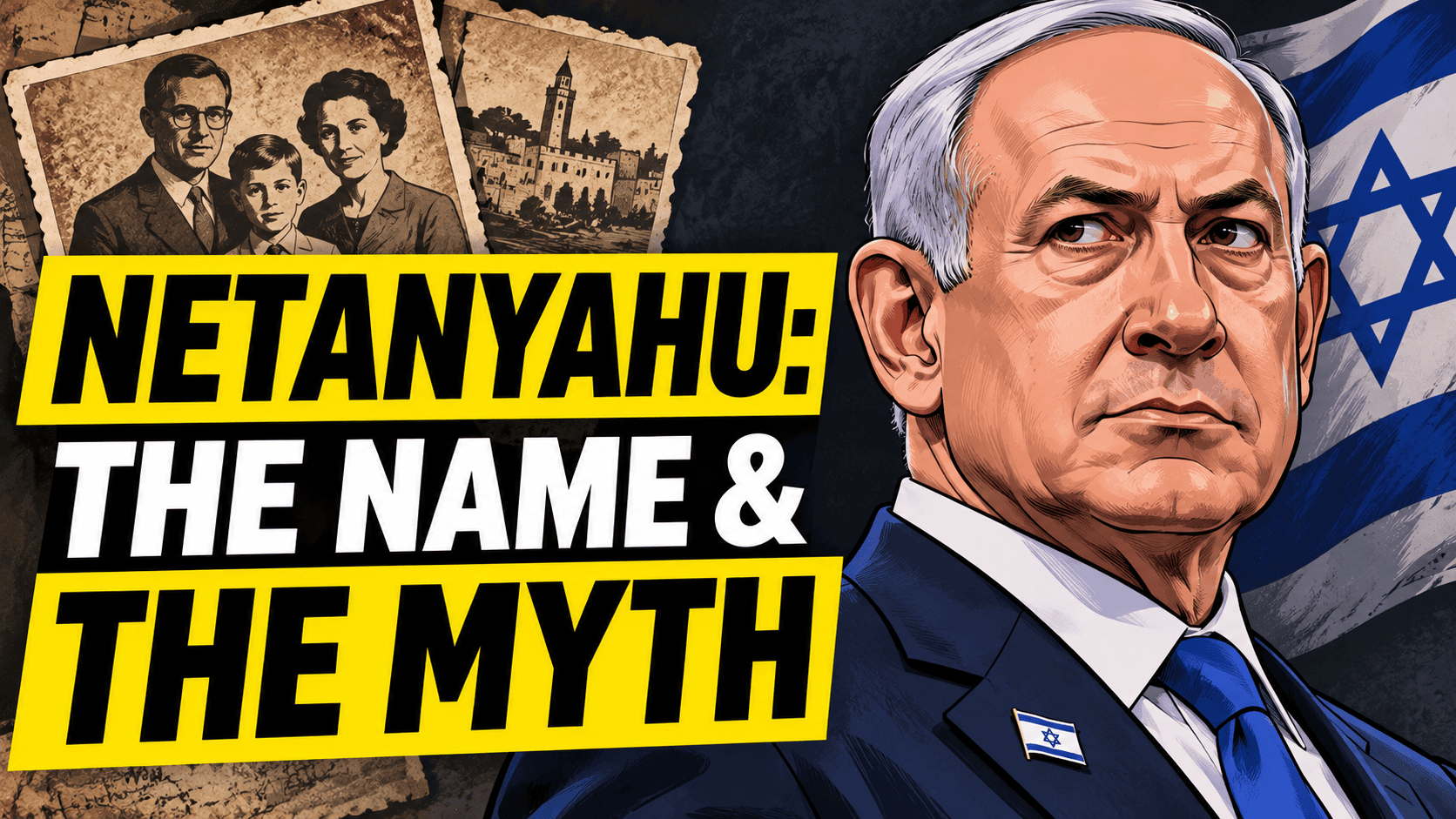
Benjamin Netanyahu. The name alone can ignite an argument halfway around the world.
To supporters, he’s a defender of Israel who refuses to buckle under international pressure. To critics, he’s a politician whose pursuit of power has become inseparable from controversy, confrontation, and questions about accountability.
But before the television appearances, military credentials, political battles, and international headlines, there was another name buried in the family history.
Mileikowsky.
And the real story behind that name is more interesting than the internet mythology surrounding it.
The Mileikowsky Name: What History Actually Says
Contrary to a widely circulated claim, Benjamin Netanyahu was not born Benjamin Mileikowsky.
He was born in Tel Aviv on October 21, 1949, already carrying the Netanyahu surname.
His father, Benzion Netanyahu, was born Benzion Mileikowsky in Warsaw in 1910. His grandfather, Nathan Mileikowsky, moved the family to British Mandatory Palestine in 1920 and adopted the Hebrew surname Netanyahu, meaning roughly “God has given.” Cornell Chronicle+1
The distinction matters.
Not because changing a surname is suspicious. It isn’t. Names were frequently Hebraized during the development of the Zionist movement and the establishment of modern Israel.
What makes this history politically interesting is the connection between national identity, ideology, and the generations that followed.
The family name changed long before Benjamin entered politics. The political worldview surrounding him, however, would become part of his public story.
A Political Inheritance Written Before His Birth
Netanyahu’s father wasn’t simply a historian sitting quietly behind a mountain of books.
Benzion Netanyahu was associated with Revisionist Zionism, a nationalist movement whose ideas differed sharply from the socialist currents that dominated Israel’s early political establishment.
He was also deeply influenced by the historical persecution of Jewish communities.
Benjamin grew up in an environment where history, nationalism, security, and questions of Jewish survival were recurring subjects. Cornell Chronicle+1
How much of that inheritance shaped his decisions as prime minister is a legitimate question for historians and political analysts.
But it would be a mistake to pretend that family history alone explains every decision made by a modern political leader.
The Making of a Political Survivor
Netanyahu’s career offers a remarkable case study in political longevity.
Military service. American education. Diplomatic appointments. Television appearances. Leadership of Likud. Multiple terms as prime minister.
His ability to communicate directly with international audiences became one of his most recognizable political assets.
Yet that public image has existed alongside serious legal controversies.
Netanyahu has faced an Israeli corruption trial involving allegations of bribery, fraud, and breach of trust across three cases. He has denied wrongdoing and described the prosecution as politically motivated. Reuters+1
In November 2024, the International Criminal Court issued an arrest warrant alleging responsibility for war crimes and crimes against humanity connected to the Gaza conflict. An arrest warrant is not a conviction, and Israel disputes the court’s jurisdiction. International Criminal Court+1
These controversies are not proof that every criticism of Netanyahu is justified. They are documented reasons why his record deserves scrutiny beyond campaign speeches and partisan slogans.
When Political Identity Becomes Political Power
Here’s where the story becomes bigger than one Israeli prime minister.
Modern politics rewards recognizable identities.
A leader becomes the defender. The outsider. The survivor. The person supposedly standing between the nation and catastrophe.
Supporters may see consistency and determination. Opponents may see calculated political messaging.
And the media often reduces complicated histories to those competing portraits.
Netanyahu’s own story contains genuine military service, diplomatic experience, electoral victories, ideological commitments, and substantial controversies.
None of those facts disappears simply because someone prefers a different narrative.
The challenge is separating the documented record from the political mythology built around it.
Dark Final Thoughts: The Name Was Never the Real Question
Mileikowsky. Netanyahu. Bibi.
Three names connected to different chapters of one family’s history.
But a surname cannot tell us whether a politician governs wisely, acts lawfully, or deserves public confidence.
Those judgments require evidence, scrutiny, and an examination of decisions and consequences.
The uncomfortable question isn’t why Netanyahu’s grandfather adopted a Hebrew name.
It’s why political debate so often becomes a battle over personalities and identities instead of a serious examination of power.
A name is history.
A political image is communication.
And accountability must rest on something far more substantial than either.
Sources and fact-check references
- Cornell University — Benzion Netanyahu and the Mileikowsky family history
- Israeli Government — Official Netanyahu biography
- The New Yorker — Benjamin Netanyahu’s Complex Histories
- Associated Press — Netanyahu’s corruption trial
- International Criminal Court — Netanyahu case record
About the Author