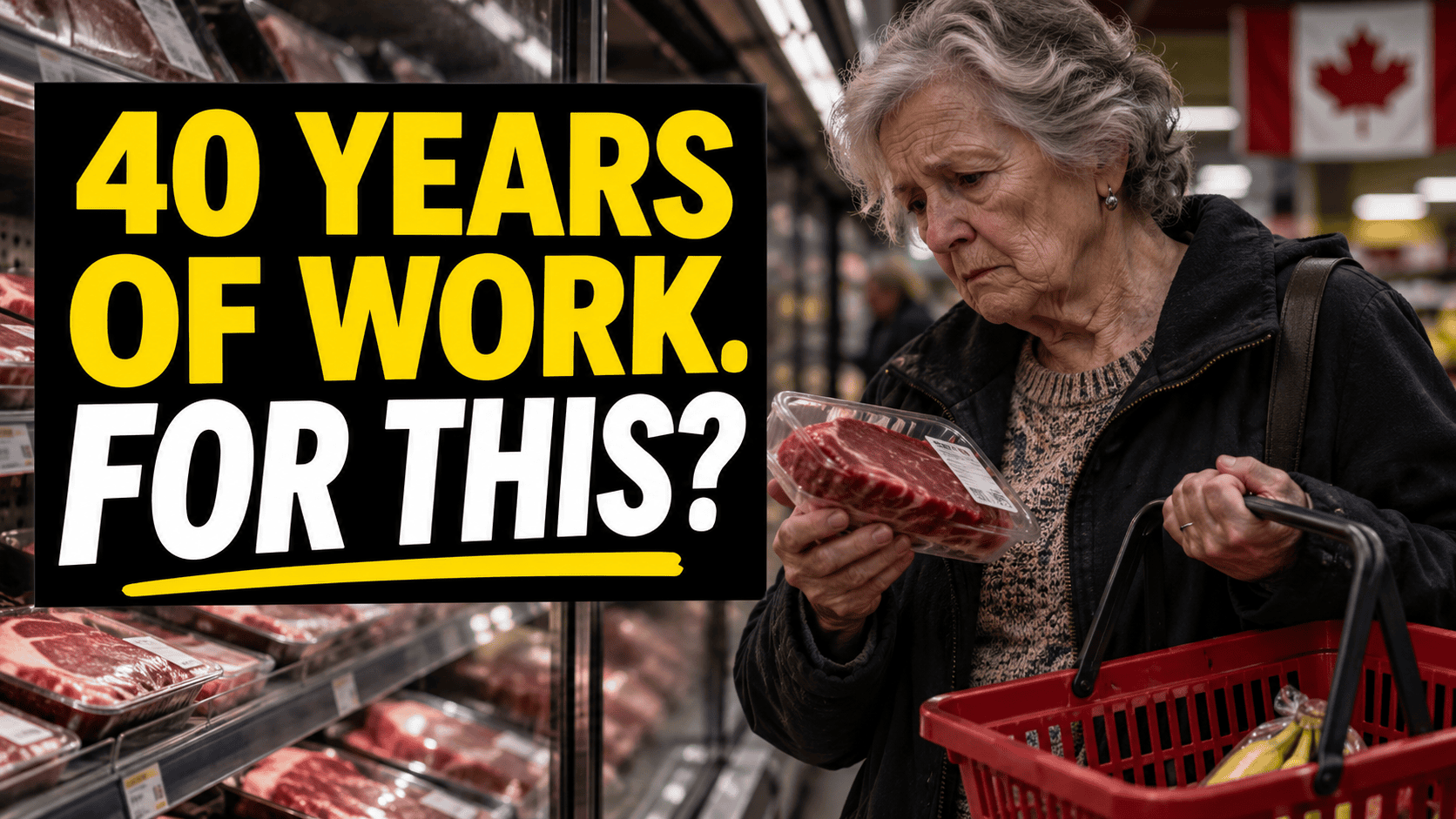
Forty years of hard work. Decades of paying taxes. A lifetime of contributing to society. And the reward for some Canadians? Standing in a grocery store wondering whether they can afford a package of ground beef.
There is something deeply disturbing about that reality.
Economic prosperity means very little to someone who cannot afford to put a decent meal on the table. Yet the disconnect between economic announcements and the everyday experiences of ordinary Canadians continues to raise uncomfortable questions.
When Retirement Becomes a Financial Survival Game
Retirement was supposed to represent financial security, independence and the opportunity to enjoy whatever years remained after decades of employment.
Instead, many Canadians living on fixed incomes find themselves carefully calculating every purchase.
Meat becomes a luxury. Heating bills become a source of anxiety. An unexpected expense can throw an entire monthly budget into chaos.
These are not extravagant demands. These are the basic necessities of human existence.
Nobody should have to consider a decent meal an unreasonable luxury after spending decades working and contributing to the country.
Rising Grocery Prices Are Eroding Financial Security
The numbers paint a troubling picture.
According to Statistics Canada, between 2022 and 2025:
- Grocery prices increased by 13.9%.
- Beef prices increased by 42.9%.
- Poultry prices increased by 21.4%.
- Egg prices increased by 26%.
- Dairy prices increased by 20.5%.
These increases came after grocery prices had already risen substantially in 2022.
Approximately 9.8 million Canadians experienced some degree of household food insecurity in 2024. Among seniors living alone, the rate was 13%. Although food insecurity declined nationally from the previous year, it remains considerably higher than it was in 2018.
Statistics Canada’s provisional estimates released in November 2026 also suggest that the senior poverty rate increased from 5.4% in 2024 to 7% in 2025.
Behind every one of those statistics is a human being.
Economic Growth Means Little Without Affordability
Governments frequently point to economic growth, employment figures and declining inflation as indicators of economic progress.
Those measurements have legitimate economic value, but they do not necessarily reflect the financial circumstances of every household.
Lower inflation does not mean lower prices. It generally means prices are increasing more slowly.
The grocery bill remains elevated. The damage to purchasing power does not simply disappear.
For someone surviving on a modest pension, the difference between economic theory and economic reality can be measured in the food they are forced to leave on the supermarket shelf.
The Growing Disconnect Between Politics and Everyday Life
The contrast between formal political functions, official receptions and the financial struggles of ordinary citizens can understandably fuel resentment.
Canadians deserve transparency surrounding public expenditures and measurable results from affordability policies, regardless of which political party holds power.
Government decisions, global supply chains, transportation costs, agricultural conditions and market competition all influence affordability.
Understanding these factors is essential, but identifying the causes is only part of the equation. Evaluating whether proposed solutions actually improve household purchasing power is equally important.
The fundamental question remains: Are Canadians becoming more financially secure?
The Silent Humiliation of Financial Hardship
Imagine working for four decades, believing that retirement would eventually provide some peace and independence.
Now imagine standing underneath the fluorescent lights of a supermarket, putting food back because your pension cannot stretch far enough.
There are no television cameras capturing that moment. No elaborate press conferences. No economic announcements.
Just a person quietly wondering how life became so damn expensive.
Financial hardship is not merely about numbers. It affects dignity, independence, nutrition and emotional well-being.
That human cost deserves considerably more attention in conversations about economic prosperity.
Dark Final Thoughts
A country’s prosperity should be measured by more than economic growth, corporate profits and impressive financial statistics.
It should also be measured by whether ordinary citizens can afford food, shelter, warmth and a dignified retirement.
What a bloody disgrace it is that anyone who has spent a lifetime working should find themselves questioning whether they can afford meat.
Economic progress should translate into meaningful improvements in people’s lives.
Because when a lifetime of hard work still leaves someone standing in a grocery aisle calculating whether they can afford dinner, economic success becomes a difficult message to sell.
Retirement should be about living, not merely surviving.
Sources
About the Author